

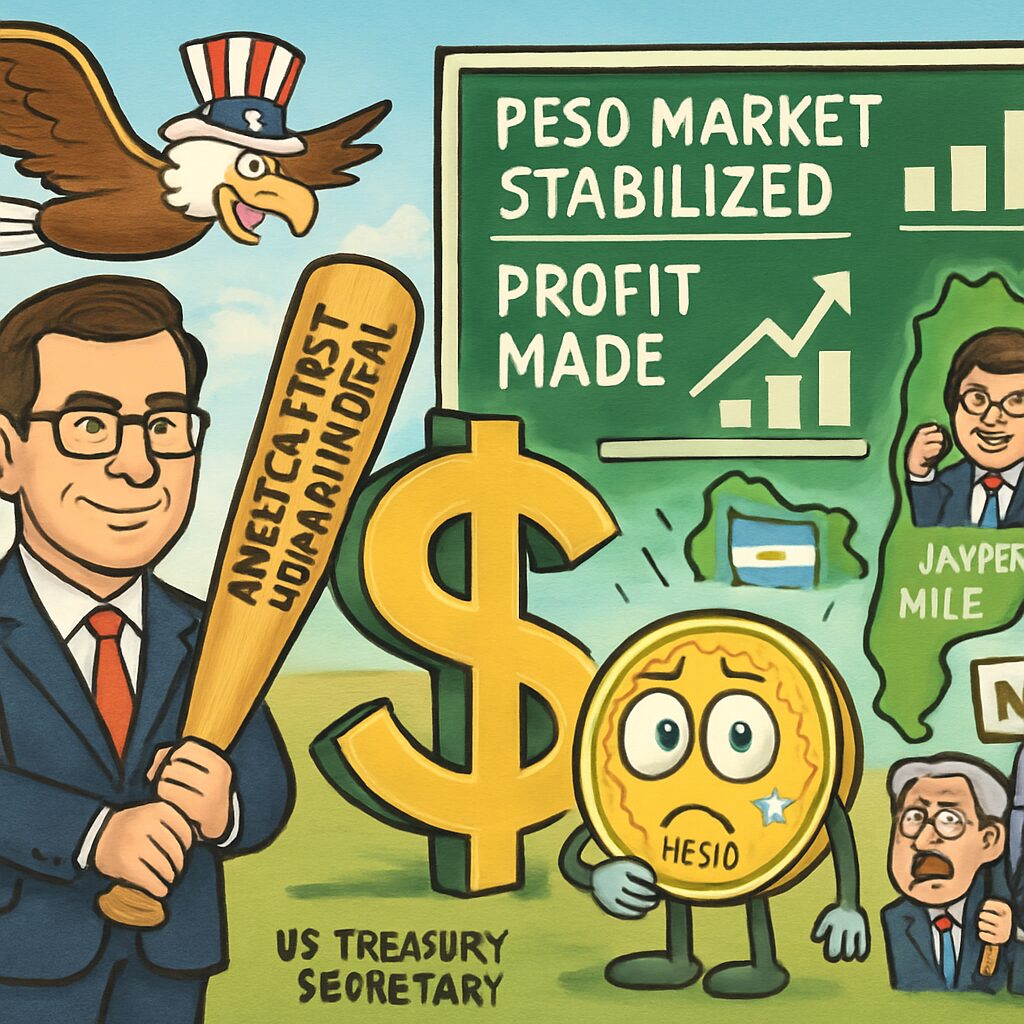
US Treasury Secretary Scott Bessent has declared that a risky financial intervention in Argentina’s currency market has proven successful, with the US recouping its investment and making a profit. Describing the move as an “America First homerun deal,” Bessent highlighted the stabilization of a key ally and economic gains for Americans.
The intervention occurred last year when the US purchased Argentine pesos to halt a plunge in the currency, aimed at supporting President Javier Milei’s government ahead of midterm elections. With Argentina’s economy facing uncertainty, the Biden administration’s Treasury Department stepped in to bolster Milei’s party, a close ally of former President Donald Trump, amid fears of political upset.
Bessent announced that the US no longer holds any Argentine pesos in its exchange stabilisation fund, confirming full repayment of the financial support. The deal involved a currency swap line allowing Argentina to exchange pesos for dollars, which helped stabilize the currency after initial declines. However, it drew criticism from Democratic lawmakers who argued it risked taxpayer money in a country with a history of financial turmoil.
Following the intervention, the peso stabilized, and Milei’s party secured a landslide victory in the mid-term elections, though the currency has since drifted lower. Argentina’s central bank settled the swap line in December, trading $2.5 billion in pesos for dollars out of a possible $20 billion credit line, according to government reports.
Additional support included $872 million from reserves held at the International Monetary Fund, though the Treasury Department has not commented on this transaction. Bessent emphasized the profitability and strategic success, stating that tens of millions in profit were generated while strengthening bilateral relations.
Brad Setser, a senior fellow at the Council on Foreign Relations, acknowledged the success in recouping funds but noted the profit was “small change” relative to the sums involved. He warned that Argentina might become overly reliant on US support, potentially delaying essential reforms to rebuild its own reserves.
The deal reflects broader US foreign policy strategies under the “America First” agenda, leveraging economic tools to support allies and secure diplomatic advantages. It has strengthened ties with Milei’s market-friendly administration, which has pursued policies aligned with US interests in Latin America.
Looking forward, Argentina continues to face economic challenges, including high inflation and depleted reserves. While the US intervention provided short-term relief, sustainable recovery will require domestic measures and reduced dependence on external bailouts, with experts urging urgency in economic planning.

