

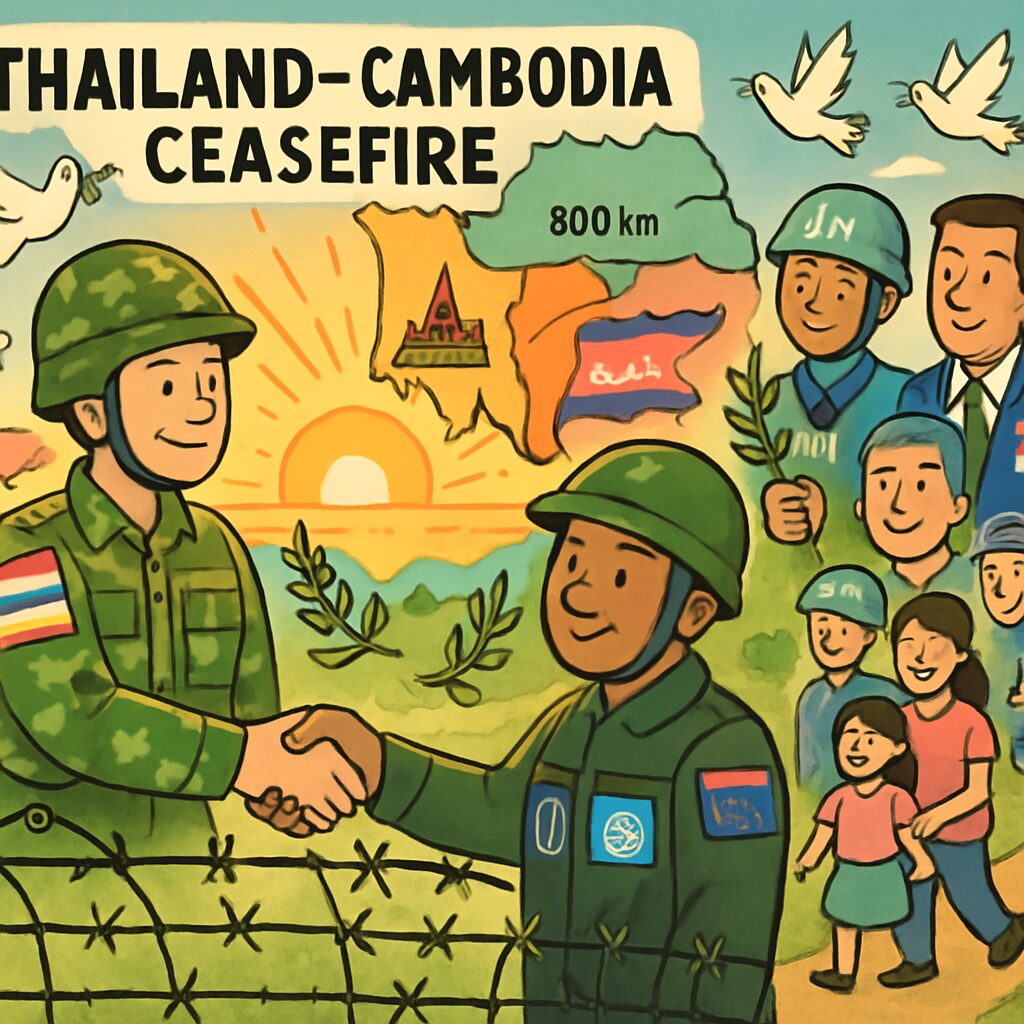
A ceasefire between Thailand and Cambodia has come into effect, aiming to halt weeks of intense border clashes that have killed over 100 people and displaced nearly a million civilians. The agreement, signed on December 27, 2025, represents a critical step towards de-escalation and humanitarian relief in the region.
The truce took effect at noon local time on Saturday, following a joint statement by the defence ministers of both countries. They agreed to freeze military positions, ban further troop movements, and prioritize the return of displaced civilians to their homes. Additionally, the ceasefire extends to all types of weapons and attacks, with the goal of preventing further casualties and damage.
The humanitarian toll has been severe, with more than half a million people forced to flee their homes on both sides of the border. Clashes have resulted in significant military and civilian losses, exacerbating the suffering in affected communities. The immediate focus is on allowing these displaced individuals to return safely, as the agreement includes provisions for removing landmines and ensuring secure passage.
International actors have played a key role in facilitating the ceasefire, with diplomatic encouragement from China and the United States. The United Nations, European Union, and several countries including Malaysia and Japan have welcomed the agreement, urging both sides to implement it in good faith. An observer team from the Association of Southeast Asian Nations (ASEAN) will monitor compliance, highlighting regional efforts to support stability.
This ceasefire comes after a series of failed attempts to end the conflict. A previous truce brokered in July 2025 collapsed earlier this month, leading to renewed fighting in December. Another agreement, known as the Kuala Lumpur Peace Accords and signed in October with US involvement, was suspended by Thailand in November due to security concerns. The current violence stems from long-standing territorial disputes along the 800-kilometer border, where colonial-era demarcations and temple claims have fueled tensions for over a century.
Despite the agreement, the ceasefire remains fragile. Thai Defence Minister Natthaphon Narkphanit described it as a test of sincerity, warning that Thailand reserves the right to self-defence if violated. Reports indicate that intense fighting continued right up to the moment the truce took effect, underscoring the volatility. Recent Thai air strikes inside Cambodia have added to the grievances, with Cambodia accusing Thailand of indiscriminate attacks.
The next 72 hours are crucial for the ceasefire’s success. As part of the deal, Thailand has agreed to release 18 Cambodian soldiers captured in previous clashes if the truce holds. Diplomatic engagements are scheduled, including a trilateral meeting between Cambodian, Thai, and Chinese foreign ministers in Yunnan, China, aimed at building confidence and addressing underlying issues.
If implemented effectively, this ceasefire could pave the way for lasting peace and reduce the humanitarian crisis. However, nationalist sentiments and deep-seated territorial grievances pose significant challenges. The international community continues to watch closely, hoping that this agreement will bring an end to the deadly cycle of violence and foster regional cooperation.

