

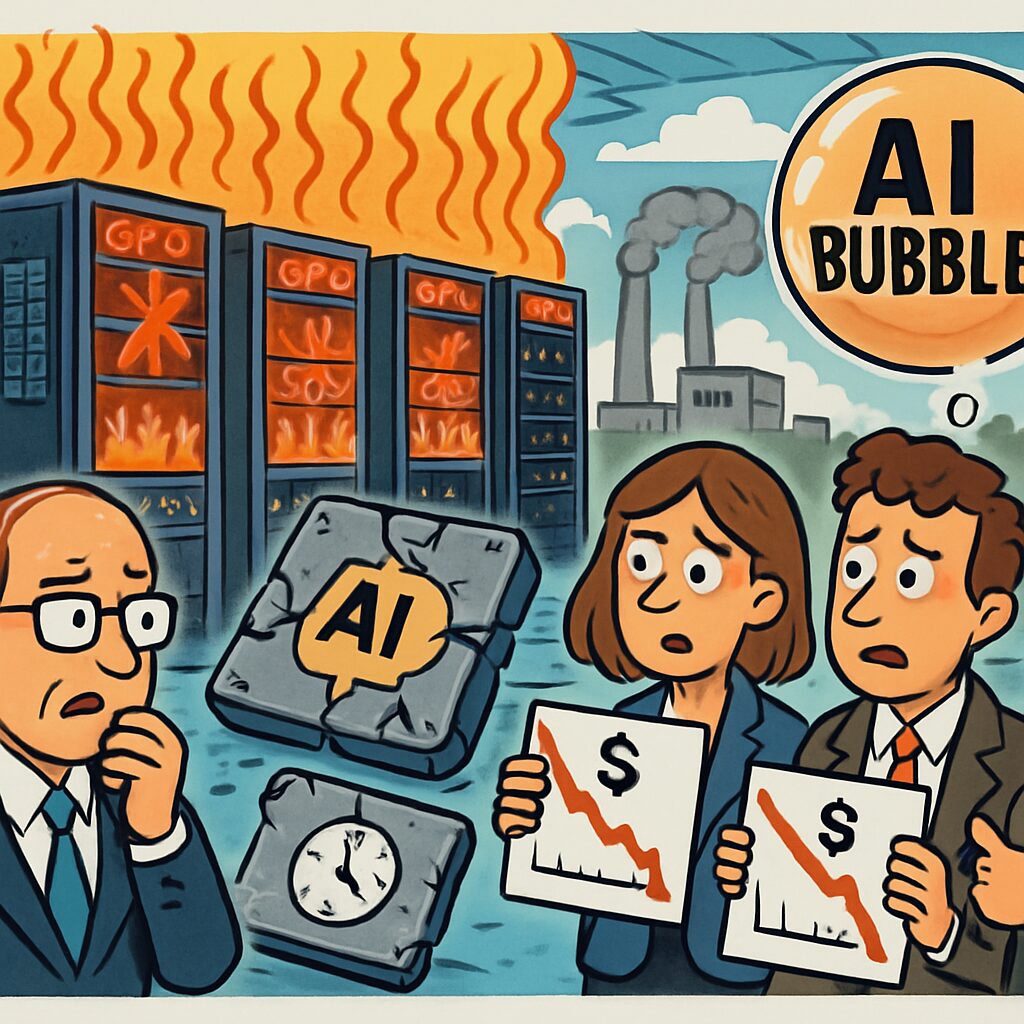
The tech industry’s unprecedented investments in artificial intelligence infrastructure, projected to reach $400 billion this year alone, are facing critical questions about the durability of advanced chips, with experts warning that shorter lifespans could undermine financial returns and fuel concerns over an AI bubble.
Tech giants are pouring hundreds of billions into data centers and graphics processing units (GPUs) to power AI models, positioning AI as a transformative force for the economy and jobs. However, the rapid pace of technological advancement and the physical strain of AI training are raising doubts about how long these expensive components will remain viable.
Industry observers estimate that top-tier AI chips used for training large language models may last only 18 months to three years before needing replacement, compared to traditional central processing units (CPUs) that typically serve five to seven years in data centers. The intense heat and computational demands of AI workloads accelerate wear, with failure rates for GPUs around 9% annually versus 5% for CPUs.
Subsequent generations of AI chips are becoming more efficient at a breakneck speed, making it economically unfeasible to continue using older models even if they are functional. Experts like Tim DeStefano of Georgetown University note that while chips might physically endure five to ten years, their economic lifespan for cutting-edge tasks is likely just three to five years, pushing companies to seek faster returns.
In response, companies like Nvidia emphasize that their CUDA software system allows for updates that extend the utility of existing hardware, with CFO Colette Kress citing six-year-old GPUs still running at full capacity. Meanwhile, Microsoft CEO Satya Nadella has discussed spacing out infrastructure investments to avoid simultaneous obsolescence, highlighting strategic adjustments to manage costs.
The uncertainty over chip longevity is intensifying bubble fears, as highlighted by investors like Michael Burry of “The Big Short” fame, who argue that overestimated asset lifespans could eventually pressure earnings. OpenAI CFO Sarah Friar recently stirred controversy by suggesting that if advanced chips last less than expected, government support might be needed, though the company later clarified it is not seeking a backstop.
Beyond balance sheets, the ramifications extend to broader societal issues, including energy consumption and environmental impact. Tech firms are not only building data centers but also advocating for new power plants to support them, raising questions about the sustainability of AI growth if economic benefits fail to materialize promptly.
Despite these concerns, the industry continues to advance, with infrastructure built during the current hype cycle potentially laying the groundwork for future technological progress. The ongoing debate underscores the need for careful planning and realistic assessments to ensure that AI investments yield long-term value without precipitating a costly bubble.

