

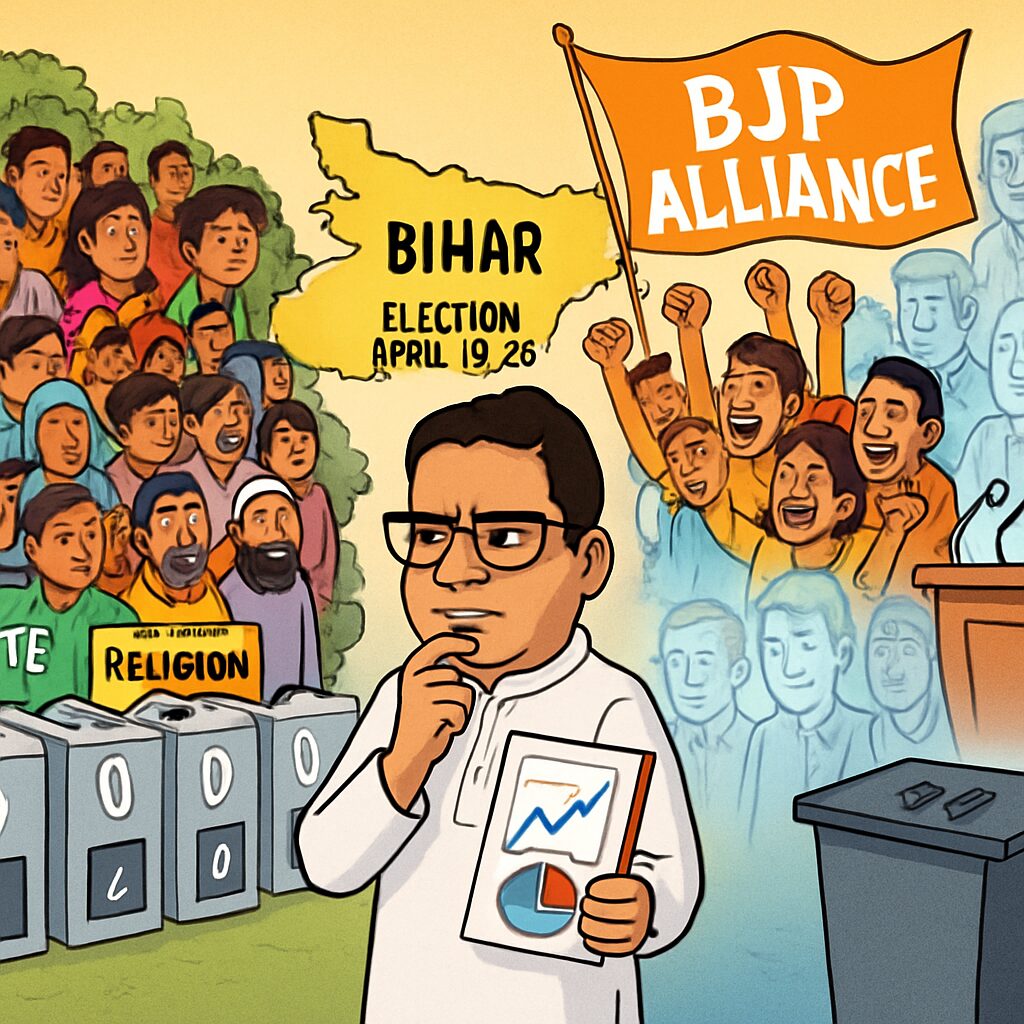
Prashant Kishor’s much-hyped political start-up, Jan Suraaj, failed to win any seats in the Bihar Legislative Assembly elections, underscoring the formidable barriers new parties face in India’s entrenched political system. The party, launched with the promise of ending Bihar’s stagnation through data-driven governance, garnered only a minuscule vote share as the BJP-led alliance swept to a landslide victory.
Prashant Kishor, once India’s most sought-after political strategist for figures like Narendra Modi and Nitish Kumar, stepped into the electoral arena with Jan Suraaj after a two-year padayatra across Bihar. He built a slick organization and fielded candidates in 238 of the state’s 243 seats, aiming to break the cycle of caste-based patronage politics. Despite extensive media coverage and his personal charisma, the party could not convert visibility into votes, failing to secure even a single seat in the elections held from November 6 to 11, 2025.
The results, declared on November 14, revealed a stark reality: Jan Suraaj lacked the deep social roots or mass movement needed to disrupt Bihar’s political status quo. Unlike successful insurgent parties such as the Aam Aadmi Party, which emerged from anti-corruption protests, Jan Suraaj was conceived as an intellectual and strategic project. Analysts note that without a strong anti-incumbency wave or widespread dissatisfaction, voters reverted to established loyalties, leaving no room for a newcomer.
Political experts point to structural challenges. Rahul Verma, a political scientist, emphasizes that most new parties fail, as building a party requires visibility, organization, mobilization, and credible candidates—each a separate hurdle without a track record of voter trust. Jan Suraaj’s candidates were largely first-timers, and the party had no natural base in caste, religious, or urban constituencies, making it hard to compete in Bihar’s divided political marketplace.
Kishor’s decision not to contest a seat himself may have deepened doubts about his commitment, contrasting with leaders like Arvind Kejriwal, whose personal candidacy helped AAP gain credibility. Saurabh Raj of the Indian School of Democracy notes that for new parties, a compelling agenda matters, but a relatable leader who embodies that agenda is often the tipping point. Jan Suraaj’s focus on governance, jobs, and migration was coherent but lacked the emotional connect needed to mobilize voters.
The election outcome also reflects broader political trends. Modi’s coalition capitalized on issues like women’s empowerment, with cash transfers appealing to key voter blocs, while the opposition’s focus on electoral roll revisions failed to resonate. The PBS report highlights how Modi’s message of hope and stability won over voters, reinforcing the NDA’s dominance in a state crucial for national politics.
Despite the setback, experts suggest that if Jan Suraaj maintains its grassroots presence and cultivates local leadership, it could gradually gain influence in Bihar’s fluid political landscape. The state’s evolving caste loyalties and growing appetite for alternatives offer opportunities, but success demands long-term engagement beyond the electoral cycle. Kishor has promised to stay in Bihar and strengthen the party, potentially positioning it for future elections.
This episode serves as a cautionary tale: in India’s complex political ecosystem, strategic design and media hype are insufficient without the combustible energy of a genuine social movement. For aspiring political entrepreneurs, breaking into the system requires not just diagnosis from the outside but the hard work of building emotional and organizational depth from the ground up.

