

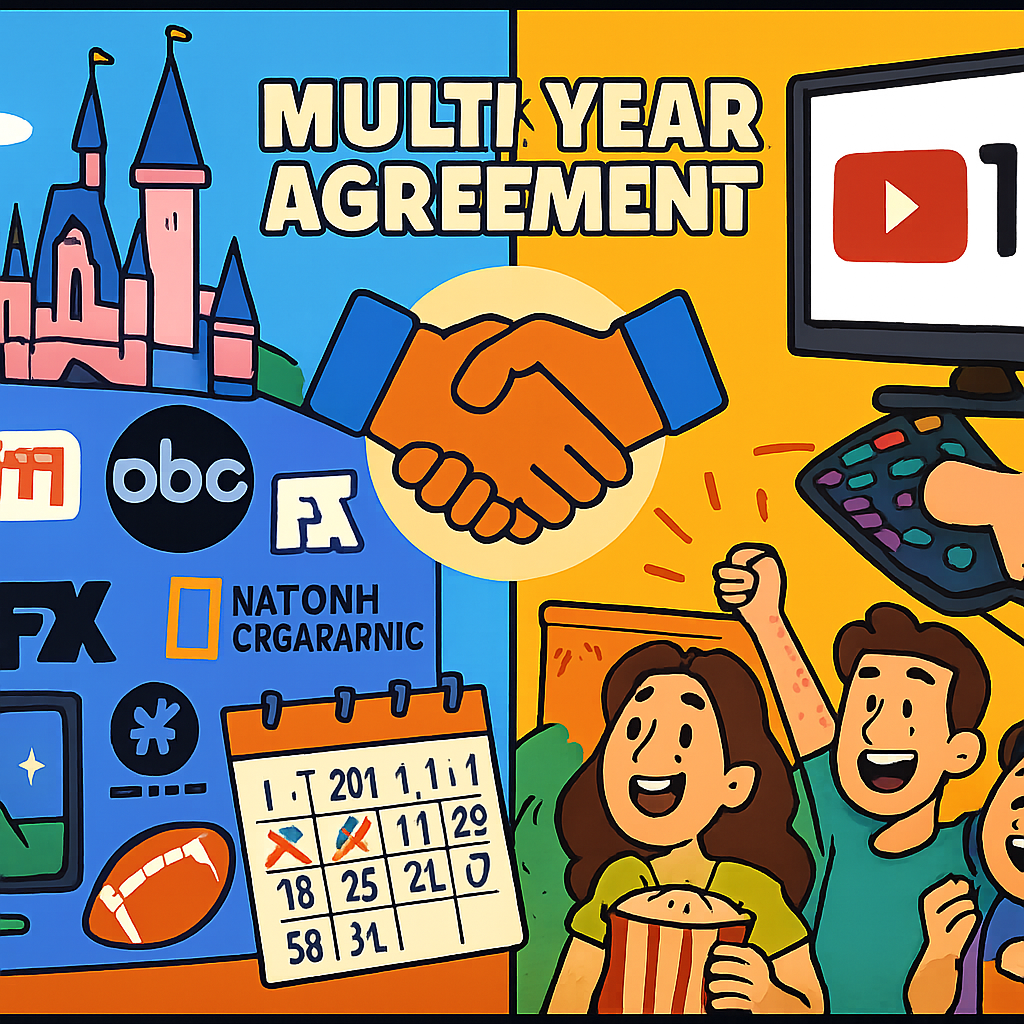
Disney and YouTube TV have reached a new multi-year distribution agreement, restoring access to Disney-owned channels like ABC and ESPN after a two-week blackout that disrupted live sports and entertainment for subscribers. The deal, announced on November 14, 2025, ensures that millions of viewers can once again enjoy key programming without interruption, marking a resolution to a contentious negotiation between the media giant and the Google-owned streaming service.
The blackout began on October 30, when the previous licensing agreement expired, leading to the immediate removal of over 20 Disney channels from YouTube TV. Affected networks included ESPN, ABC, FX, National Geographic, Freeform, and specialized sports channels like SEC Network and ACC Network. This left subscribers unable to access live events, including college football games and Monday Night Football broadcasts, prompting YouTube TV to issue $20 credits to customers as an apology for the disruption. The restoration process started on November 14, with channels gradually returning to the platform throughout the day.
During the standoff, YouTube TV subscribers missed significant programming, particularly impacting sports fans who rely on ESPN and ABC for live coverage. The absence of these channels coincided with high-stakes events, such as pivotal college football matchups and professional games, underscoring the reliance on Disney’s content for real-time entertainment. In response, YouTube TV emphasized its commitment to negotiating on behalf of subscribers, while Disney highlighted the value of its networks in delivering premium sports and news.
Negotiations were marked by public disputes over carriage fees, with Disney seeking higher rates for its channels, especially ESPN, which commands over $10 per subscriber per month in the U.S. pay-TV market. YouTube TV accused Disney of using the blackout as a tactic to drive viewers to its own streaming services, such as Hulu + Live TV, while Disney argued that Google was leveraging its market dominance to suppress competition. Executives from both companies issued statements expressing satisfaction with the outcome, with Disney’s leadership noting the restoration in time for weekend college football games.
This conflict is part of a broader trend in the media industry, where streaming services and traditional broadcasters frequently clash over distribution terms. Earlier in 2025, YouTube TV faced similar standoffs with NBCUniversal and Fox, highlighting the evolving dynamics of content licensing in an era of digital transformation. These disputes often revolve around balancing fair compensation for content creators with affordable pricing for consumers, reflecting the competitive pressures in the streaming landscape.
The new agreement includes provisions for future program packages and grants YouTube TV subscribers access to ESPN Unlimited—a digital service combining ESPN+ and new offerings—at no additional cost by the end of 2026. This indicates a forward-looking approach to content distribution, emphasizing flexibility and innovation in how audiences consume entertainment. Both companies underscored the deal’s alignment with changing viewer habits and the importance of maintaining high-quality programming.
With channels now restored, subscribers can look forward to uninterrupted access to Disney’s diverse portfolio, including upcoming sports events, news broadcasts, and entertainment shows. The resolution not only benefits current viewers but also sets a precedent for future negotiations between media companies and streaming platforms. It reinforces the need for collaborative partnerships to navigate the rapidly shifting media environment, ensuring that consumer interests remain central to content delivery.
In the aftermath, industry observers note that such agreements could influence how other streaming services handle similar disputes, potentially leading to more standardized terms that balance costs and content value. As the media landscape continues to evolve, this deal exemplifies the ongoing adaptation required to meet audience demands while sustaining business growth in a competitive market.

