

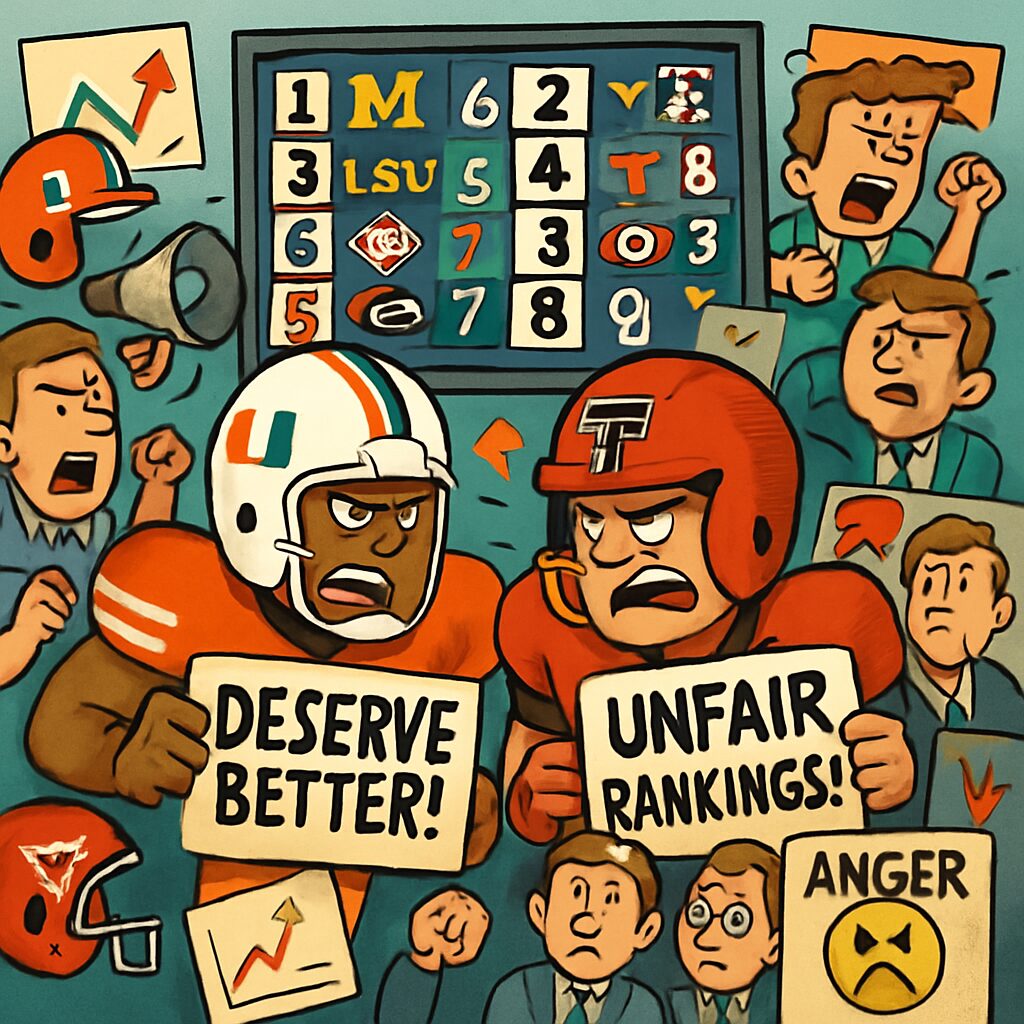
The latest College Football Playoff rankings have sparked controversy, with Miami and Texas Tech leading the list of teams that have strong cases for being ranked higher based on their performances and résumés.
The release of the second College Football Playoff rankings for the 2025 season has ignited debates across the college football world, with ESPN’s Week 12 Anger Index pinpointing the teams with the most justified complaints. This analysis, published on November 11, delves into the discrepancies between teams’ actual achievements and their committee-assigned positions, emphasizing cases where logic seems to falter. The rankings determine playoff seeding and byes, making every spot critically important as the season nears its end.
At the forefront is the Miami Hurricanes, who climbed to No. 15 but remain overshadowed by Notre Dame at No. 9, despite Miami’s head-to-head victory and superior metrics in SP+ and strength of record. With four wins against FPI top-35 teams—more than many higher-ranked squads—the Hurricanes’ placement behind two-loss teams like Texas and Vanderbilt defies statistical reasoning. Analysts argue that the committee may be undervaluing Miami’s consistent performance while overemphasizing potential future losses, contravening the goal of evaluating past results.
Similarly, the Texas Tech Red Raiders, sitting at No. 6 with an 8-1 record, have showcased dominance through blowout wins over top opponents, yet they trail Georgia, who has narrower victories. Texas Tech’s average in-game win probability ranks second nationally, highlighting their consistency, while their loss to a respectable Arizona State team appears less damaging than other teams’ setbacks. Their case for a top-five spot is strengthened by a ferocious defense that has limited elite offenses to minimal scoring.
The Anger Index also spotlights Texas A&M’s argument for the No. 1 ranking, as they boast the best strength of record and multiple quality wins, including over Notre Dame. Despite this, they remain behind Ohio State and Indiana, leading to critiques from figures like Lane Kiffin, who publicly questioned the logic. Texas A&M’s tougher schedule and higher number of top-35 wins compared to Ohio State make their lower ranking puzzling, with implications for playoff byes.
BYU’s fall to No. 12 after a loss to Texas Tech seems disproportionately harsh, especially when compared to Oregon’s similar profile but higher ranking. BYU has a better strength of record and more impressive wins, yet the committee dropped them five spots for a road loss to a top team, while Oregon’s close win over Iowa kept them elevated. This inconsistency suggests a bias in how losses are weighted across different conferences.
USC Trojans, ranked 17th, are another overlooked team, with a résumé that matches or exceeds Texas’s in several metrics but places them significantly lower. The committee’s tendency to undervalue certain losses, like USC’s to Illinois, while overlooking others, such as Texas’s struggles against weaker opponents, points to methodological flaws. USC’s strong performance against a competitive schedule has been largely ignored in the rankings discourse.
Underlying these grievances is a broader criticism of the committee’s approach, which may involve predicting future outcomes rather than strictly evaluating past achievements. For example, Miami’s potential loss to NC State shouldn’t influence current rankings, yet it might be factoring in, undermining the committee’s stated purpose. This risk of bias could affect the integrity of the playoff system and fuel perceptions of unfairness among teams and fans.
Looking ahead, these placements will shape the final weeks of the season, with teams fighting for recognition and better seeding. The ongoing debates highlight the emotional investment in college football, where every decision is dissected, and the Anger Index serves as a barometer for fan and analyst sentiment. As games unfold, the committee’s rankings will continue to be tested against on-field results.

