

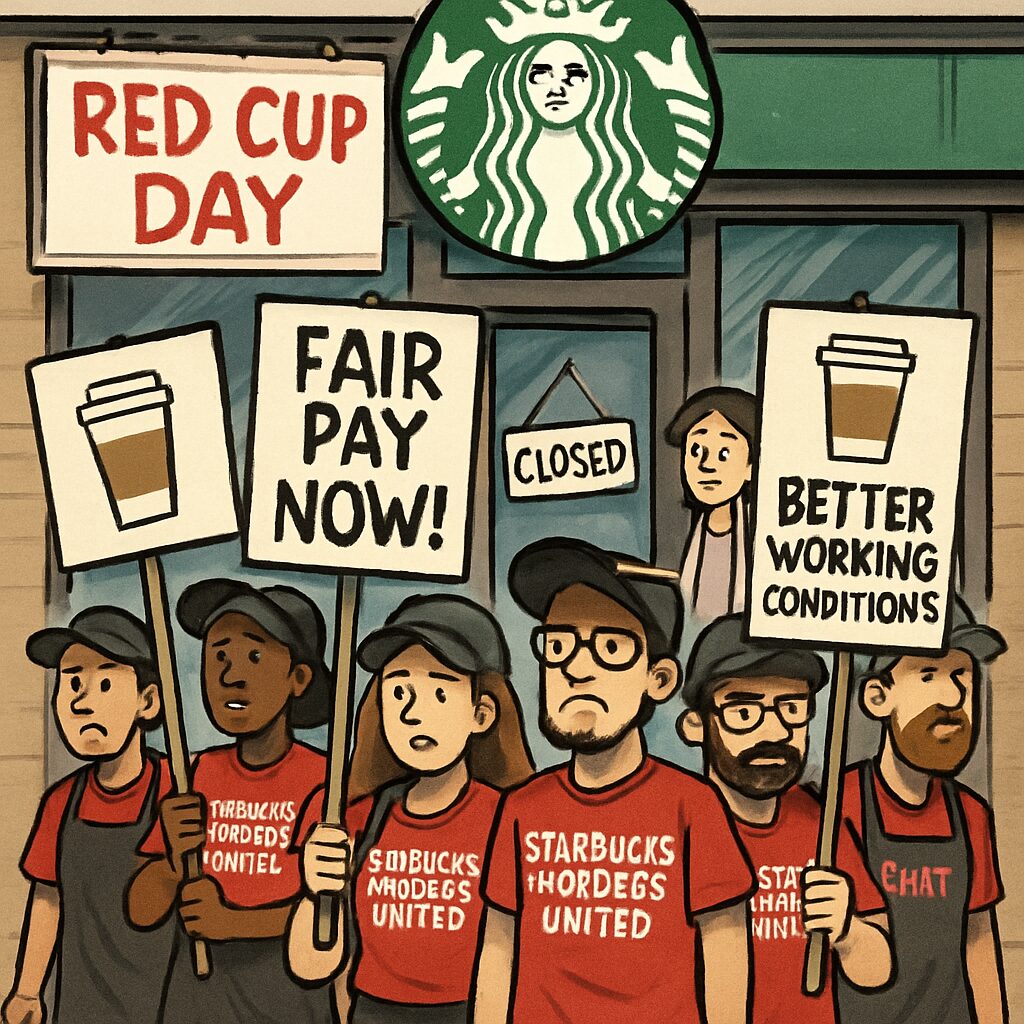
Starbucks baristas are striking across the United States today, demanding better pay and working conditions, which could impede the company’s ongoing recovery efforts amid persistent labor tensions. The walkout, expected to affect stores in at least 25 cities, is timed to coincide with Starbucks’ Red Cup Day, a key holiday sales event where free reusable cups are distributed. This strategic timing aims to maximize visibility and pressure on the company, as picket lines may greet customers during one of the busiest periods. Unionized workers, represented by Starbucks Workers United, are protesting what they describe as unfair labor practices and stalled contract negotiations after more than a year of bargaining.
Baristas cite increased workloads under Starbucks’ new turnaround policies, which include faster service mandates and stricter dress codes, as key grievances. Michelle Eisen, a union spokesperson and former barista, emphasized that daily operations have become excessively demanding, with workers feeling run into the ground. The union, which represents employees at over 600 U.S. stores, is calling for higher wages, improved staffing levels, and resolutions to hundreds of unresolved unfair labor practice charges. In a related action, baristas at the Downtown Disney location in Anaheim went on strike over the weekend, closing the store and highlighting the nationwide scope of the dispute.
In response, Starbucks has stated that it does not anticipate significant disruptions at the vast majority of its 10,000 company-operated stores. Executive Sara Kelly, the chief partner officer, accused the union of walking away from negotiations and reiterated the company’s readiness to resume talks. Starbucks maintains that it offers competitive pay and benefits, with an average hourly wage of $30, and attributes low staff turnover to these conditions. The company blames the union for stalled talks, arguing that demands for pay increases would negatively impact store operations and customer experience.
This strike marks the third major labor action since Starbucks Workers United formed four years ago, reflecting ongoing friction despite the arrival of CEO Brian Niccol last September. Niccol, known for turnarounds at Chipotle and Taco Bell, has implemented a ‘Back to Starbucks’ strategy focused on customer experience improvements, such as reintroducing comfy seating and banning non-customer bathroom use. However, these changes have been accompanied by store closures, layoffs, and the sale of a majority stake in the China business, exacerbating labor tensions. Union leaders say relations improved briefly last year but stalled under Niccol’s leadership.
The labor unrest poses both operational and reputational risks for Starbucks, which reported its first quarterly sales growth in nearly two years last month but saw flat sales in the U.S. Analysts like Laurence Newell of Brand Finance note that Starbucks’ brand strength has declined to its lowest since 2016, partly due to customer perception issues linked to employee dissatisfaction. Stephan Meier, a Columbia Business School professor, stressed that happy employees are crucial for customer satisfaction, warning that top-down approaches may fail. The strike on Red Cup Day could further alienate customers already concerned about high prices and service delays.
Political pressure is mounting, with over 80 Democrats in Congress recently sending letters to Niccol, accusing Starbucks of union-busting and urging good-faith bargaining. Management adviser Joe Pine expressed surprise that Niccol has not prioritized resolving labor issues, given their importance to operational stability. The union has indicated that baristas are prepared to escalate actions if no progress is made, potentially leading to more widespread strikes. In Southern California, additional locations may join the walkout, as seen in the Downtown Disney case.
Looking ahead, the outcome of this strike could significantly influence Starbucks’ recovery trajectory. If resolved quickly, it might bolster consumer confidence and operational efficiency; prolonged disputes, however, could exacerbate sales challenges and alienate both workers and customers. The company’s ability to navigate these labor tensions while executing its turnaround plan will be critical in determining its future market position. Investors and industry watchers will closely monitor how Starbucks balances its growth ambitions with the demands of its workforce.

