

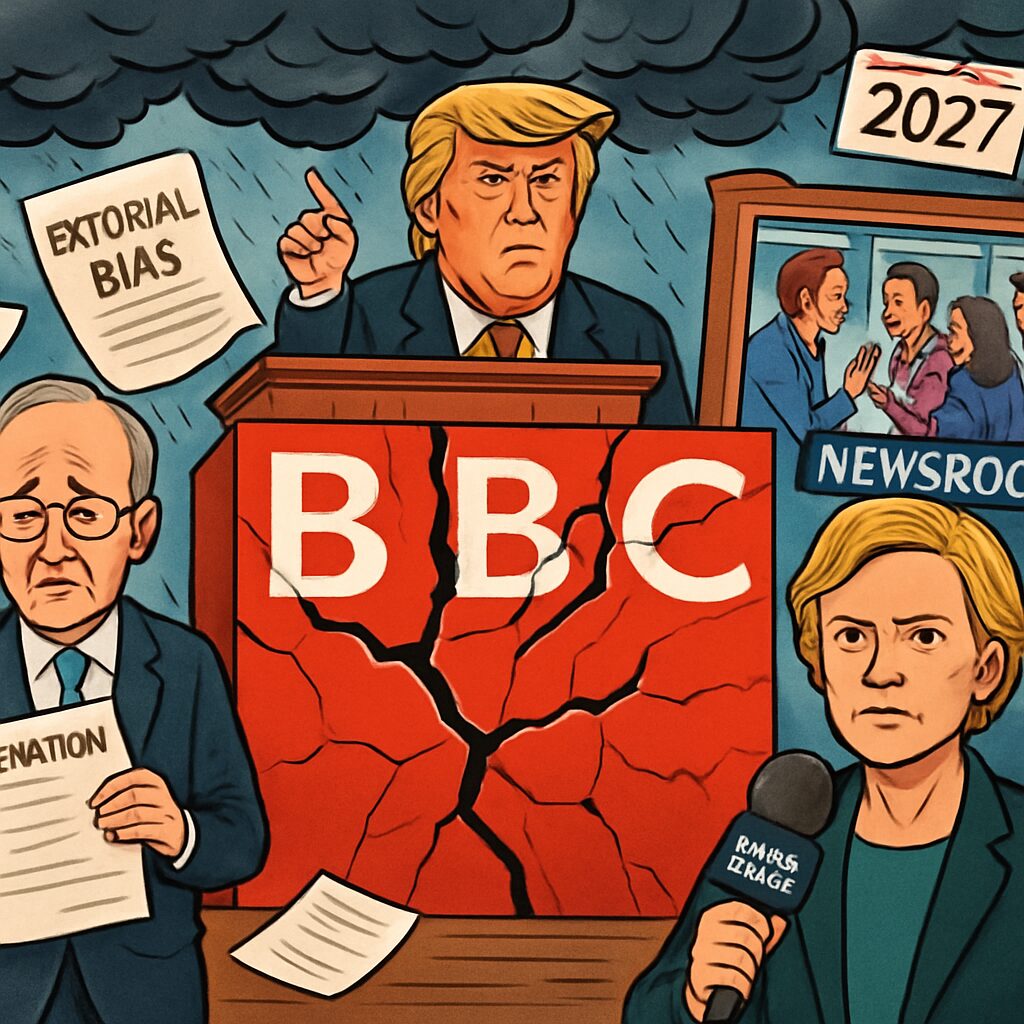
The British Broadcasting Corporation (BBC) is embroiled in a profound crisis after the simultaneous resignations of its director general Tim Davie and news chief Deborah Turness, triggered by a misleading edit in a documentary about Donald Trump. This has led to a $1 billion lawsuit threat from the former president and highlighted systemic issues within the institution.
The resignations occurred on Sunday, following a week of escalating controversy after an internal report by former standards adviser Michael Prescott was leaked to the Daily Telegraph. The report detailed editorial failings, including bias in coverage of Trump, the Israel-Hamas war, and transgender issues, accusing the BBC of institutional left-leaning bias. This leak intensified scrutiny and exposed deep divisions within the organization’s leadership.
Central to the scandal is a Panorama documentary aired before the 2024 US presidential election, which spliced parts of a Trump speech to make it appear he encouraged the January 6th Capitol riot. The BBC admitted this was an ‘error of judgement’ and apologized, but Trump’s lawyers demanded a retraction and apology by November 14th, threatening a lawsuit for no less than $1 billion if not complied with. This legal threat adds financial and reputational pressure to an already strained broadcaster.
The leak of the memo and the subsequent resignations have exposed rifts within the BBC’s leadership. Media correspondent Katie Razzall and political presenter Nick Robinson reported clashes between news executives and the board, with board member Robbie Gibb, a former Conservative spokesman, allegedly criticizing the news output. Chairman Samir Shah denied blocking an apology but acknowledged robust debates, highlighting internal tensions over editorial control and response timing.
In response, Shah apologized for the Trump edit and defended the BBC’s impartiality, citing surveys that show high public trust. However, the corporation faced criticism for its delayed response, with some insiders arguing that apologies should have been issued earlier to mitigate the damage. The crisis has sparked concerns about the BBC’s ability to maintain objectivity and accountability in its journalism.
The scandal comes at a critical time as the BBC prepares for a charter review in 2027, which will determine its funding model. The licence fee, paid by TV-owning households, is under scrutiny due to declining subscriptions and competition from streaming services, raising questions about the broadcaster’s future sustainability. This financial uncertainty compounds the leadership vacuum left by the resignations.
Supporters of the BBC, including some staff and media commentators, believe the scandal was orchestrated by political and commercial opponents to undermine public service broadcasting. Figures like former prime minister Boris Johnson fueled the controversy, while economists like Diane Coyle labeled it a crisis created by opponents. This perspective suggests external forces are exploiting internal weaknesses to challenge the BBC’s role.
The resignations leave the BBC without key leaders as it navigates this turmoil, emphasizing the need for robust leadership to restore trust and steer through the legal and political challenges ahead. The event underscores broader tensions in media integrity and the role of public broadcasters in an increasingly polarized landscape, with implications for how such institutions adapt to modern pressures.

