

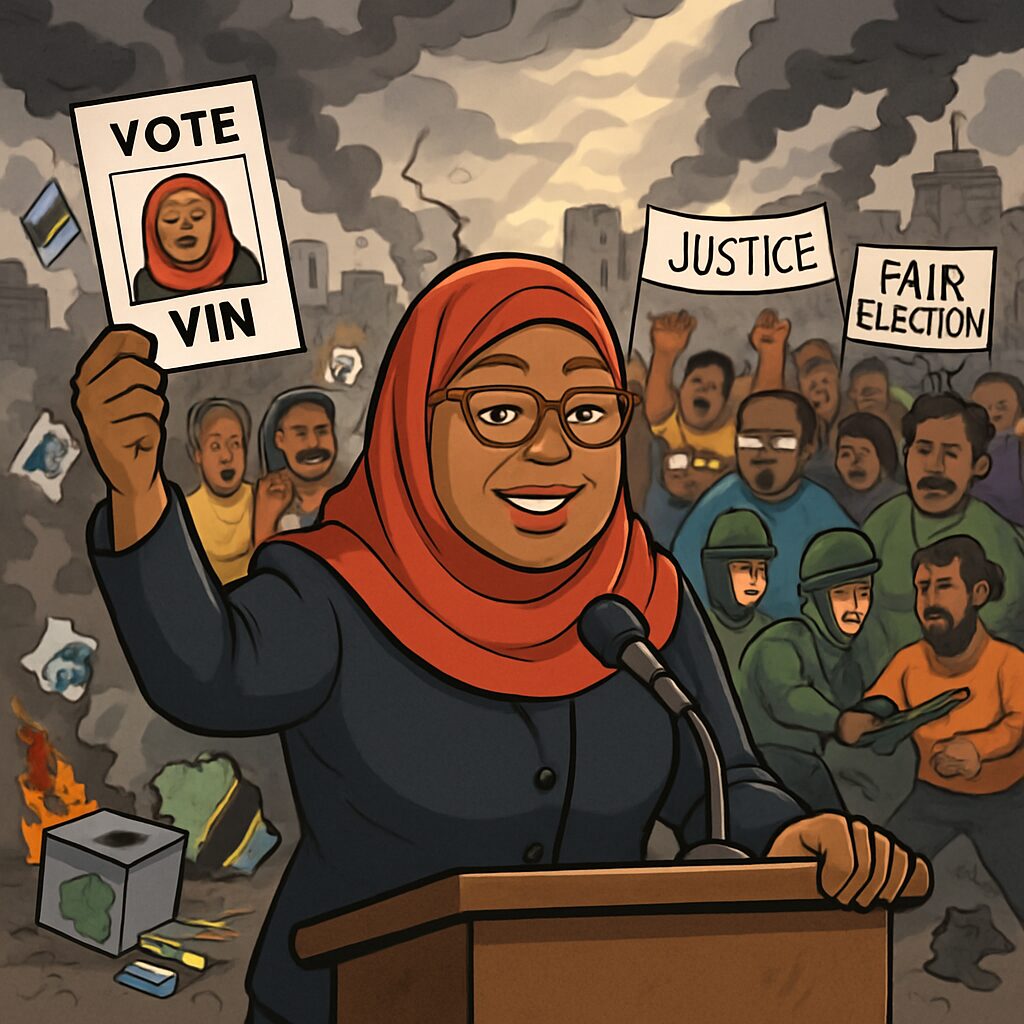

Tanzania’s President Samia Suluhu Hassan has been re-elected with an overwhelming 98% of the vote, but the victory has been marred by violent protests and reports of hundreds of deaths, raising international alarm over democratic integrity and human rights abuses. The election, held on Wednesday, saw high voter turnout, but opposition leaders rejected the results as fraudulent, citing the exclusion of main challengers and widespread unrest that has left the nation in turmoil.
Samia Suluhu Hassan, Tanzania’s first female president, was declared the winner on Saturday by the electoral commission, securing approximately 31.9 million votes out of a nearly 87% turnout among 37.6 million registered voters. In her victory speech, she praised security forces for ensuring voting proceeded despite the violence and condemned protesters as “unpatriotic,” while asserting the election was free and democratic. The announcement followed days of tension, with the electoral chief officially certifying her win amid a backdrop of escalating demonstrations across the country. Samia, who took office in 2021 after the death of her predecessor, emphasized the government’s commitment to stability, but her claims of a fair process were immediately contested by opposition groups and international observers.
Opposition parties, including Chadema and ACT-Wazalendo, have vehemently rejected the election results, labeling them a sham due to the systematic suppression of key challengers. Tundu Lissu, a prominent opposition figure, was imprisoned on treason charges he denies, while Luhaga Mpina was barred from running on legal technicalities, leaving only 16 fringe parties with minimal public support to compete. This exclusion fueled accusations that the ruling Chama Cha Mapinduzi (CCM) party, which has dominated Tanzanian politics since independence, orchestrated an unfair electoral environment. The opposition’s spokesperson claimed that the vote lacked transparency and was designed to ensure Samia’s uncontested victory, echoing concerns raised by human rights organizations ahead of the poll.
Violent protests erupted in multiple cities, including Dar es Salaam and Arusha, where demonstrators tore down campaign posters, attacked polling stations, and clashed with police and security forces. Reports from opposition sources and diplomatic channels indicate that hundreds of people have been killed in the unrest, with Chadema alleging around 700 fatalities and a diplomatic source confirming at least 500 deaths, though the exact toll remains unverified due to a nationwide internet shutdown. The government, however, has downplayed the violence, describing it as isolated incidents and crediting security forces with swift action to restore order. Foreign Minister Mahmoud Kombo Thabit dismissed the scale of the casualties, but the widespread reports of fatalities have intensified scrutiny from global watchdogs.
In response to the escalating crisis, authorities extended a curfew in major urban areas and imposed an internet blackout, severely hampering independent verification of events and communication among protesters. The army chief had earlier warned demonstrators to end the unrest, but the measures have been criticized for exacerbating the situation and suppressing freedom of expression. The internet shutdown, in particular, has made it difficult to assess the full extent of the violence and casualties, with aid groups and journalists struggling to gather accurate information. Despite government assurances, the curfew and shutdown have fueled further anger among citizens, especially youth-led protesters who see the election as a symbol of democratic backsliding.
International reactions have been swift and critical, with United Nations Secretary-General Antonio Guterres expressing deep concern over the reports of deaths and injuries and urging all parties to prevent further escalation. Countries including the UK, Canada, and Norway have issued statements citing credible evidence of numerous fatalities and injuries, calling for restraint and accountability from Tanzanian authorities. Observers from organizations like Amnesty International had previously warned of a “wave of terror” involving enforced disappearances and extrajudicial killings, allegations the government denies. The global community’s focus now centers on pushing for independent investigations into the electoral process and the violent crackdown, with potential implications for Tanzania’s international relations and aid.
The election unfolds against a historical context of CCM’s unbroken rule since independence, with Samia’s presidency initially seen as a step toward reform after the authoritarian tenure of John Magufuli. However, her hesitant reforms and the suppression of opposition have fueled political anger, particularly among young Tanzanians who demand greater democratic freedoms. In Zanzibar, the semi-autonomous region, the incumbent president Hussein Mwinyi also won re-election amid fraud allegations from the opposition, highlighting broader issues of governance and accountability. The current unrest reflects deep-seated frustrations over economic inequality, corruption, and the concentration of power, which have been simmering for years and now threaten to destabilize the nation further.
Looking ahead, the situation remains highly volatile, with tensions persisting in urban centers and the potential for renewed protests as the government seeks to consolidate its control. Samia’s administration faces the dual challenge of addressing the root causes of the unrest, such as political exclusion and human rights concerns, while navigating international pressure for transparency and justice. The opposition has called for sustained resistance, and the death toll could rise if security forces continue their crackdown. Ultimately, the outcome of this crisis will shape Tanzania’s democratic trajectory, with implications for regional stability in East Africa and the credibility of future elections under Samia’s leadership.