

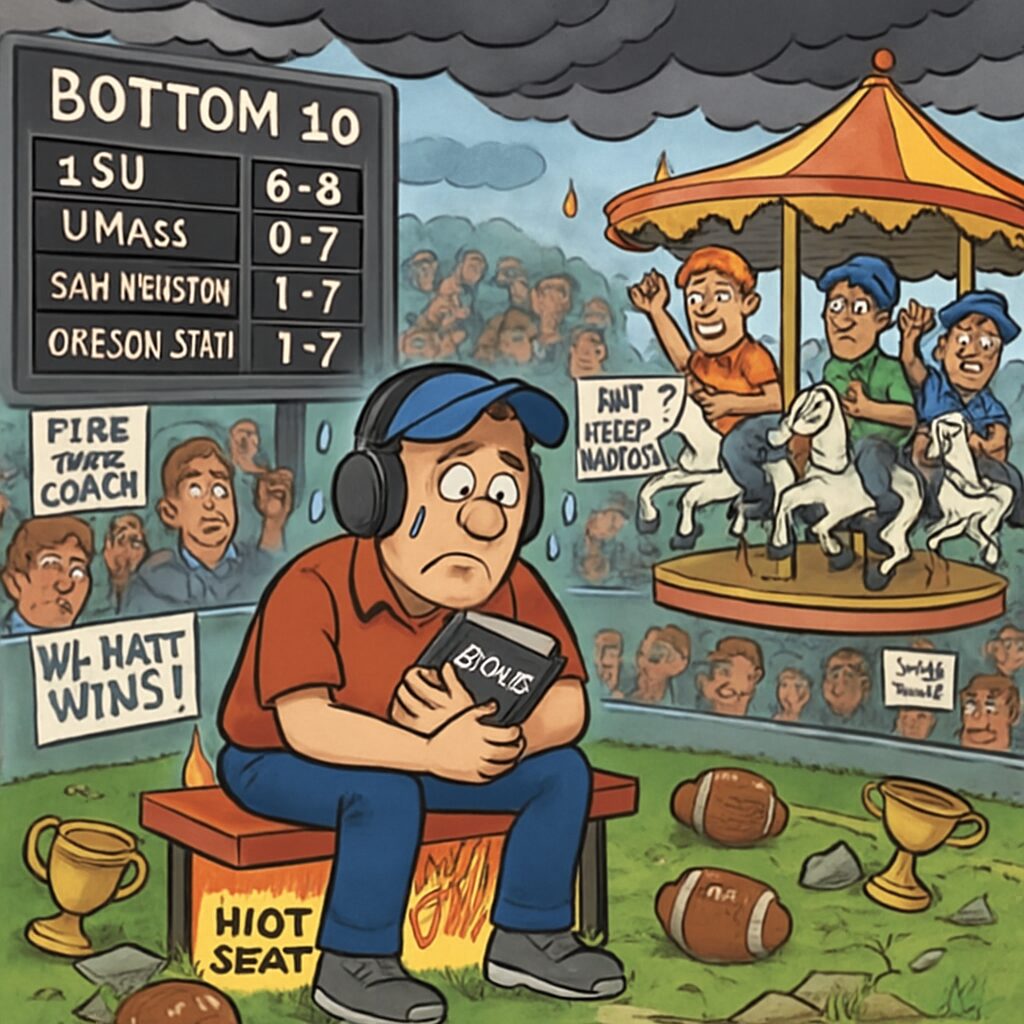

The latest College Football Bottom 10 rankings after Week 9 underscore the mounting pressure on coaches across several programs, with LSU’s recent firing of Brian Kelly highlighting the volatile coaching carousel. This weekly feature by ESPN identifies the most struggling teams, emphasizing how poor performances are intensifying scrutiny on leadership and potentially triggering more changes as the season progresses.
The Bottom 10 list, compiled by Ryan McGee, includes programs like UMass (0-8), Sam Houston (0-7), and Oregon State (1-7), each grappling with winless or near-winless records that have fueled fan discontent and administrative impatience. These teams face a combination of on-field struggles, such as lopsided losses and inconsistent play, exacerbating the challenges for coaches already under fire. For instance, UMass’s loss to Central Michigan and Sam Houston’s ongoing woes illustrate how prolonged losing streaks can quickly erode job security, even in mid-major conferences.
LSU’s inclusion in the Bottom 10, despite a 5-3 record, stems from the abrupt dismissal of head coach Brian Kelly, who was fired after a home loss to Texas A&M. Kelly’s tenure, which began in 2022, failed to meet the high expectations set by the program, culminating in a decision that reflects the cutthroat nature of Power 4 football. His firing, reported by multiple outlets including LSU’s official athletics site, signals that even coaches at prestigious programs are not immune to rapid turnovers, especially amid fan and booster dissatisfaction.
Other teams highlighted for coaching hot seats include Georgia State (1-7), Charlotte (1-7), and Oklahoma State (1-7), where similar patterns of underperformance have raised questions about long-term viability. Georgia State, for example, lost back-to-back games to rivals, while Charlotte’s struggles have made them a fixture in discussions about program rebuilds. These situations often involve factors like recruiting misses, player development issues, and financial pressures that compound on-field results.
The context of Week 9 results adds to the urgency, as losses by teams like Nevada (1-7) and Middle Tennessee State (1-6) in close contests have only heightened frustrations. Nevada’s roller-coaster season, with narrow defeats followed by blowouts, exemplifies how unpredictable outcomes can accelerate calls for change. Meanwhile, the waiting list of teams like Tulsa and Colorado State suggests that the coaching carousel could expand further, affecting even those with modest expectations.
Broader implications for college football include the financial and emotional toll of coaching changes, with buyouts and recruiting disruptions potentially altering team dynamics for years. The concentration of firings in October, as seen with Kelly and others, aligns with historical trends where mid-season evaluations lead to swift actions. This environment forces athletic directors to balance patience with the demand for immediate improvement, often in highly publicized settings.
Looking ahead, the focus shifts to how these programs will navigate the remainder of the season, with interim coaches and potential hires influencing morale and performance. For teams in the Bottom 10, upcoming games against peers offer chances for redemption, but continued losses could cement decisions already in motion. The evolving landscape underscores that in modern college football, no seat is too cold to heat up unexpectedly, shaping the future of numerous programs and careers.