

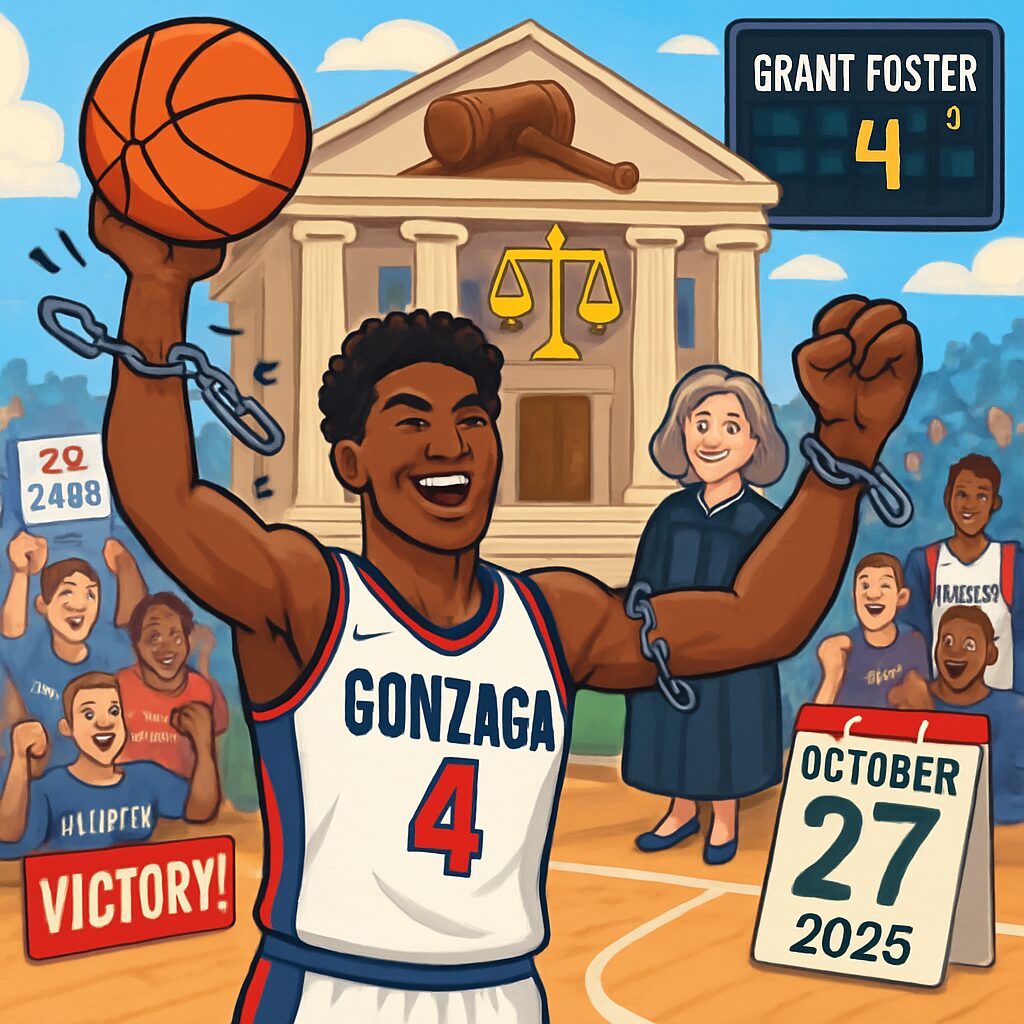

Tyon Grant-Foster has been granted a preliminary injunction by a Spokane County judge, allowing him to play for the Gonzaga Bulldogs this season after the NCAA denied his eligibility waiver. The decision was made on October 27, 2025, just in time for him to participate in Gonzaga’s exhibition game.
The ruling came after a 2.5-hour hearing in Spokane County Superior Court, where Judge Marla Polin sided with Grant-Foster, enabling him to immediately suit up for the team. Grant-Foster, a 25-year-old forward, had filed a lawsuit against the NCAA earlier in October after multiple appeals for a waiver were rejected. His legal team argued that he deserved an additional year of eligibility due to a blanket waiver for junior college transfers and the severe health issues he faced during his career.
Grant-Foster’s basketball journey has been marked by adversity. He began at Indian Hills Community College before transferring to Kansas, then to DePaul, where he collapsed at halftime of his first game in 2021 due to a heart condition. This led to multiple surgeries and a 16-month absence from the sport. He made a remarkable comeback at Grand Canyon University, earning WAC Player of the Year honors in 2023-24 and leading his team to NCAA Tournament success.
In court, attorneys Carl Oreskovich and Elliot Abrams presented arguments based on antitrust laws and the “Pavia rule,” which grants extra eligibility to former junior college athletes. They emphasized the irreparable harm Grant-Foster would face if denied play, contrasting it with minimal impact on the NCAA. The NCAA’s representative, Matthew Ralph, defended the eligibility rules as essential for competitive integrity, citing examples like gender restrictions in sports.
Judge Polin’s injunction not only allows Grant-Foster to play but also includes a provision against the NCAA’s restitution rule, meaning any wins or awards won’t be retroactively voided if an appeal succeeds. This safeguard ensures that Gonzaga’s season results remain intact regardless of future legal outcomes. The ruling was delivered shortly before Gonzaga’s exhibition against Western Oregon, allowing Grant-Foster to rush to the arena and make a dramatic entrance.
The emotional weight of the decision was palpable, with Grant-Foster tearing up in court and receiving support from coach Mark Few and teammates. After the hearing, he expressed relief, saying, “I can sleep now,” and quickly joined the team, scoring four points in nine minutes during the game. Fans and students cheered enthusiastically, highlighting the community’s backing for his return.
For Gonzaga, ranked No. 21 preseason, Grant-Foster adds depth and experience to the frontcourt, potentially starting alongside Graham Ike and Braden Huff. His versatility and scoring ability could be crucial as the team aims for another strong NCAA Tournament run. The Bulldogs open their regular season on November 3 against Texas Southern, with Grant-Foster now cleared to contribute fully.
This case underscores ongoing tensions between athletes and the NCAA over eligibility rules, particularly for those with exceptional circumstances. Similar legal challenges have arisen in recent years, reflecting a broader push for athlete rights and flexibility in collegiate sports. Grant-Foster’s victory may set a precedent for other players facing similar hurdles.
Looking ahead, the NCAA could appeal the decision, but any review would likely occur after the season, minimizing disruption. For now, Grant-Foster can focus on basketball, bringing a story of resilience and legal triumph to the court.