

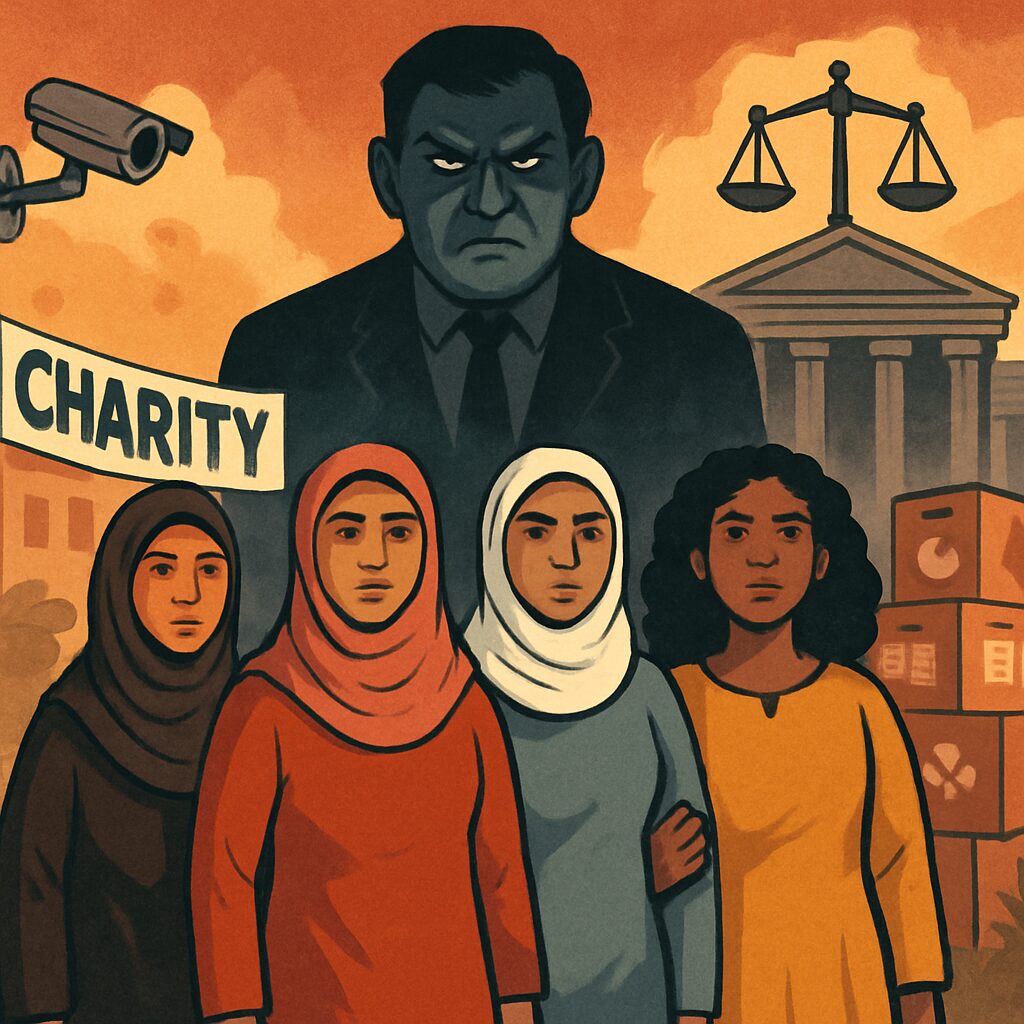

A Turkish charity owner has been arrested on charges of sexual abuse following a BBC investigation that uncovered allegations he exploited Syrian refugee women by demanding sex in exchange for aid. Survivors of the abuse have expressed that the arrest brings them strength and hope for justice, with one woman stating it “gives courage and strength to all women who are being exploited.”
The arrest of Sadettin Karagoz, who operated the Hope Charity Store in Ankara’s Altindag district, home to thousands of Syrian refugees, came after a detailed BBC probe revealed a pattern of sexual misconduct spanning several years. Karagoz, a retired bank worker, founded the charity in 2014 and was initially seen as a savior by many desperate refugees, but the investigation exposed a darker side to his operations.
Three women, whose identities were protected, shared harrowing accounts with the BBC. Madina, a mother of three abandoned by her husband, said Karagoz grabbed and kissed her when she went to his office for help, and she only escaped by yelling. Nada, a 27-year-old refugee, alleged that Karagoz demanded she go to an empty flat with him for aid and later forced her to touch his genitals. Batoul, now in Germany, reported that he groped her when she turned to pick up supplies.
Despite previous accusations in 2019 and 2025, prosecutors dropped the cases due to lack of evidence, as victims feared coming forward. Police noted that witnesses were unwilling to testify, often due to fears of deportation or social stigma. However, the BBC’s investigation, which included testimonies from seven other people, prompted two more women to file official complaints, leading to the current charges.
Karagoz vehemently denies all allegations, arguing that the aid distribution area is crowded and monitored by CCTV, making solitary encounters impossible. He also cited health issues, including diabetes and the removal of his left testicle in 2016, claiming he is incapable of sexual activity. However, urology expert Professor Ates Kadioglu told the BBC that such a condition does not affect sexual function, and the assaults may stem from a desire for power rather than sexual urge.
The women involved have expressed relief at the arrest. Batoul said she is “truly happy” for herself and others who suffered in silence, hoping it empowers more victims to speak out. The case has sparked discussions on the safety of refugees and the accountability of aid organizations, with implications for future oversight and legal actions.
As Karagoz remains in jail awaiting trial, the focus shifts to the judicial process and its potential to deliver justice. This case underscores the critical need for protective measures for vulnerable populations and robust mechanisms to investigate abuse within charitable institutions.