

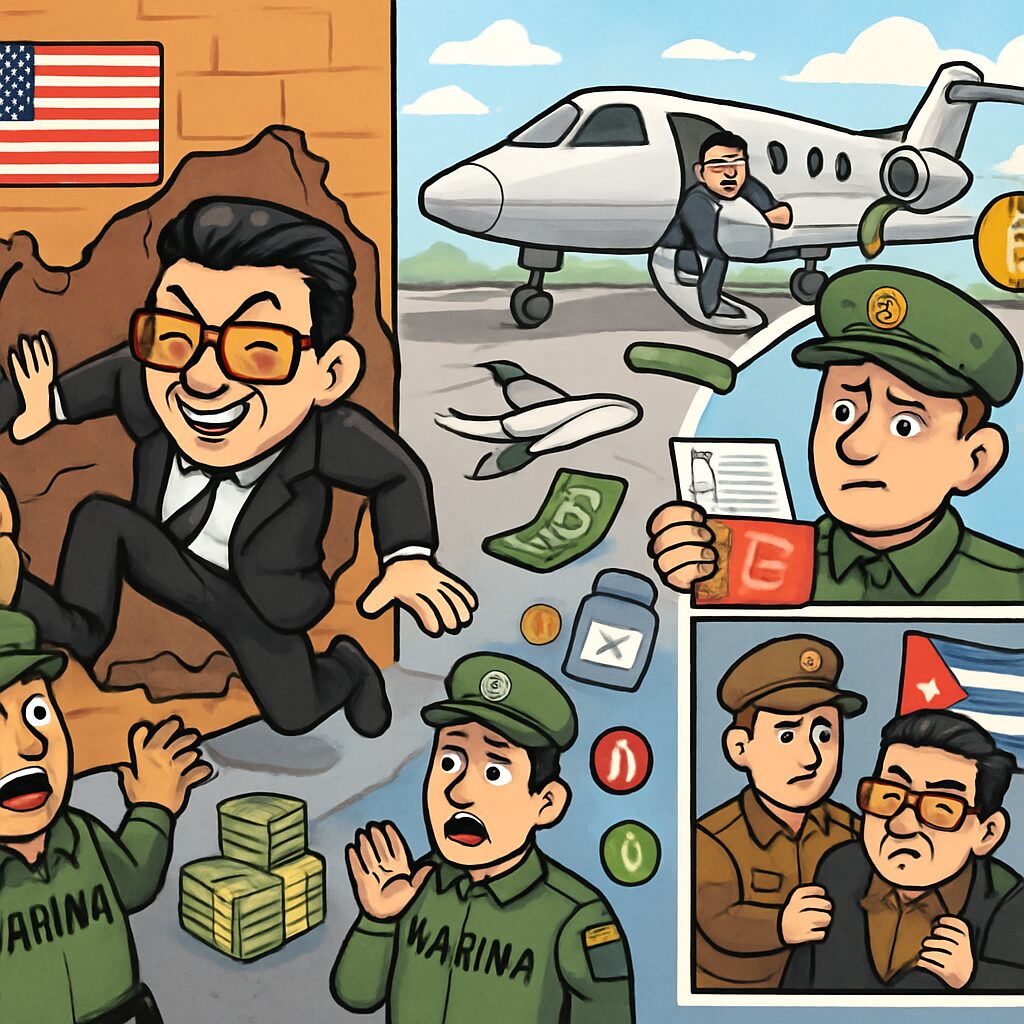

Suspected Chinese drug kingpin Zhi Dong Zhang, known as Brother Wang, has been captured after a bold escape from house arrest in Mexico City, leading to his extradition to the United States on charges of fentanyl trafficking and money laundering. This development represents a key success in international efforts to disrupt global drug networks, though experts question its long-term impact on the illicit trade.
Zhi Dong Zhang was initially arrested in a joint security operation in Mexico City in October 2024, where he was held in a maximum-security prison before being controversially granted house arrest by a judge. Mexican President Claudia Sheinbaum denounced the decision as outrageous, and it set the stage for his daring escape. Reports indicate he fled through a hole in a wall, evading guards, and swiftly boarded a private jet bound for Cuba, demonstrating the audacity that has characterized high-profile drug fugitives in the past.
From Cuba, Zhang attempted to reach Russia using falsified documents, aiming to find refuge in a country with no extradition treaty with the U.S. However, his plan unraveled when Russian immigration authorities detected the counterfeit papers and denied him entry. After a brief detention, he was returned to Cuba, where security services, now aware of his true identity, took him into custody. This twist of fate highlighted the vulnerabilities in his escape route and the role of international cooperation in apprehending fugitives.
Following his return to Havana, Cuban authorities held Zhang for several months, conducting extensive interrogations before extraditing him back to Mexico. Mexican Security Secretary Omar Harfuch publicly thanked Cuba for its cooperation, which helped avert further embarrassment for Mexico’s justice system. Subsequently, Zhang was extradited to the United States, where he faces a litany of charges related to drug trafficking and money laundering, accused of being a pivotal figure in a transnational criminal enterprise.
U.S. prosecutors allege that Zhang masterminded a vast network facilitating the flow of fentanyl precursors from China to Mexico and into the United States, while also laundering millions of dollars for powerful cartels like the Sinaloa and New Generation Jalisco Cartel (CJNG). Former DEA agent Mike Vigil described him as a critical link between Mexican cartels and Chinese chemical suppliers, emphasizing his role in converting drug proceeds into cryptocurrency to obscure financial trails. If convicted, Zhang could face life imprisonment in a high-security U.S. facility, similar to other notorious kingpins.
The capture has been met with satisfaction in Washington, reinforcing the security partnership between the U.S. and Mexico under the administrations of President Donald Trump and President Claudia Sheinbaum. Over the past year, Sheinbaum’s government has intensified efforts against drug trafficking, increasing fentanyl seizures and extraditing numerous cartel members to the U.S. This cooperation has helped stave off potential trade tariffs from the Trump administration, underscoring the diplomatic stakes involved in cross-border security initiatives.
Despite the symbolic victory, analysts caution that Zhang’s removal is unlikely to significantly dent the global drug trade. Vigil noted that cartels have already adapted to his absence, with replacements readily available to assume his functions. The case echoes past captures, such as that of Joaquin ‘El Chapo’ Guzman, which did little to curb drug flows, highlighting the resilient and decentralized nature of these criminal organizations. Ongoing challenges include stemming the supply of precursor chemicals and addressing root causes like demand and corruption.
Looking ahead, Zhang is expected to undergo legal proceedings in the U.S., where his trial will scrutinize the intricacies of international drug trafficking. Meanwhile, the episode serves as a reminder of the persistent efforts required to combat organized crime, with authorities continuing to focus on dismantling networks through enhanced intelligence and multilateral agreements. The outcome may influence future strategies in the protracted war against drugs, but lasting solutions will demand sustained global commitment beyond individual arrests.