
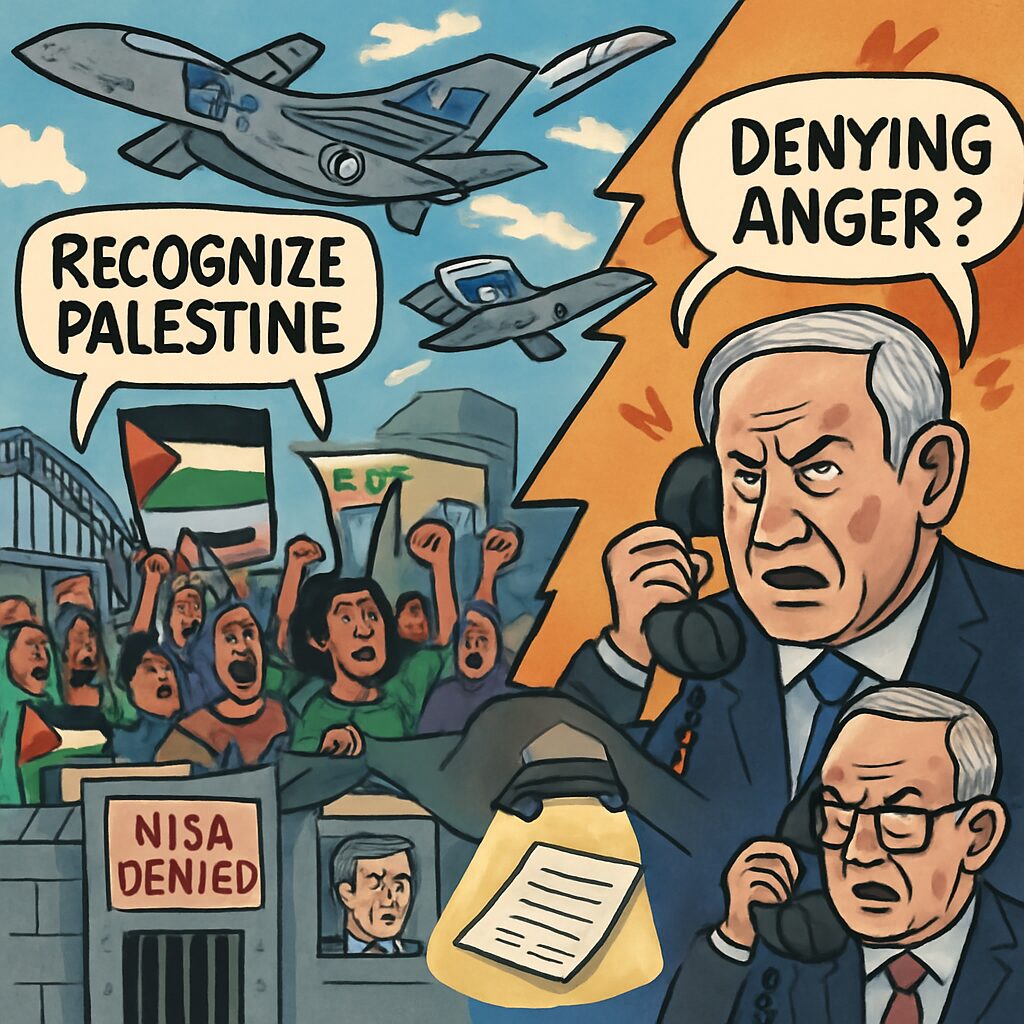
Australia-Israel diplomatic relations have deteriorated to an unprecedented low following Australia’s move to conditionally recognize a Palestinian state, amid ongoing protests and diplomatic exchanges. Tens of thousands of Australians participated in protests across capital cities on August 24, demanding stronger government action against Israel’s operations in Gaza. This followed a massive demonstration on Sydney Harbour Bridge on August 3, one of the largest in Australian history, calling for sanctions and an end to the arms trade. In response to growing public outrage and international pressure, Prime Minister Anthony Albanese announced on August 18 that Australia would conditionally recognize a Palestinian state, aligning with similar moves by the UK, France, and Canada. Albanese cited a phone call with Netanyahu where the Israeli leader appeared “in denial” about the humanitarian crisis in Gaza. Israeli Prime Minister Benjamin Netanyahu strongly criticized the decision, accusing Albanese of pouring “fuel on this antisemitic fire” and describing it as “appeasement” towards Hamas. In a letter, Netanyahu made harsh remarks, and later in interviews, he called Albanese a “weak politician” who betrayed Israel. The diplomatic spat escalated with Australia denying entry to far-right Israeli politician Simcha Rothman, and Israel revoking visas of Australian representatives to the Palestinian Authority. These actions marked a significant downturn in bilateral relations. Despite the public friction, Australia continues to supply components for Israel’s F-35 fighter jets, which are used in Gaza operations. The Australian government denies providing lethal arms, stating that the parts are non-lethal, but this still constitutes part of the arms trade under UN definitions. Domestic reactions are mixed; pro-Palestinian activists see the recognition as insufficient and symbolic, while Jewish community leaders express disappointment. Both sides criticize the government’s handling, highlighting the complex domestic landscape. In a recent development, Australia expelled Iran’s ambassador over allegations of directing antisemitic attacks, a move applauded by Israel but denied by Australia to be influenced by Israeli interference. This incident underscores the delicate diplomatic balance Australia is attempting to maintain. Experts, such as Ian Parmeter from ANU, note that while relations are at a historic low, the strong human ties between the two countries suggest that the rift is likely temporary and will eventually heal, as the economic and strategic relationship is not severely impacted.


ABOUT US
HeraldTimes.org is a news aggregation and AI-powered publishing platform by Giving Forward, a nonprofit organization that uses cause marketing to generate funding for good causes. By turning readers’ time and attention into charitable impact, Herald Times continues Giving Forward’s mission to make every view and click count for social good.
Contact us: contact@yoursite.com
FOLLOW US
© Newspaper WordPress Theme by TagDiv