

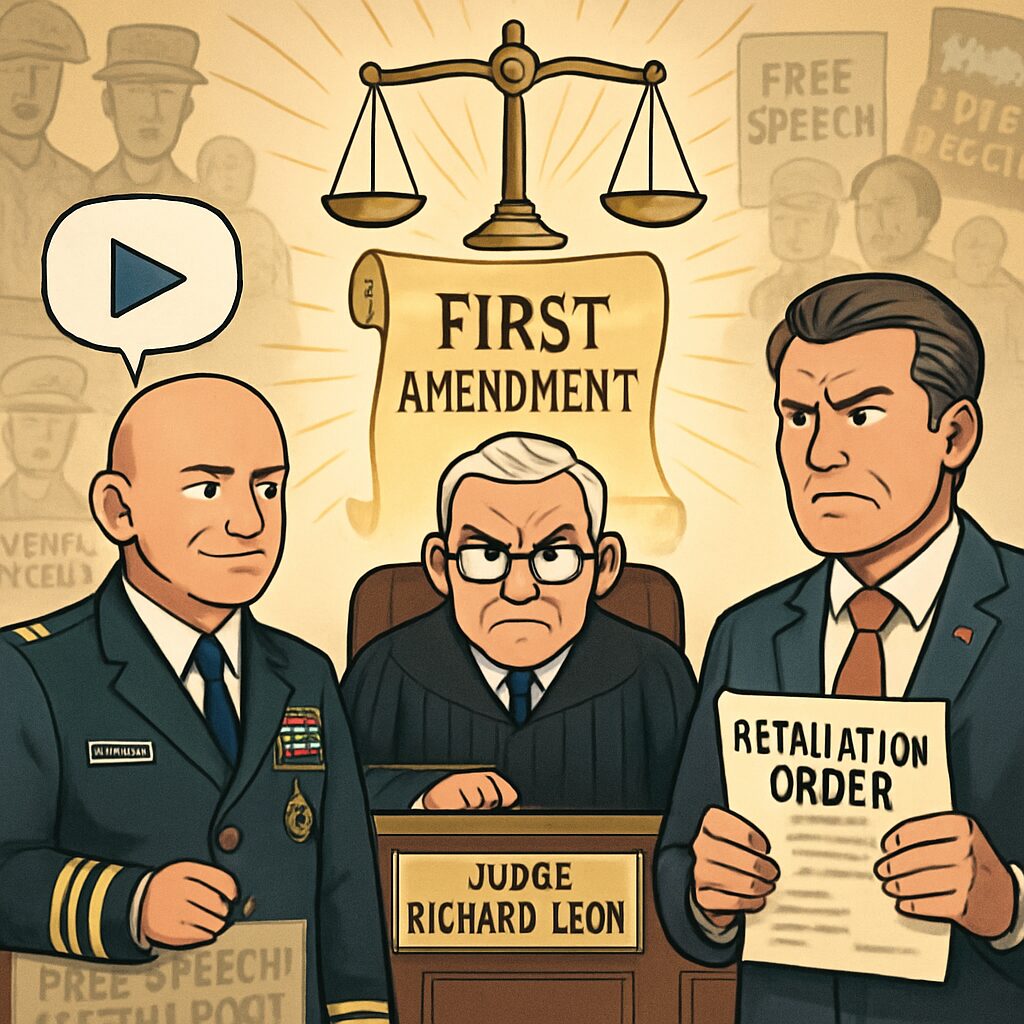
A federal judge ruled Thursday that Defense Secretary Pete Hegseth unlawfully retaliated against Senator Mark Kelly for a video urging service members to refuse illegal orders, blocking punitive actions and upholding First Amendment protections. The decision underscores ongoing legal battles between the Trump administration and its critics.
U.S. District Judge Richard Leon issued a temporary injunction against Hegseth’s attempts to demote Kelly, a retired Navy captain, and issue a formal censure. In a 29-page ruling, Leon described the Pentagon chief’s actions as “unconstitutionally retaliatory” and a violation of Kelly’s free speech rights. The judge emphasized that retired service members retain full First Amendment protections, unlike active-duty personnel. He urged the administration to respect the contributions of veterans to public discourse.
The controversy stems from a video posted in November 2025, in which Kelly and five other Democratic lawmakers with military backgrounds called on troops to disobey orders they deemed illegal. The lawmakers argued that the Trump administration was pitting the military against American citizens and stressed that service members have a duty to refuse unlawful commands. The video prompted fierce criticism from President Donald Trump, who labeled it “seditious behavior” and suggested severe penalties.
In response, Hegseth announced administrative proceedings to reduce Kelly’s rank, which would cut his retirement pay, and issued a censure letter accusing the senator of counseling servicemembers to refuse specific operations. Kelly sued the Defense Department in January, seeking to block these actions and arguing they were retaliatory. Judge Leon’s ruling grants Kelly’s request for a preliminary injunction, halting the demotion process while the lawsuit proceeds.
Hegseth swiftly denounced the decision, posting on social media that it would be “immediately appealed” and reiterating his claim that Kelly’s actions were seditious. Kelly, in a statement, welcomed the ruling but acknowledged the legal fight might continue, vowing to resist administration efforts to silence dissent. The senator highlighted the importance of protecting constitutional rights, especially for those who have served in the military.
This ruling follows a grand jury’s refusal earlier this week to indict Kelly and the other lawmakers on charges of seditious conspiracy sought by federal prosecutors. The dual setbacks indicate the judiciary’s reluctance to endorse the administration’s aggressive tactics against political opponents. Similar cases targeting other critics have been stymied by courts, suggesting a pattern of judicial pushback against perceived overreach.
The case has broader implications for free speech and the role of retired military personnel in public life. Judge Leon warned that retaliating against veterans for speaking out could chill valuable contributions to national debates. He cited a friend-of-the-court brief from former military officials who expressed concern that fear of reprisal is already stifling discourse. Leon’s forceful language underscored the constitutional stakes involved.
Moving forward, the appeal process will likely prolong the legal confrontation, with both sides digging in. The outcome could set precedents for how far the government can go in punishing critics, particularly those with military ties. As political tensions remain high, this case highlights the ongoing struggle over the boundaries of executive power and individual liberties in a polarized era.

