

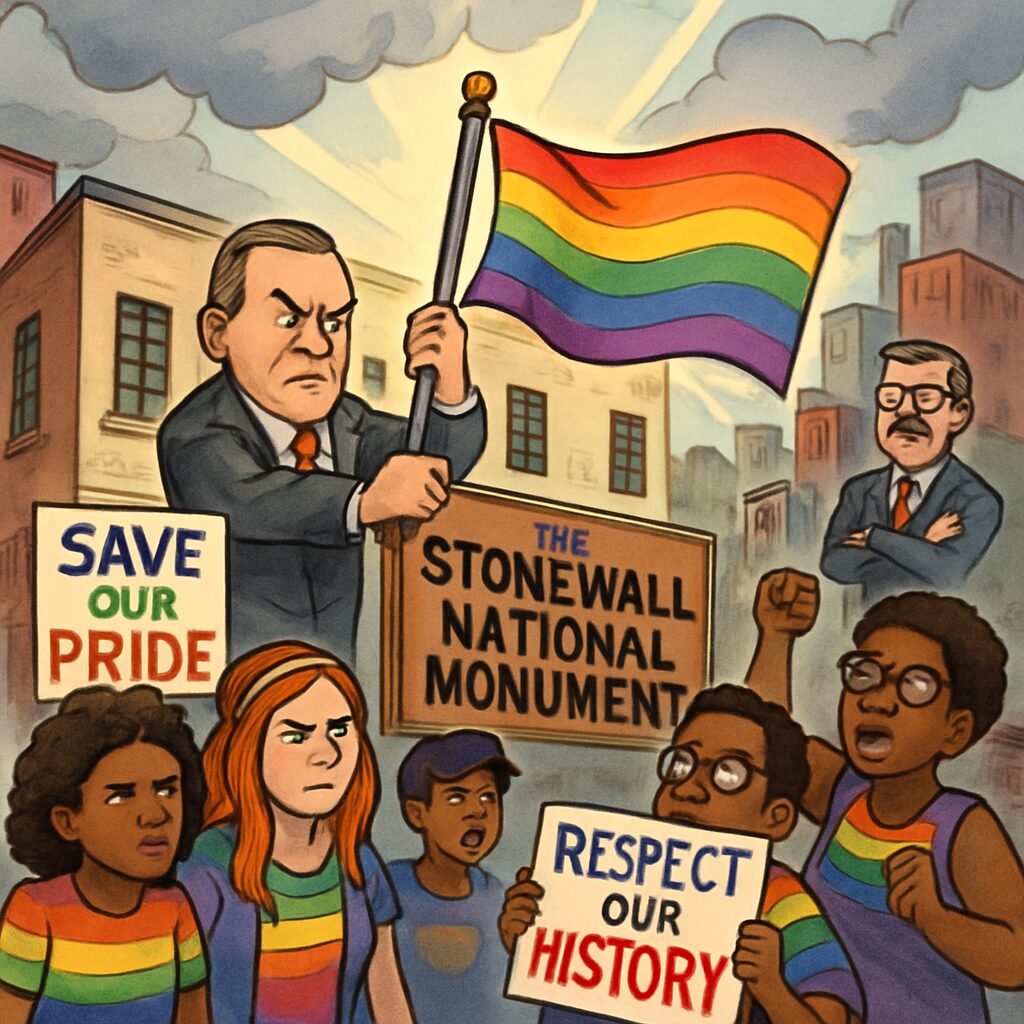
The Trump administration has removed a Pride flag from the Stonewall National Monument in New York City, a move that has drawn sharp criticism from LGBTQ advocates and local officials who see it as an attempt to erase the history of the modern gay rights movement. This action follows a new National Park Service directive restricting the display of non-agency flags on federal properties, part of a broader effort by the administration to impose its political views on cultural institutions.
According to reports from CNN and the Associated Press, the flag was taken down from the monument site in Greenwich Village, which commemorates the 1969 Stonewall uprising that sparked the contemporary LGBTQ rights movement in the United States. The National Park Service, under acting Director Jessica Bowron, issued a memorandum in January prohibiting ‘non-agency flags and pennants’ except for historical, military, or Tribal nation flags. This policy change has led to the removal of the rainbow flag, which had been a symbol of pride and recognition for the LGBTQ community at the landmark.
The Stonewall National Monument, designated by former President Barack Obama in 2016, includes the area around the Stonewall Inn, an iconic gay bar where a police raid in 1969 ignited days of protests and became a catalyst for the fight for LGBTQ equality. The removal of the Pride flag is seen by many as a direct attack on this legacy. New York City Mayor Zohran Mamdani expressed outrage, stating that ‘New York is the birthplace of the modern LGBTQ+ rights movement, and no act of erasure will ever change, or silence, that history.’
Local leaders, including Manhattan Borough President Brad Hoylman-Sigal, have vowed to challenge the removal. Hoylman-Sigal told CNN that he is working to reraise the flag at the site, despite the federal guidance, emphasizing the spirit of resistance that Stonewall represents. Similarly, Senate Minority Leader Chuck Schumer called the action ‘deeply outrageous’ and assured that New Yorkers would ensure the flag’s return, highlighting the community’s determination to preserve its history.
This incident is not isolated but part of a wider pattern under the Trump administration. Since the start of his second term, Trump has issued directives to limit federal recognition to two genders and has overseen the removal of references to transgender and queer people from various agencies. For instance, the National Park Service previously edited web pages for the Stonewall monument to exclude mentions of transgender individuals, and other federal displays related to diversity have been altered or taken down.
The backlash extends beyond New York, with activists nationwide condemning the move as a step backward in the fight for LGBTQ rights. Human rights organizations have pointed out that such actions undermine progress and fuel discrimination. The administration’s approach has been criticized for aligning with conservative political agendas at the expense of inclusive representation in public spaces.
Looking ahead, the conflict over the Pride flag at Stonewall may escalate into a legal or political battle. City officials are preparing to defy the federal order, potentially leading to confrontations with National Park Service personnel. This situation mirrors previous disputes, such as when Philadelphia sued the administration over the removal of an exhibit on slavery, indicating a broader struggle over how history is commemorated in America.
In conclusion, the removal of the Pride flag from the Stonewall National Monument signifies a contentious moment in the ongoing cultural wars, with implications for LGBTQ visibility and historical acknowledgment. As local authorities plan to restore the flag, the event underscores the enduring significance of Stonewall and the resilience of the community it represents. The outcome of this dispute will likely influence future policies on public monuments and the recognition of minority histories in the United States.

