

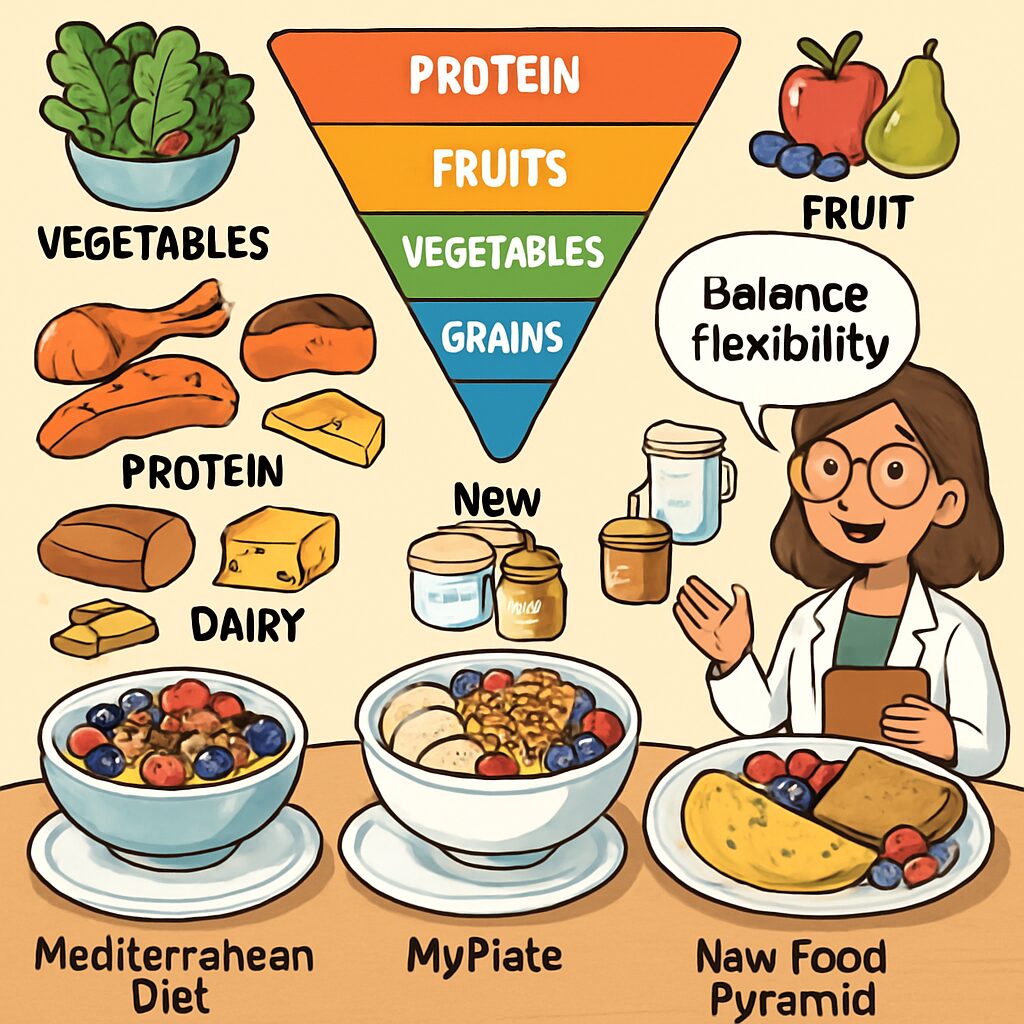
The latest iteration of the US Dietary Guidelines for Americans, unveiled with a visually inverted food pyramid, has sparked discussions on optimal nutrition. In response, registered dietitian Natalie Mokari, based in North Carolina, has crafted comparative daily meal plans that pit the new guidelines against the familiar MyPlate and the acclaimed Mediterranean diet. Published on February 9, 2026, this analysis provides a timely snapshot of how these frameworks translate into real-world eating, helping consumers navigate conflicting advice.
For breakfast, the Mediterranean diet’s focus on whole grains is evident in steel-cut oats topped with berries, flaxseed, and almonds, offering sustained energy and plant-based protein. MyPlate, representing older guidelines, balances low-fat yogurt with banana, berries, and granola, ensuring a quarter of the plate as carbohydrates. The new food pyramid shifts toward protein-rich options like an omelet with cheese and spinach, accompanied by whole-grain toast and berries, emphasizing fruits and vegetables over grains.
Lunch comparisons highlight vegetable priorities: the new pyramid calls for three daily vegetable servings, exemplified by a mixed greens salad with chicken, avocado, and beans. The Mediterranean diet maintains its plant-heavy approach with vegetable soup and whole-grain toast adorned with hummus and feta, while MyPlate incorporates ground turkey tacos with fresh toppings, meeting its recommendation of 2-4 cups of vegetables for adults. All plans uniformly advocate reducing added sugars and processed foods, though the new guidelines are notably stringent, proposing no added sugar for children aged 5-10—a standard Mokari critiques as impractical given its prevalence in packaged foods.
Snack time underscores dairy discrepancies: the Mediterranean diet restricts dairy to one serving daily, shown as Greek yogurt with pears and walnuts; the new pyramid promotes full-fat dairy through cheese sticks with grapes; and MyPlate sticks to low-fat options like apple slices with nut butter. Mokari explains that dairy choices should be tailored to individual health, with lower-fat versions preferable for cardiovascular concerns, but whole milk acceptable in moderation.
Dinner reveals protein emphases: the Mediterranean diet sources lean protein from baked salmon with herbs and a robust salad, MyPlate from chicken with whole-grain pasta and asparagus, and the new pyramid from steak with baked potato and roasted vegetables. The pyramid’s near-doubling of protein recommendations to 1.2-1.6 grams per kilogram of body weight raises flags, as its inclusion of red meat and full-fat dairy may exceed saturated fat limits, potentially endangering those at risk of heart disease.
Mokari’s professional advice transcends any single guideline, emphasizing five core elements: protein, carbohydrates, healthy fats, fruits, and vegetables. She champions whole foods—whether fresh, frozen, or canned—and allows for refined carbohydrates like pasta in moderation. Her recommended meal, baked salmon with brown rice and broccoli, blends the best of all plans, promoting balance and sustainability.
This comprehensive breakdown not only clarifies the new dietary landscape but also empowers individuals to adopt flexible, health-conscious eating habits. By synthesizing insights from multiple reliable sources, it underscores the importance of personalized nutrition in an era of evolving guidelines, encouraging informed choices that align with both health goals and daily realities.

