

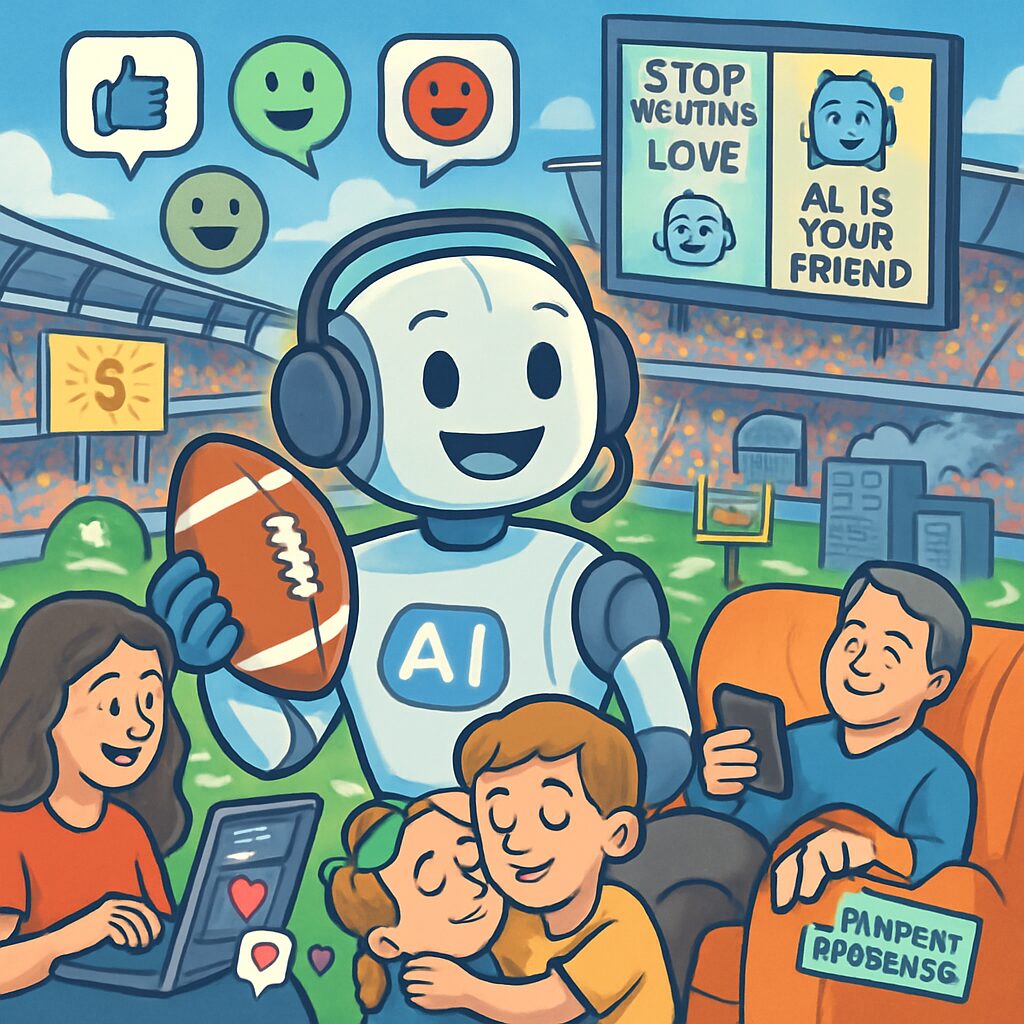
During Super Bowl LX, a series of high-profile advertisements from artificial intelligence companies aimed to reshape public perception by depicting AI as a friendly and helpful companion, directly addressing widespread anxieties about job displacement and social isolation.
The overriding message from the commercials was unmistakable: artificial intelligence is your friend. Ads for services like ChatGPT showed how AI enables average people to write code and build apps without technical training, while other spots featured scenarios like using AI to plan a perfect date meal or comfort a child upset about moving. Actor Mathew Broderick appeared in one ad demonstrating AI’s utility in taking a day off work seamlessly, alleviating fears of job loss. Even AI firm Anthropic participated, though its ad focused on promising an ad-free experience, subtly critiquing rivals like OpenAI.
This concerted push comes amid significant public skepticism. Surveys, including a September Marist poll, indicate that two-thirds of Americans believe AI will eliminate more jobs than it creates, with Gen Z and women particularly concerned. About four in ten people rarely or never use AI tools, highlighting an adoption gap. The Pew Research Center has reported that Americans are more worried than excited about AI’s growing role, fearing it could undermine creativity and meaningful relationships.
Flush with cash from surging stocks and billions in investments, AI companies leveraged the Super Bowl’s massive audience to sell a vision of a kinder, gentler AI future. The ads were less about specific products and more about fostering peace of mind—a necessary precursor to wider adoption of AI-enabled devices and subscriptions. Without this consumer buy-in, the industry risks struggling to turn a profit after heavy capital outlays.
The commercials portrayed AI as a natural evolution of human intelligence, capable of assisting in nearly every aspect of life. From finding lost dogs to preparing gourmet meals, the narratives emphasized AI’s benign utility. Humor was employed to dismiss apocalyptic fears, with one ad cheekily suggesting that worrying about AI ending humanity is as absurd as asking Alexa if it will kill you. This contrasted with real-world expert concerns about potential job losses and environmental impacts from data center expansions.
Despite the optimistic tone, the ad blitz faced immediate backlash on social media. Viewers on platforms like X expressed frustration, with posts such as ‘3 ai commercials within the first 45 mins of the superbowl. we are in hell’ and ‘If I see one more AI commercial I might snap.’ This reaction underscores the challenge AI companies face in winning over a public wary of rapid technological change.
Economically, the stakes are high. With reported costs of $8 million for 30-second Super Bowl spots, the industry is betting that the event’s unique viewership—where audiences actually watch ads—is worth the investment. In the streaming age, the Super Bowl remains a rare venue for reaching engaged consumers, crucial for driving the adoption needed to recoup investments and sustain growth.
Looking forward, the success of this campaign could shape public acceptance of AI in the years ahead. As the technology advances, balancing innovation with trust will be critical. The Super Bowl ads represent a pivotal effort to demystify AI and encourage its integration into daily life, but whether they can alleviate deep-seated concerns remains an open question.

