

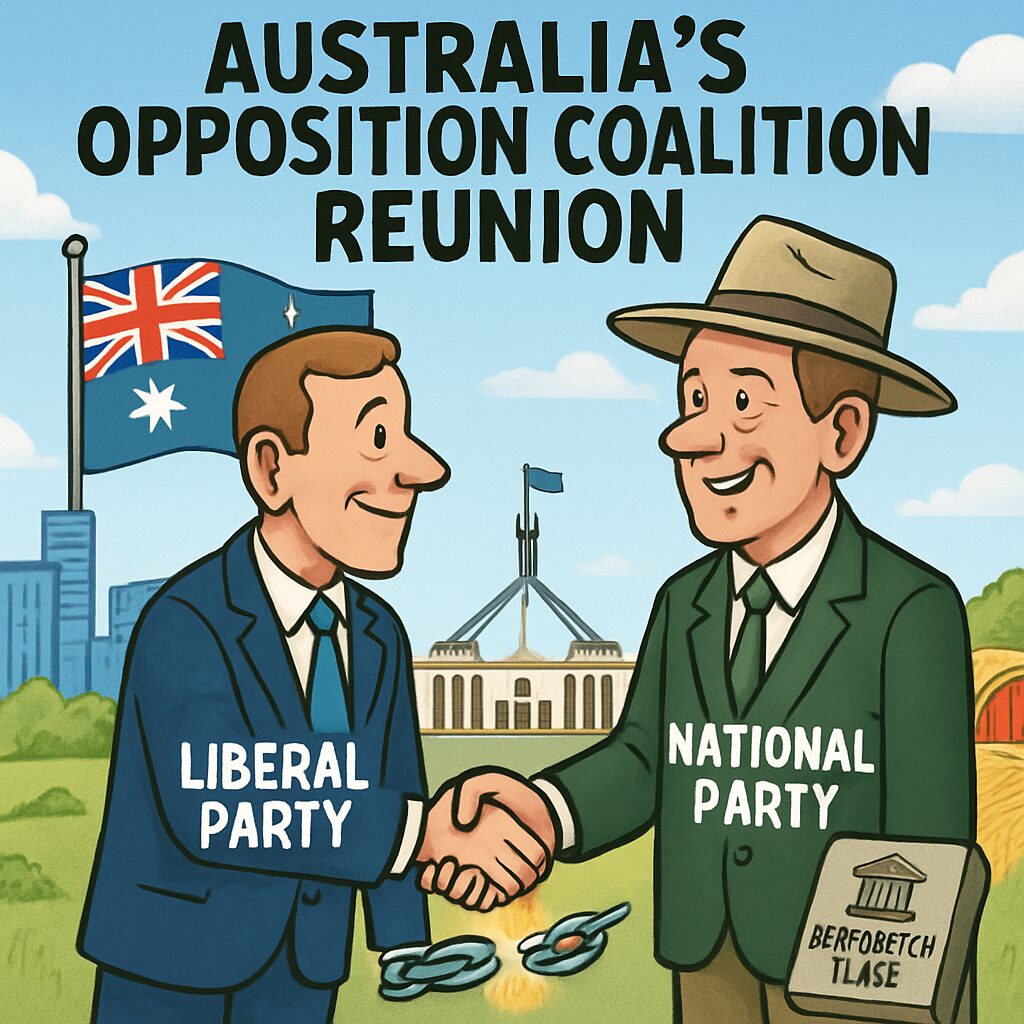
Australia’s opposition coalition has reunited after a brief split over hate-speech laws, resolving internal tensions that emerged following a tragic mass shooting. The Liberal-National Coalition, the country’s main conservative alliance, came back together on Sunday, with leaders emphasizing a forward-looking approach.
The reunion was announced in Canberra by Liberal Party leader Sussan Ley and National Party leader David Littleproud, marking the end of a 17-day separation. The split occurred on January 22 when the Nationals refused to support new hate-speech legislation introduced by the center-left Labor government. This legislation was drafted in response to the Bondi Beach attack in December, where two gunmen targeted a Jewish festival, killing 15 people.
The hate-speech laws include provisions to ban groups deemed to spread hate and introduce tougher penalties for preachers who advocate violence. While the Liberal Party backed the measures, the Nationals cited free speech concerns, leading to their abstention in the lower house and opposition in the senate. David Littleproud described the issue as substantive, acknowledging the disappointment but underscoring the principled stance.
This dispute was the second rift within the coalition in less than a year. A previous separation in May over climate and energy policy was resolved within a week, but the current division was more prolonged. The coalition, which dates back to the 1940s, had not split since 1987 before these recent episodes, highlighting the fragility of the partnership.
Politically, the coalition is facing significant challenges. After a heavy election loss last year, where Labor won in a landslide, the Liberals lost several seats. Additionally, there is growing pressure from populist forces, particularly Senator Pauline Hanson’s anti-immigration One Nation party, which has surged in recent polling. This external threat adds urgency to the coalition’s need for unity.
In their statements, Ley and Littleproud struck a conciliatory tone. Ley said, “The Coalition is back together and looking to the future, not to the past,” while Littleproud noted that the disagreement was over a meaningful issue. They have agreed that neither party can overturn decisions made by the joint shadow cabinet, aiming to prevent future splits.
The reunion allows the coalition to refocus on its role as the official opposition, scrutinizing government policies and preparing for future elections. However, the hate-speech laws remain a contentious topic in Australian society, with ongoing debates about security versus civil liberties. The coalition’s ability to navigate these issues will be crucial for its relevance and effectiveness.
Moving forward, the coalition must work to mend fences with its supporters and address broader concerns such as economic stability and social cohesion. While the immediate crisis is resolved, the underlying tensions between urban and rural interests, as represented by the Liberals and Nationals, may resurface. The political landscape in Australia continues to evolve, with the coalition’s unity being tested in an increasingly polarized environment.

