

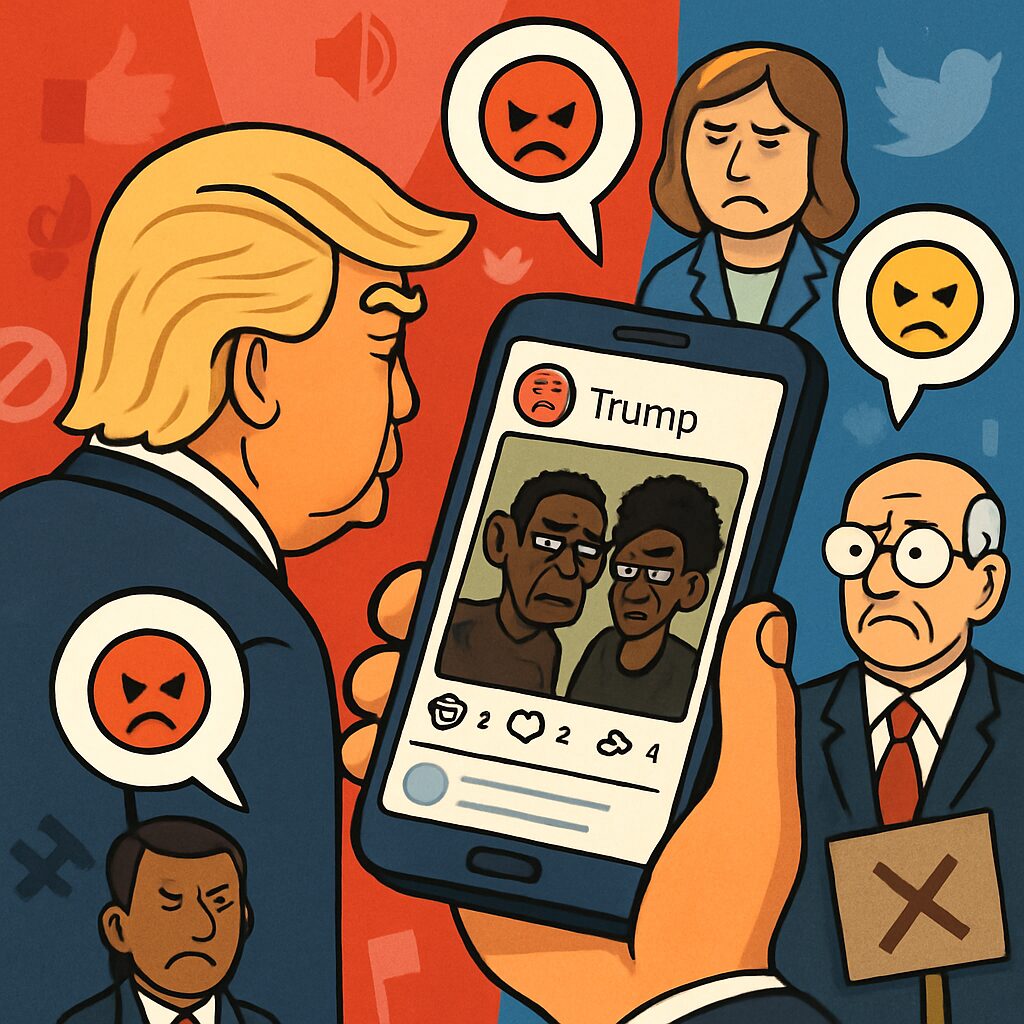
President Donald Trump sparked widespread condemnation after sharing a racist video on social media that depicted former President Barack Obama and former First Lady Michelle Obama as apes, highlighting a recurring pattern of inflammatory posts from his account. The video, which promoted debunked voter fraud claims, included a brief clip where the Obamas’ heads were superimposed on ape bodies, set to the song ‘The Lion Sleeps Tonight,’ and was posted late Thursday night before being removed after nearly 12 hours amid bipartisan criticism.
Trump responded to the backlash by stating that he had only reviewed the beginning of the video before passing it to a staffer, who failed to catch the offensive content. He declined to apologize, insisting he was not at fault and that the post was made ‘erroneously.’ This explanation was met with skepticism, as the White House had initially defended the video as an ‘internet meme’ and dismissed the outrage as ‘fake’ before backtracking and removing it from his Truth Social account.
The incident drew sharp rebukes from within Trump’s own party, with Republican Senator Tim Scott of South Carolina, the only Black GOP senator, calling it ‘the most racist thing I’ve seen out of this White House.’ Other Republicans, including Representative Mike Lawler of New York, demanded an immediate deletion and apology, while Senator John Curtis of Utah labeled the video ‘blatantly racist and inexcusable.’ The criticism underscored the growing discomfort among some Republicans with Trump’s social media conduct.
Historically, this episode is not isolated; Trump has a long record of sharing offensive content on social media. During his presidency and beyond, he has reposted anti-Muslim videos from far-right groups, shared doctored images of political opponents in racist caricatures, and promoted AI-generated videos depicting Democrats like House Minority Leader Hakeem Jeffries with stereotypical attributes. Each time, the White House has offered similar excuses, often blaming staff errors or dismissing concerns.
The pattern raises questions about the lack of quality control over Trump’s social media posts, despite access being limited to a few close aides. CNN reports that Trump often posts personally, but the repeated incidents suggest either approval of such content or a disregard for its implications. This has led to calls for implementing safeguards to prevent future occurrences, though the White House has shown little inclination to do so.
The racist video also taps into deeper issues of race and politics in the United States, recalling historical caricatures that dehumanize Black people. The Obamas have not publicly commented, but figures like former Obama adviser Ben Rhodes emphasized that such actions stain Trump’s legacy. Meanwhile, Democrats, including Governor JB Pritzker of Illinois, unequivocally labeled Trump a racist and urged all Republicans to denounce the post.
Looking ahead, the incident is likely to fuel ongoing debates about social media responsibility and political rhetoric. With the 2026 election cycle heating up, Trump’s posts may continue to test the boundaries of acceptable discourse, forcing his party to navigate between loyalty and condemnation. The lack of an apology or systemic changes suggests that similar episodes could recur, keeping racial tensions at the forefront of American politics.

