

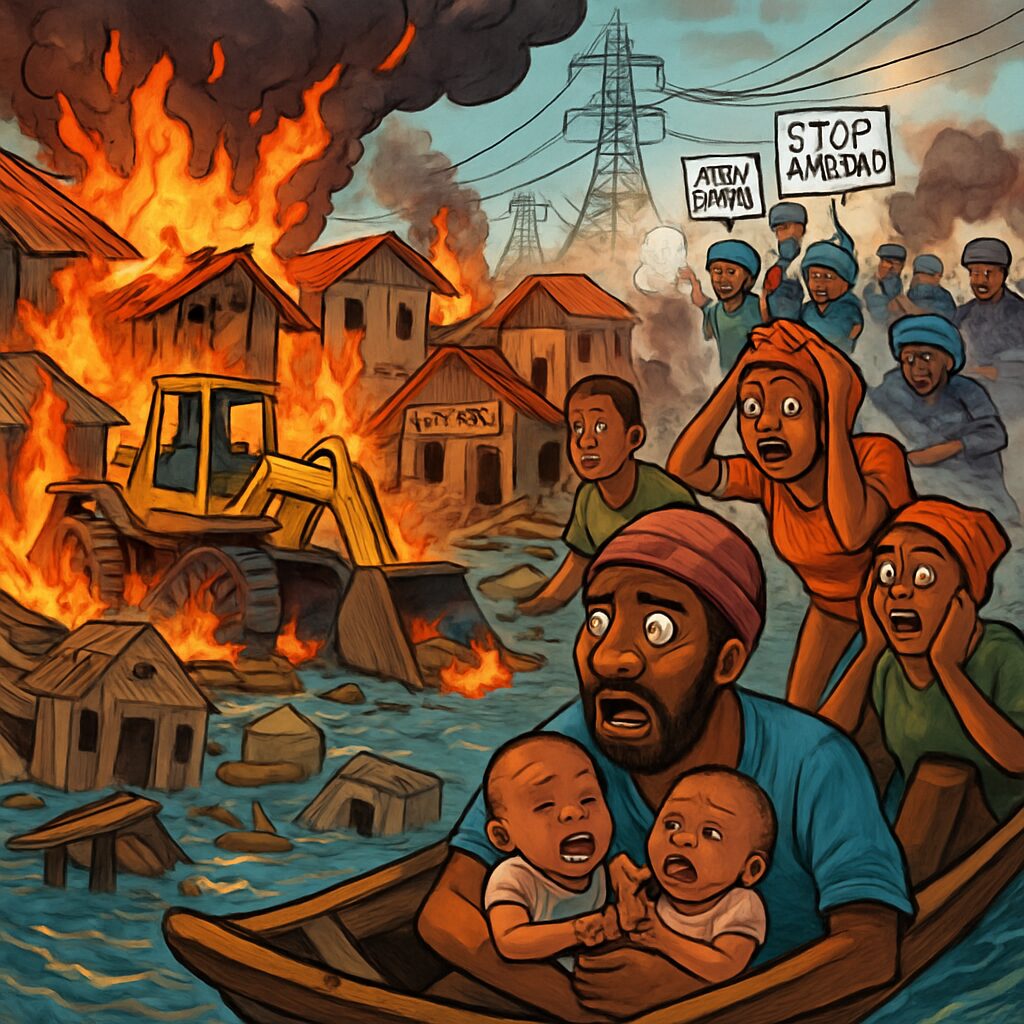
In a controversial urban clearance operation, the Lagos State government has demolished and set fire to thousands of waterfront shanties in the historic Makoko community, displacing over 10,000 residents and sparking outcry over alleged human rights abuses.
The demolitions began in late December 2025, with bulldozers moving into the lagoon-side settlements without prior warning, according to residents. Victor Ahansu, a fisherman, described being awakened by the sound of machinery before his home was destroyed, forcing his family, including five-month-old twins, to live in a wooden canoe.
Official figures from local advocacy groups indicate that more than 3,000 homes have been torn down since the operation started on December 23. The Lagos State government justifies the actions on safety grounds, citing the proximity of structures to high-tension power lines, but residents claim the demolitions extended far beyond the stipulated safety zones.
The impact has been devastating, with reports of at least five deaths, including a three-week-old infant who drowned during the chaos. Esther Nicholas, a long-time resident, recounted how schools, clinics, and places of worship were also destroyed, leaving the community in ruins.
Protests have erupted across Lagos, with police using tear gas to disperse demonstrators. Human rights organizations, including Justice and Empowerment Initiatives, have condemned the evictions as illegal and unconstitutional, referencing court orders that previously restrained the government from such actions.
Historically, Makoko has been a testing ground for innovative solutions like floating schools, but it now faces eradication as authorities prioritize waterfront development. The community, established in the 19th century, is home to tens of thousands who rely on fishing and trade, with few alternatives in a city plagued by high rents.
Legal experts like Senior Advocate Femi Falana have pointed to subsisting court judgments that protect residents from forced evictions without resettlement. Despite this, the government continues the demolitions, arguing that they are necessary for urban regeneration and public safety.
The ongoing situation highlights the tension between rapid urbanization and the rights of low-income communities in Lagos, a megacity of 20 million people. As displaced residents consider relocating to other states or countries, the demolitions raise questions about social equity and governance in Nigeria’s economic hub.

