

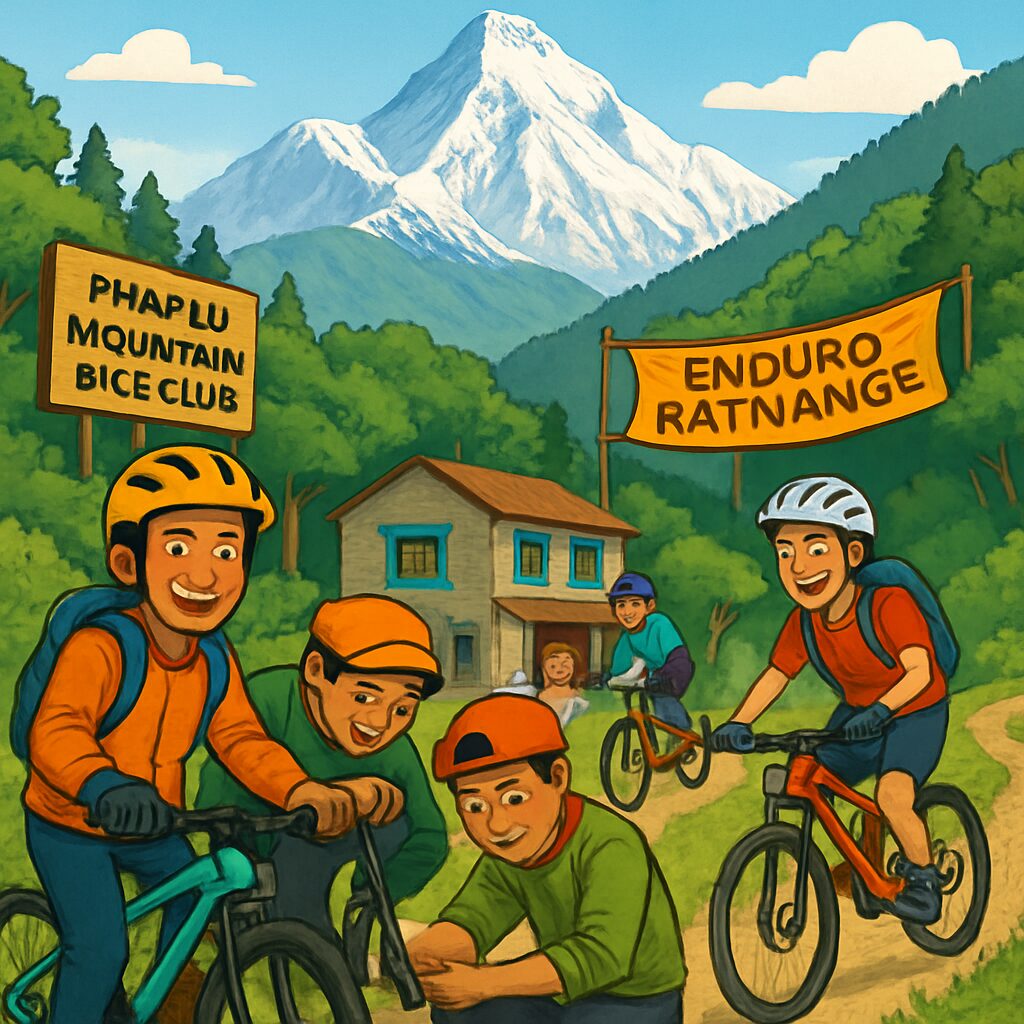
In the shadow of Mount Everest, a new mountain biking initiative in Nepal’s Solukhumbu District is offering travelers an adrenaline-fueled adventure while empowering local Sherpa communities through job creation and cultural immersion. The Phaplu Mountain Bike Club, founded in 2020 by hospitality director Ang Tshering Lama and French ex-pro mountain biker Tangi Rebours, has developed a network of 17 beginner- to expert-level trails spanning 70 kilometers in the community-managed Ratnange Forest.
This grassroots movement aims to diversify tourism beyond the crowded Everest climbing season, providing stable year-round incomes for Sherpas who often struggle with seasonal work. Sherpa guides can earn substantial amounts during the climbing season, but it’s a fraction of what Western guides make, highlighting economic disparities that the biking project seeks to address. By creating trails and promoting mountain biking, the club offers new opportunities for young Sherpas to become guides, mechanics, or entrepreneurs.
The club’s efforts include launching the annual Enduro Ratnange race in 2023, which attracts international professionals and boosts local visibility. Collaborations with tour operators bring both novice and experienced bikers to the region, where they can stay in homestays run by Sherpa families, immersing themselves in local culture. Homestays, such as those operated by Ngima and Dawa Sherpa, allow visitors to enjoy traditional Sherpa cuisine and learn about daily life, fostering deeper connections.
Funding from organizations like the Himalayan Trust and The Conscious Travel Foundation has enabled the club to obtain bikes, build practice tracks, and train local youth in skills from bike maintenance to first aid. This training not only prepares them for guiding roles but also instills a sense of ownership and pride in their community’s resources. The growing biking scene has additional benefits, such as deterring illegal logging and hunting by increasing foot traffic and community oversight in the forests.
The initiative is part of a broader trend to leverage Nepal’s natural assets for sustainable tourism. With mountain biking being a $12.6 billion industry globally, projected to double by 2032, Nepal’s mild weather, good terrain, and high-altitude trails offer unique advantages. Riders can experience altitudes up to 4,060 meters, providing endurance benefits similar to high-elevation training used by elite athletes.
As the Phaplu Mountain Bike Club expands, it represents a shift away from the sole focus on Everest, offering a quieter, more immersive adventure in the Himalayas. This not only enhances the travel experience but also supports the long-term well-being of Sherpa communities, ensuring they can thrive in their ancestral lands. The project exemplifies how adventure tourism can be harnessed for positive social and economic impact, creating a model that could inspire similar efforts in other regions.

