

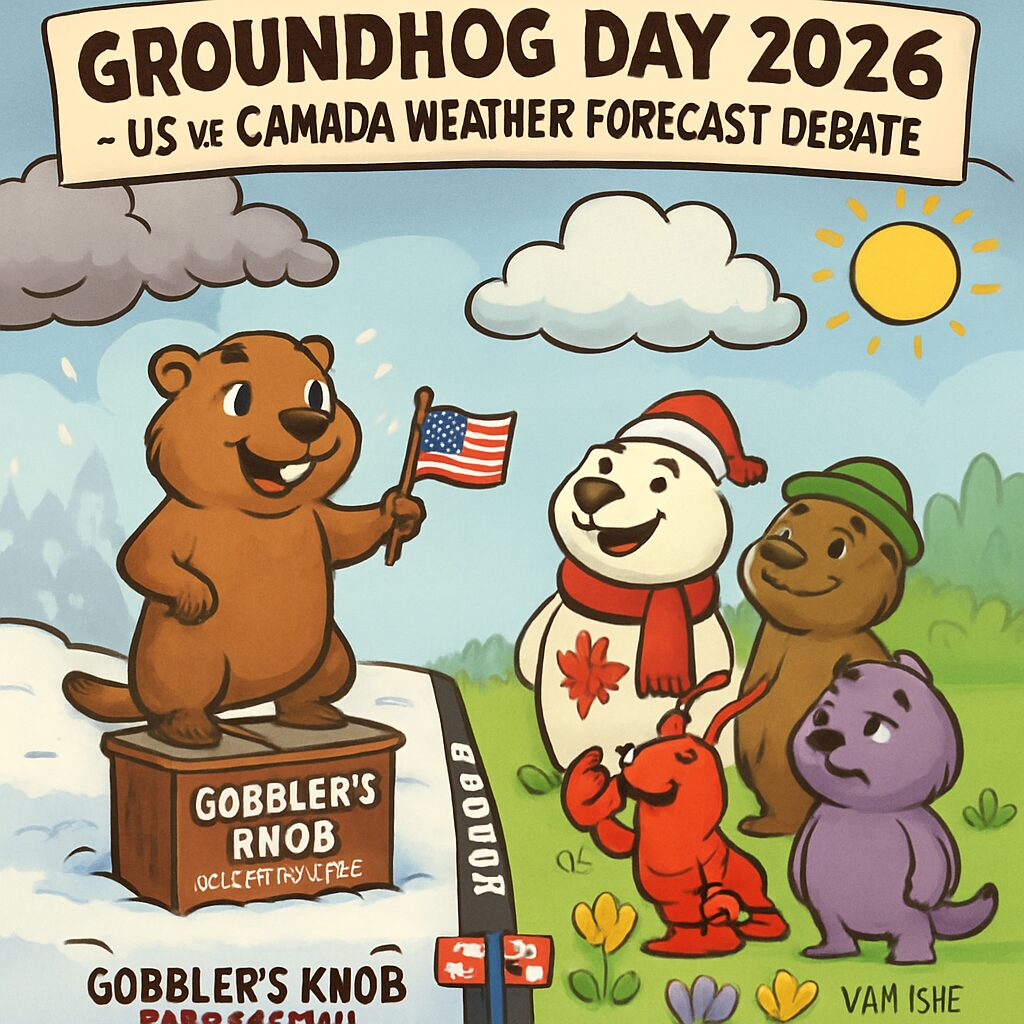
On February 2, 2026, Groundhog Day traditions in the United States and Canada led to a light-hearted cross-border dispute as animal weather prognosticators delivered conflicting forecasts. While Canadian groundhogs and even a lobster predicted an early end to winter, the famed Punxsutawney Phil in Pennsylvania saw his shadow, heralding six more weeks of cold weather, sparking playful banter about national meteorological differences.
The annual Groundhog Day saw multiple animal seers across North America emerge from hibernation or their shelters to make their weather predictions. In Canada, Wiarton Willie, a white-furred groundhog in Ontario, did not see his shadow on a cloudy morning, indicating an early spring. Similarly, Nova Scotia’s Shubenacadie Sam and New Brunswick’s Lucy the Lobster made identical forecasts, while British Columbia’s Van Isle Violet predicted more winter, aligning with the U.S. outlook.
In the United States, the spotlight was on Punxsutawney Phil, who has been making predictions since 1887. At Gobbler’s Knob in Pennsylvania, Phil saw his shadow, prompting his handlers to declare an extended winter season. This prediction contrasted sharply with most of his Canadian counterparts, creating a humorous narrative of disagreement between the two nations over weather prospects.
Groundhog Day is rooted in folklore and Pennsylvania Dutch traditions, with the first official celebration in Punxsutawney dating back to the late 19th century. In Canada, the tradition began more recently, with Wiarton Willie starting in 1956 as a whimsical event that grew into a major festival. Both countries host elaborate ceremonies, drawing tourists and media attention, with events like breakfasts, fireworks, and family activities.
The accuracy of these animal predictions is widely debated. According to meteorologists, groundhogs have mixed success rates; for instance, Wiarton Willie has been correct about 29% of the time since 2000, while some U.S. prognosticators fare better. Scientific agencies like NOAA often provide alternative forecasts, but the day remains a cultural staple, celebrated more for its entertainment value than meteorological precision.
The conflicting predictions have sparked light-hearted commentary on social media and news outlets, with some joking about diplomatic tensions over weather. The event underscores the shared cultural heritage between the U.S. and Canada, where communities embrace folklore to break the monotony of winter. It also highlights regional weather variations, as predictions can differ based on local conditions and the animals’ behaviors.
Looking ahead, regardless of the groundhogs’ forecasts, winter weather patterns will continue to be monitored by official meteorological services. The tradition is expected to persist, with plans already underway for next year’s celebrations. In the meantime, residents on both sides of the border can enjoy the whimsy of the day while bracing for the actual weather, which may or may not align with the furry forecasters’ predictions.

