

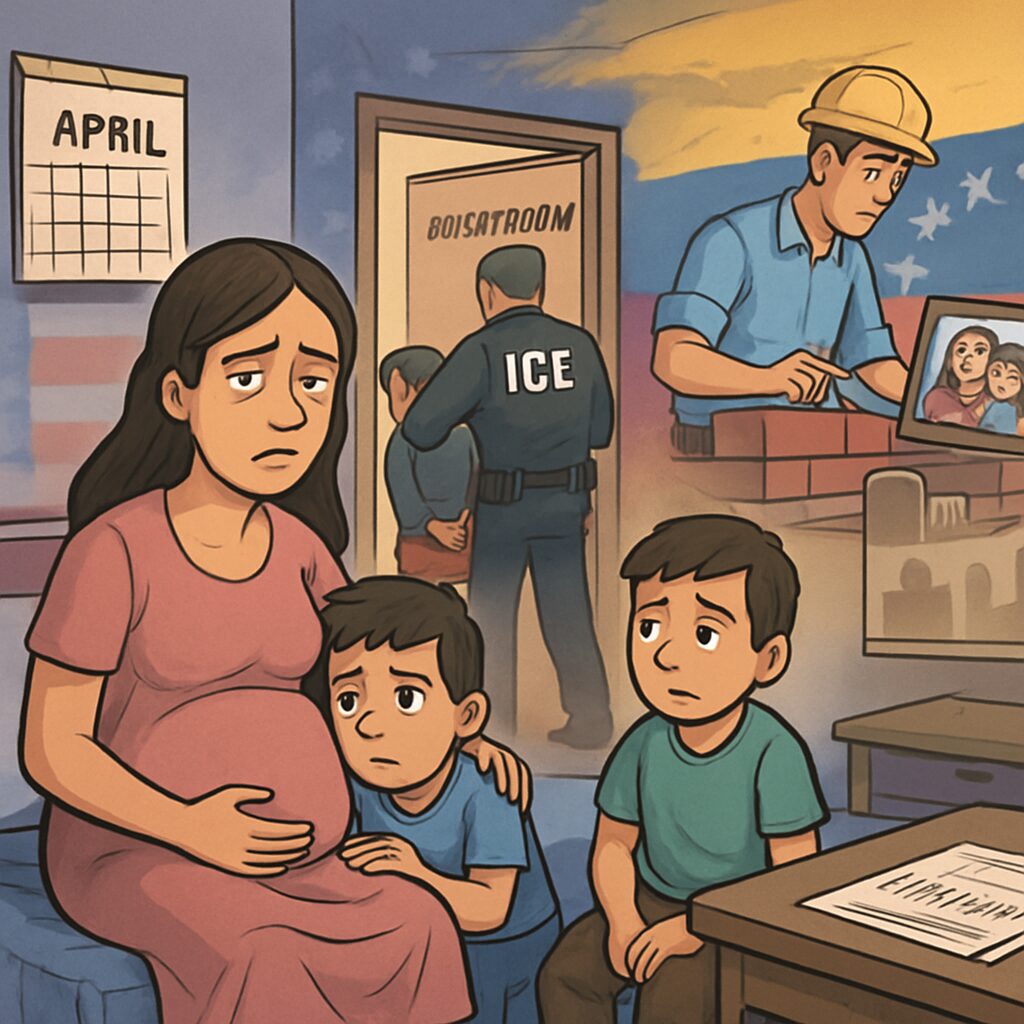
A pregnant Venezuelan mother is trapped in the United States’ immigration system after her husband’s deportation, unable to self-deport and reunite with her family, highlighting the human toll of recent enforcement crackdowns under the Trump administration.
Franyelis, 28, and her partner Yonquenide fled Venezuela in 2024 with their two young sons, seeking asylum through legal channels under the Biden administration. They settled in New York, where Yonquenide worked various jobs to support the family, and Franyelis became pregnant with their third child, initially embracing their new life with hope. However, the political shift after Donald Trump’s re-election brought stricter immigration rules, directly impacting their precarious situation.
In September 2025, during a routine immigration court hearing in Manhattan, ICE agents detained Yonquenide as he left the courtroom, forcibly separating him from Franyelis and their children. He was held in detention facilities, including the Jackson Parish Correctional Center in Louisiana, before a judge ordered his immediate deportation. By late 2025, Yonquenide was flown back to Venezuela, leaving Franyelis alone and pregnant in a New York shelter, with their sons Yoneifer and Emma.
The detention and deportation occurred amid a surge in ICE actions targeting Venezuelans, with over 14,000 arrested and more than 10,000 deported in the first ten months of 2025, according to the Deportation Data Project. This crackdown included the revocation of Temporary Protected Status for Venezuelans and increased enforcement at court hearings, creating a climate of fear among immigrant communities. Franyelis, now seven months pregnant, expressed a desperate desire to self-deport and join Yonquenide in Venezuela, but bureaucratic obstacles have left her stuck.
With the help of a lawyer from St. Peter’s Church in New York, Franyelis filed motions for voluntary departure for herself and her sons, but the process has been slow and uncertain. Her due date in April 2026 looms, adding urgency to her situation, as she navigates life in a shelter with limited resources and the emotional strain of family separation. Yonquenide, back in Maracaibo, Venezuela, faces economic hardship and political instability, earning minimal wages in construction and longing for his family.
The story is set against broader U.S.-Venezuela tensions, including military actions and the capture of former President Nicolás Maduro, which have exacerbated challenges for deportees. Franyelis’s case illustrates how immigration policies can tear families apart, leaving vulnerable individuals like pregnant women in limbo, often avoiding essential services due to fear. Advocates highlight the need for more compassionate approaches to prevent such humanitarian crises.
As the immigration enforcement push continues, Franyelis’s predicament underscores the complex interplay of policy, politics, and personal tragedy. Her journey from seeking a better life to facing isolation and uncertainty reflects the struggles of many immigrants caught in systemic cracks. The outcome remains unresolved, with Franyelis hoping for a resolution that allows her to be with her husband before giving birth, even as she grapples with the realities of a divided family.

