

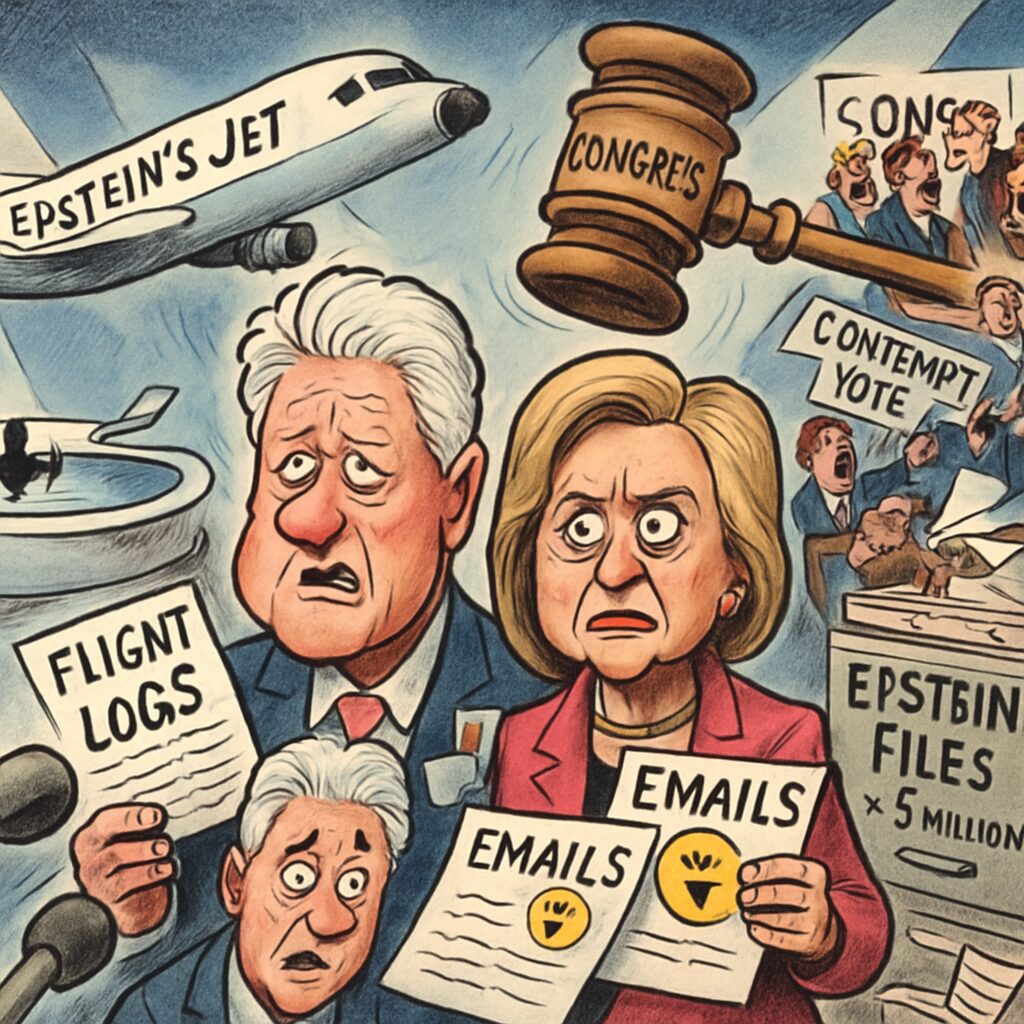
The Justice Department’s latest release of Jeffrey Epstein’s files reveals fresh insights into communications between Bill Clinton’s staff and Epstein’s associate Ghislaine Maxwell, as the House prepares to vote on holding the Clintons in contempt of Congress for refusing to testify in a bipartisan probe. This document dump, comprising over 3 million files, includes emails from 2001 to 2004 that show Maxwell’s interactions with Clinton aides, some containing flirtatious or lewd content, and highlights Bill Clinton’s travels on Epstein’s private plane at least 16 times during that period.
The release follows a smaller batch in December that featured never-before-seen photos, including one of a shirtless Clinton in a hot tub with an individual described by a DOJ official as a victim of Epstein’s abuse. Clinton’s spokesman has denied any personal involvement, asserting that the former president did not send the emails and severed ties with Epstein before the financier was charged in 2006, while also denying visits to Epstein’s island.
Simultaneously, the House Oversight Committee voted to advance contempt charges against both Bill and Hillary Clinton after they failed to appear for scheduled depositions, with nearly half of the committee’s Democrats joining Republicans in support, citing the need to uphold congressional subpoena authority. Republicans, led by Chairman James Comer, argue the Clintons possess unique knowledge due to Epstein’s White House visits and Clinton’s flights, but the Clintons’ attorneys have called the subpoenas invalid and offered an alternative interview, which was rejected.
The files also list unverified sexual abuse allegations against President Donald Trump, compiled by the Justice Department last summer, with the White House noting the potential for fake submissions. Both Clinton and Trump have denied wrongdoing related to Epstein, whose death by suicide in 2019 halted his trial on federal sex trafficking charges.
If the full House approves the contempt resolution, it would be largely symbolic but could lead to a Justice Department prosecution, adding legal pressure on the Clintons. The standoff has sparked criticism from top Democrats like former Speaker Nancy Pelosi, who urged delay until all Epstein files are released, but Comer has indicated possible negotiations for a deal before the vote.
This development intensifies the political scrutiny surrounding Epstein’s network, emphasizing ongoing efforts to uncover the extent of high-profile associations. The bipartisan nature of the committee vote reflects broader concerns about transparency and accountability in the investigation, which has drawn attention to numerous influential figures linked to Epstein.
As the House moves toward a vote, the episode underscores the challenges of balancing congressional oversight with legal protections, with implications for future probes into similar matters. The outcome may influence public perception and set precedents for handling testimonial demands in high-stakes inquiries.

