

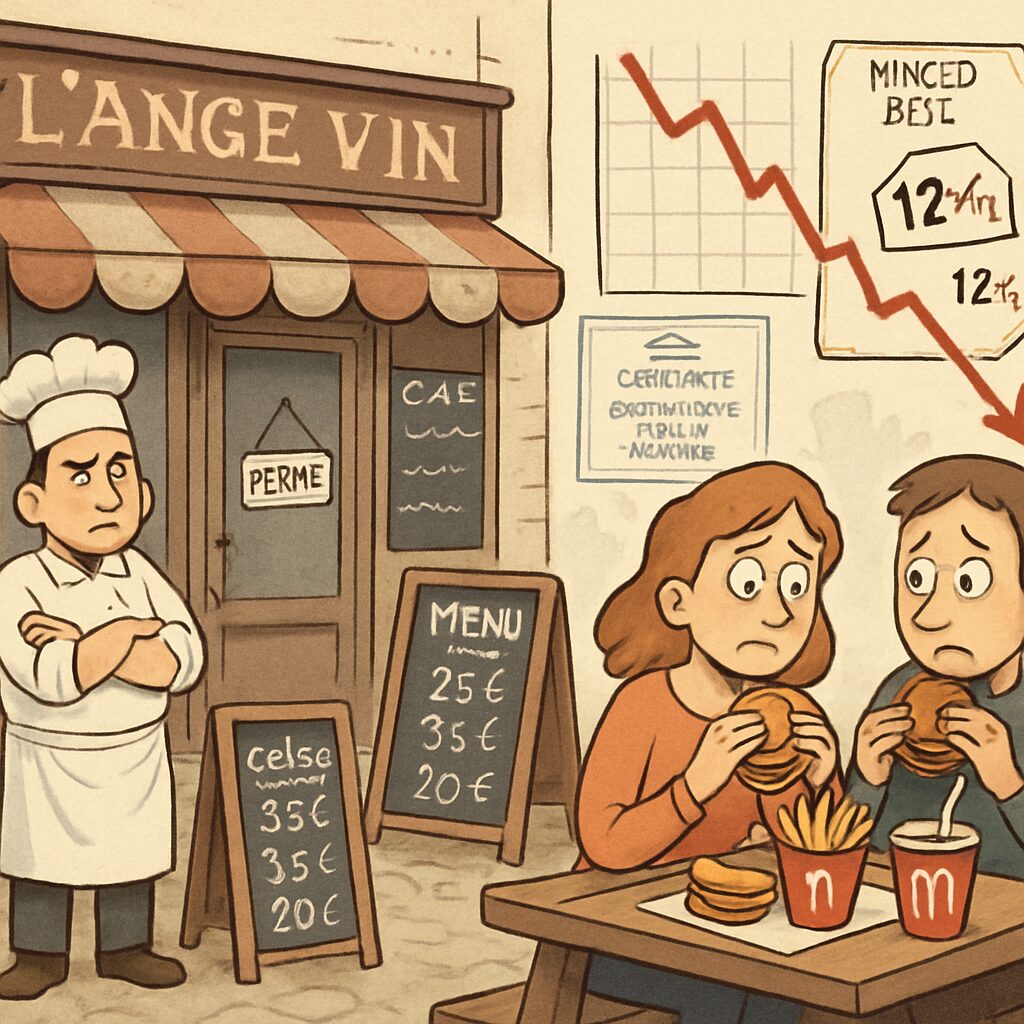
Executive summary: The traditional French bistro, an iconic element of France’s culinary landscape, is facing an unprecedented decline, with thousands of establishments closing each year due to rising operational costs and a cultural shift towards fast food and Americanized dining habits.
Recent statistics highlight the severity of the crisis. Between June 2024 and June 2025, approximately 9,800 restaurants closed permanently in France, a 10% increase from the previous year. Profits for traditional restaurants plummeted from 11% of turnover in 2023 to just 3% in 2024, as fewer customers and higher costs squeezed margins.
Personal stories from restaurant owners like Mickael Moureaud of L’Ange Vin in Angers illustrate the daily struggles. Moureaud reports that his clientele has dropped by 10%, and he often works without paying himself, relying on his wife’s income. He cites minced beef prices rising from €8 to over €12 per kilo in a year, forcing him to absorb costs rather than pass them to customers.
Economic pressures are compounded by changing consumer behaviors. Celine Viale, a local union president, notes that the ‘Americanisation’ of eating habits has led younger generations to prefer fast food or home-delivered meals over traditional sit-down restaurants. This shift is rapid and significant, with many French people now viewing restaurant dining as a luxury for special occasions only.
Experts like Bernard Boutboul of Gira consultancy point out that restaurant prices have increased by an average of 23% between late 2022 and mid-2024, while raw material costs rose 16%. This timing coincided with higher grocery and energy bills for consumers, making dining out prohibitively expensive for many.
The cultural significance of this decline is stark. In 2010, UNESCO recognized the ‘gastronomic meal of the French’ as intangible cultural heritage, celebrating the social practice of structured meals with wine. However, as Viale observes, just as UNESCO honors this tradition, many French people are abandoning it for quicker, cheaper alternatives.
The future implications are concerning. Viale warns of a potential two-tier system where only expensive gastronomic restaurants survive, while the majority eat poorly or at home. This could lead to the disappearance of independent bistros, replaced by chain stores and fast-food outlets, eroding the diversity of France’s dining scene.
Despite the challenges, some adaptations are emerging. Boutboul mentions La Nouvelle Garde, a new chain offering affordable versions of traditional brasseries. However, the dense network of small, family-run bistros that once defined French mealtimes is dwindling rapidly, with little hope for reversal without significant intervention.
In conclusion, the decline of the French bistro reflects broader economic and cultural shifts. As costs rise and tastes change, the survival of this cherished institution hinges on innovative business models and perhaps policy support, to preserve a key part of France’s identity and culinary heritage.

