

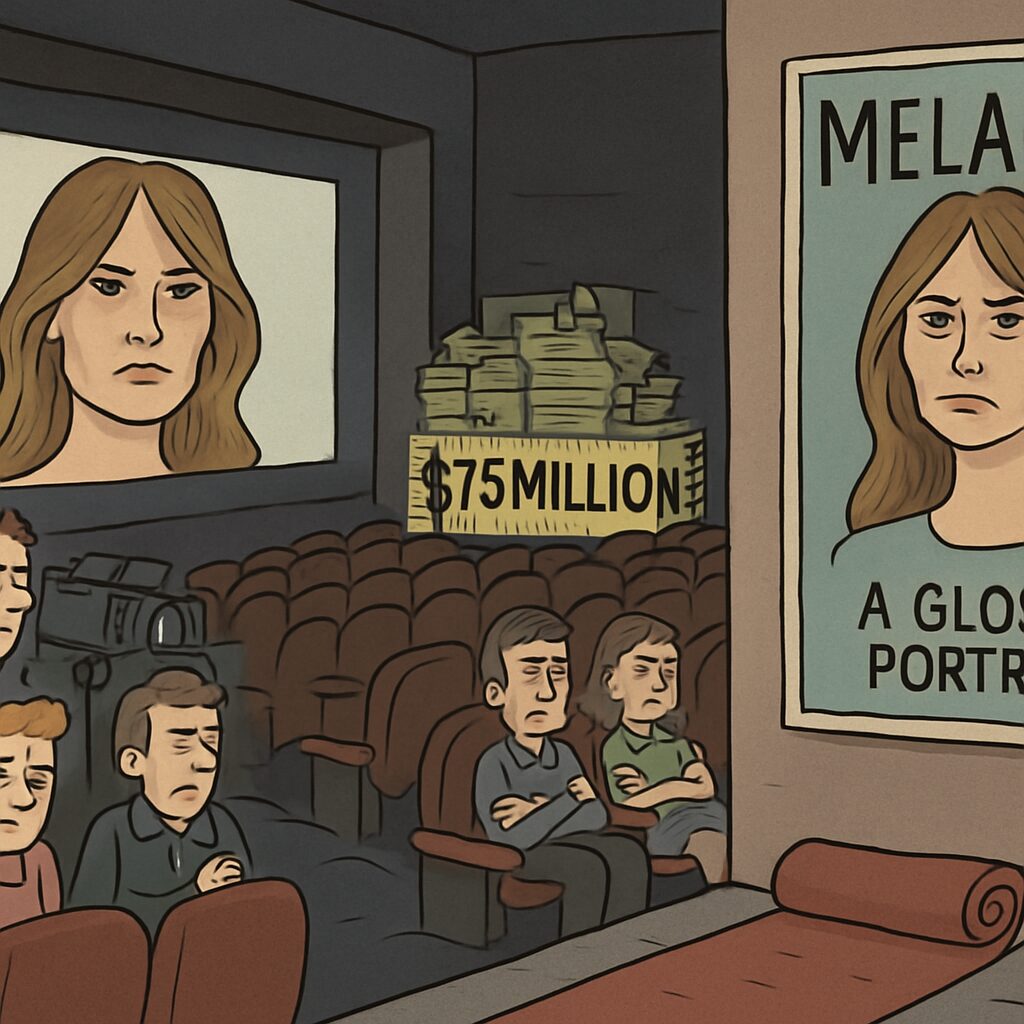
Melania Trump’s documentary ‘Melania,’ directed by Brett Ratner, premiered on January 30, 2026, to widespread criticism and disappointing box office performance. The film, which cost Amazon $40 million to acquire with an additional $35 million promotion budget, has been panned as a glossy, insubstantial portrait that fails to provide meaningful insight into the First Lady’s life.
In Sydney, Australia, opening day screenings saw alarmingly low attendance, with some theaters selling only a handful of tickets. A review from The Guardian noted that in a city of 5.5 million people, less than 100 individuals attended the debut, highlighting the film’s poor reception. The sparse audiences consisted of a mix of dedicated supporters and journalists, with one couple describing it as a ‘PR vehicle’ designed to enhance Trump’s image rather than offer genuine insight into Melania.
Critics have universally criticized the documentary for its slow pace and superficial focus. Scenes depict Melania Trump engaging in mundane activities such as trying on outfits, discussing interior design with staff, and planning inauguration details like menu selections and tablecloth designs, all presented with a monotonous voiceover. The Guardian’s reviewer described it as ‘excruciatingly slow’ and lacking narrative depth, while NPR’s assessment called it an ‘astronomically pricey portrait’ that fails to deliver substance, noting scripted voiceovers about her mother’s death and the Capitol’s history.
Financially, the project is projected to be a significant loss, with expected earnings of only $5 million globally on opening weekend. Amazon’s hefty investment, including a $1 million inaugural donation mentioned in the film, raises questions about the company’s motives, with speculation about seeking political favor or media influence rather than profit. The documentary’s cost makes it one of the most expensive infomercials in history, unlikely to recoup its expenses.
The release timing has been questioned, coming amidst ongoing political controversies in the Trump administration, yet the film avoids contentious issues, offering a sanitized view. Brett Ratner’s involvement, marking his first feature in 12 years after sexual misconduct allegations, adds controversy, with some viewing it as propaganda or a rehabilitation attempt for Ratner. Editing tricks, such as fabricated audience reactions during Trump’s speech, further undermine its authenticity.
Implications for the entertainment industry are significant, as the failure may discourage similar high-budget documentaries on political figures. Amazon might reconsider its content acquisition strategies, especially in a polarized media landscape where such projects face scrutiny. The documentary’s poor reception underscores the risks of blending celebrity culture with political storytelling in today’s environment.
Ultimately, ‘Melania’ fails to deliver the intimate portrait it promises, instead offering a costly and criticized spectacle. Its release serves as a cautionary tale for future documentary projects, highlighting how financial extravagance does not guarantee artistic or commercial success in the modern film industry.

