

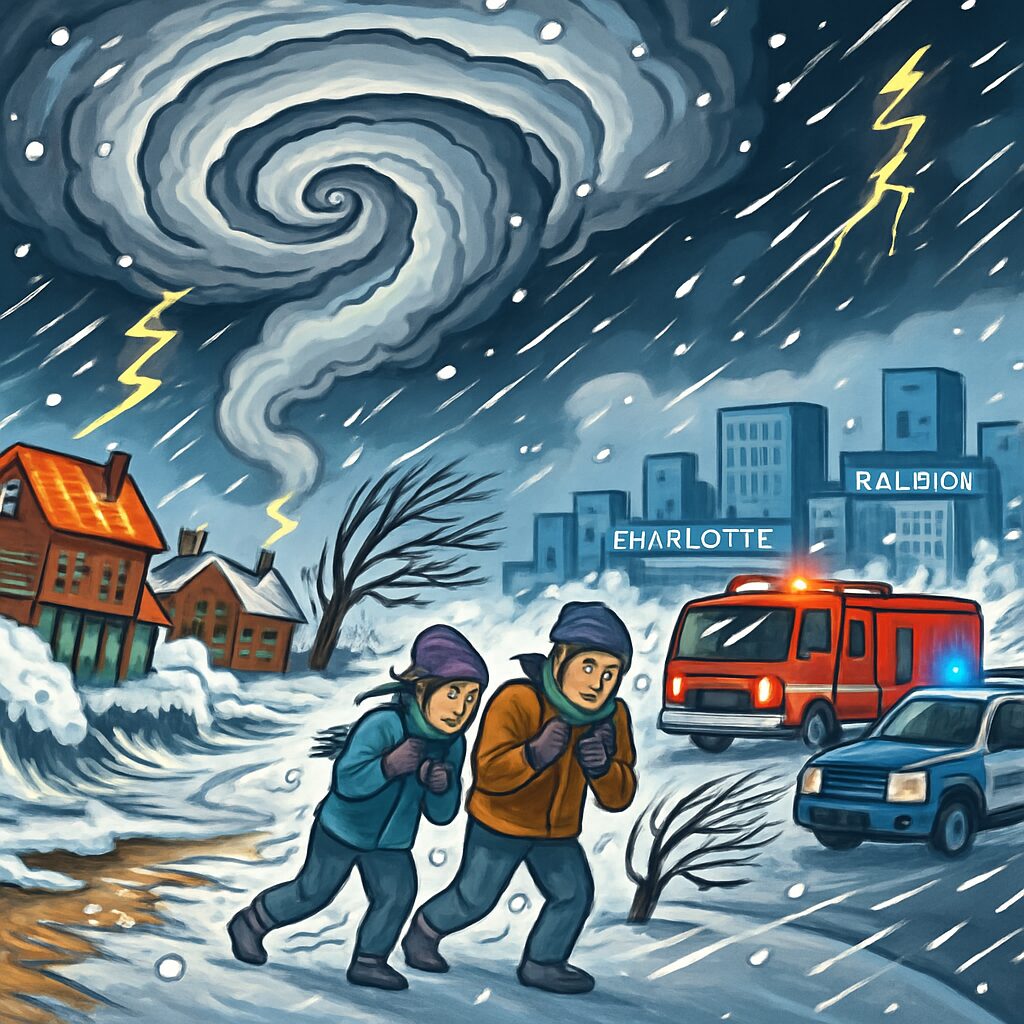
A rapidly intensifying winter storm, known as a bomb cyclone, is set to unleash blizzard conditions, heavy snowfall, and powerful winds across the Southeast and mid-Atlantic regions this weekend, threatening widespread travel disruptions and dangerous conditions for millions of residents. The storm, expected to form off the North Carolina coast late Friday, will rapidly strengthen into a potent nor’easter, bringing the most significant snow in years to areas unaccustomed to such severe winter weather.
Impacts will begin late Friday into Saturday, with snow accumulating across parts of Georgia, the Carolinas, and southern Virginia. Central North Carolina, including Raleigh and Charlotte, could see 5 to 10 inches of snow, potentially marking the heaviest snowfall in decades for cities like Wilmington. In South Carolina, Columbia might experience its largest snowstorm since 2010, with predictions of several inches. The cold air already in place will allow snow to stick quickly, leading to hazardous road conditions that could persist into early next week.
Powerful winds accompanying the storm will exacerbate the dangers, particularly along the coast. Hurricane-force gusts approaching 75 miles per hour are forecast for parts of the North Carolina and Virginia shoreline by Saturday night, where blizzard conditions with near-zero visibility are possible. The Outer Banks and southeast Virginia are at highest risk for these extreme conditions, which could make travel impossible and pose life-threatening risks.
Inland areas will not be spared, with persistent winds of 25 to 35 mph causing blowing and drifting snow, further reducing visibility and creating treacherous travel even after snow tapers off. The combination of heavy snow and strong winds has prompted blizzard warnings in some coastal areas, the first such warnings for the Carolinas in over a decade, highlighting the storm’s unusual severity for the region.
Emergency preparations are underway across affected states. Governors in Georgia, North Carolina, and South Carolina have issued or extended state of emergency declarations to mobilize resources and streamline response efforts. Transportation departments are pretreating roads, while airlines and airports are warning of potential cancellations and delays, building on disruptions from a previous winter storm that left parts of the Southeast paralyzed.
This new storm follows closely on the heels of a deadly winter system that caused widespread damage, power outages, and at least 94 weather-related deaths across the country. Many areas are still recovering, with over 172,000 customers without power in Tennessee, Mississippi, and Louisiana as of Friday night. The rapid succession of storms underscores a challenging winter season, straining infrastructure and emergency services.
Coastal communities face additional threats from flooding, as onshore winds coincide with high tides, raising the risk of moderate to significant coastal flooding, especially in vulnerable areas like the Outer Banks. Beach erosion and property damage are concerns, with more than two dozen homes lost in recent years due to similar storms. Further north, if the storm tracks closer to shore, coastal New England could also see snow and wind later in the weekend.
As the bomb cyclone moves up the East Coast, it will leave behind deep cold, with wind chills below zero in some areas and record low temperatures possible in Florida. Residents are urged to stay informed through local forecasts, as small shifts in the storm’s track could alter impacts. The event serves as a stark reminder of the increasing volatility in winter weather patterns, with communities bracing for the worst while hoping for a swift recovery.

