

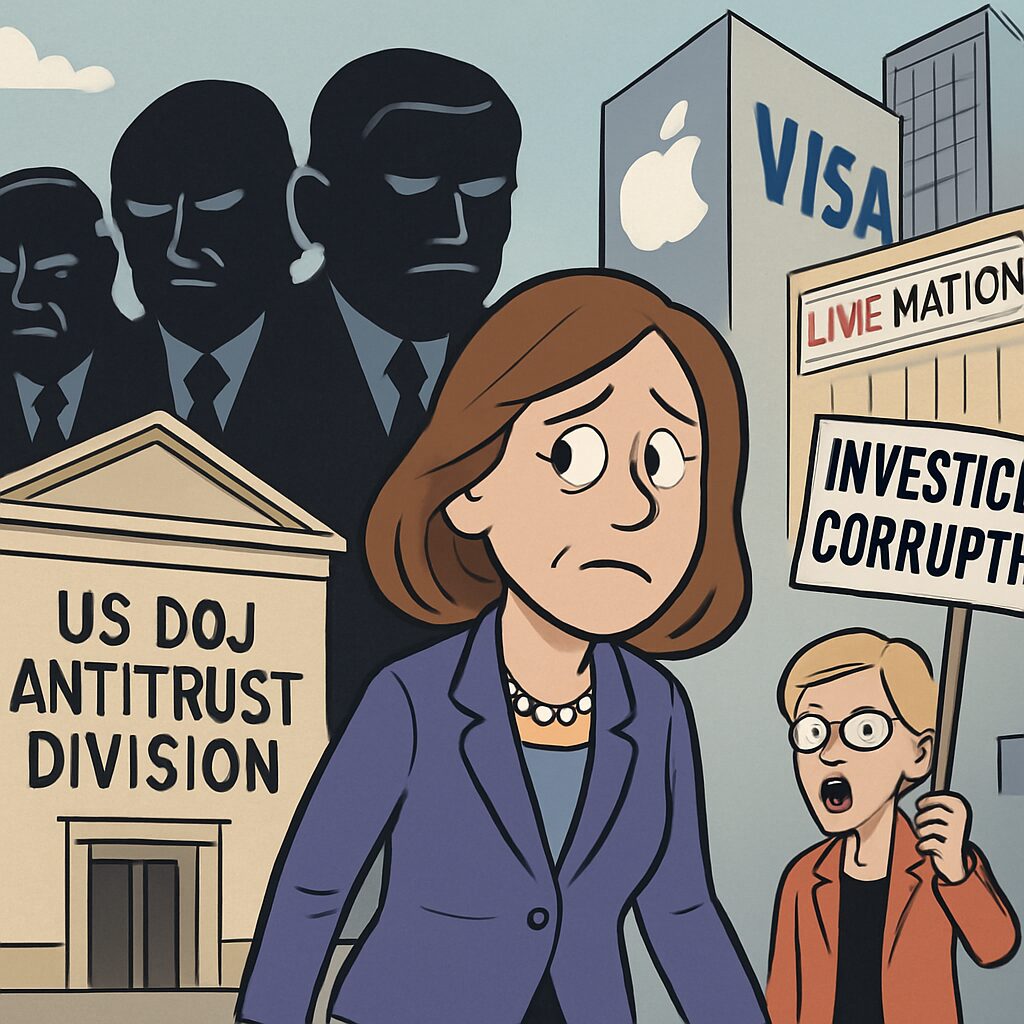
Gail Slater, the head of the US Department of Justice’s antitrust division, has resigned amid escalating tensions with senior Trump administration officials, sparking fears that the White House is retreating from robust enforcement of anti-monopoly laws. Her departure, announced on social media, marks the latest in a series of leadership upheavals within the division and raises critical questions about the fate of high-profile lawsuits against major corporations.
Slater, appointed by President Donald Trump last year, stepped down on Thursday, expressing “great sadness and abiding hope” in her resignation message. The Justice Department confirmed her exit but offered no explanation for the circumstances surrounding it, with Attorney General Pam Bondi issuing a standard statement thanking her for her service. This resignation follows the ouster of two other top antitrust officials since last summer, indicating persistent turmoil within the unit responsible for policing corporate mergers and monopolies.
Tensions between antitrust enforcers and higher-ups at the DOJ have been brewing for months, publicly surfacing last summer when the department dropped a lawsuit challenging Hewlett-Packard Enterprise’s $14 billion acquisition of Juniper Networks. Reports suggest that companies appealed directly to senior DOJ officials, leading to the decision and subsequent removal of key antitrust leaders, including Roger Alford, Slater’s former deputy. Alford has since described an internal “battle” within the department, accusing senior leadership of undermining efforts to protect consumers.
Critics, including lawmakers and former officials, allege that Trump administration appointees have repeatedly overruled antitrust division decisions on enforcement matters, adopting a softer stance influenced by corporate lobbyists. This has raised alarms about the integrity of ongoing cases against firms like Live Nation, Visa, and Apple, which are under scrutiny for potential anti-competitive practices. The uncertainty could weaken the DOJ’s ability to hold powerful companies accountable, potentially allowing mergers that harm competition and consumers.
Senator Elizabeth Warren, a prominent Democrat, condemned Slater’s resignation as “looks like corruption” and called for congressional investigations to hold the administration accountable. Her statement underscores the political ramifications of the shake-up, with bipartisan concerns emerging over the administration’s commitment to antitrust laws. Slater had received support from both parties during her confirmation, highlighting the non-partisan nature of antitrust enforcement until recent disputes.
The turmoil is creating regulatory ambiguity that could impact businesses nationwide. John Newman, a law professor and former Federal Trade Commission official, warned that companies seeking to comply with the law face a “worst-case scenario” of confusion, while those disregarding legal standards might benefit. This environment could deter legitimate mergers and acquisitions or encourage risky deals, ultimately stifling economic innovation and consumer choice.
Looking ahead, the DOJ must navigate this leadership vacuum while managing sensitive lawsuits that could redefine market competition. The antitrust division’s ability to function independently is now in question, with potential long-term effects on US economic policy. Congressional oversight may intensify, with hearings likely to examine the administration’s handling of antitrust matters and any undue corporate influence.
In conclusion, Slater’s resignation not only reflects deep-seated conflicts within the Trump administration but also poses significant challenges for antitrust enforcement. As the DOJ grapples with internal divisions, the outcome will shape the competitive landscape for years to come, with implications for consumers, businesses, and the rule of law in America.

