

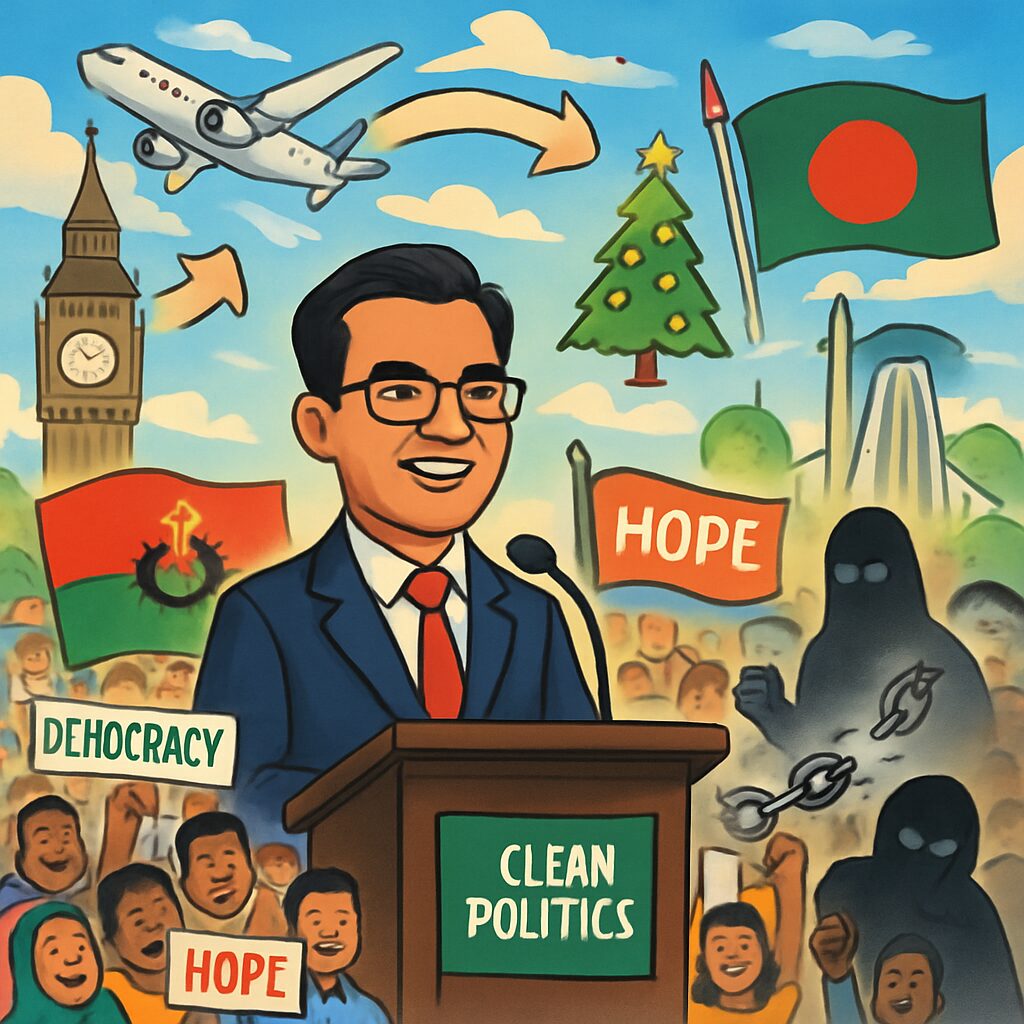
Tarique Rahman, the chairman of the Bangladesh Nationalist Party (BNP), is on course to be elected as Bangladesh’s next prime minister after his party secured a majority in the general election, marking a dramatic return from 17 years in exile.
In a pivotal moment for Bangladesh, the center-right BNP has won enough seats to form a government, according to recent election results. This victory comes in the first free and fair elections held in almost two decades, following the fall of autocratic prime minister Sheikh Hasina in 2024. The elections, which saw high voter turnout, represent a significant step towards restoring democracy in a country that has long been plagued by political turmoil and corruption.
Rahman, 60, is the figurehead of the influential Zia family, which has dominated Bangladeshi politics for decades. Both of his parents served as prime ministers; his father, Ziaur Rahman, was a military ruler turned president and founder of the BNP, while his mother, Khaleda Zia, was the country’s first female prime minister. Rahman’s path to leadership was far from smooth, as he faced allegations of nepotism and corruption, and spent time in jail before going into exile in London.
After 17 years abroad, Rahman returned to Bangladesh on Christmas Day 2025, just days before his mother’s death. He officially took over as BNP chairman in January 2026, and his return was met with both support and skepticism. During his exile, he continued to shape party strategy, and associates say his time in London mellowed him and influenced his political views, including a push for more tolerance and practical policies.
In interviews, Rahman has pledged a new era of clean politics, vowing to combat corruption with a ‘top down, no tolerance’ approach. He acknowledged past mistakes under previous BNP regimes but emphasized his commitment to accountability and economic recovery. Bangladesh has ranked among the world’s most corrupt countries, and Rahman’s promises aim to address deep-seated issues that have hindered development.
The election also highlighted challenges, including the resurgence of Islamist parties like Jamaat e-Islami, which advocate for sharia law and have gained significant support. Human rights groups have raised concerns about moral policing and restrictions on women’s freedoms. Rahman attributed such extremism to the long absence of democracy and expressed confidence that inclusive governance and job creation would mitigate these threats.
Geopolitically, the new government will need to rebuild relations with India, which were strained after Hasina’s fall. India had been a close ally under Hasina, but ties have deteriorated, and Hasina now lives in exile there. Rahman stated that he seeks a relationship based on mutual respect but was cautious about engaging while India harbors his political rivals.
Looking ahead, Rahman’s leadership will be tested as he transitions from party leader to national leader. Analysts note that his experience with political conflict and exile could provide wisdom, but the true measure will be his ability to unite the country, address economic stagnation, and uphold democratic values. For many Bangladeshis, this election offers hope for a fresh start after years of authoritarian rule.

