

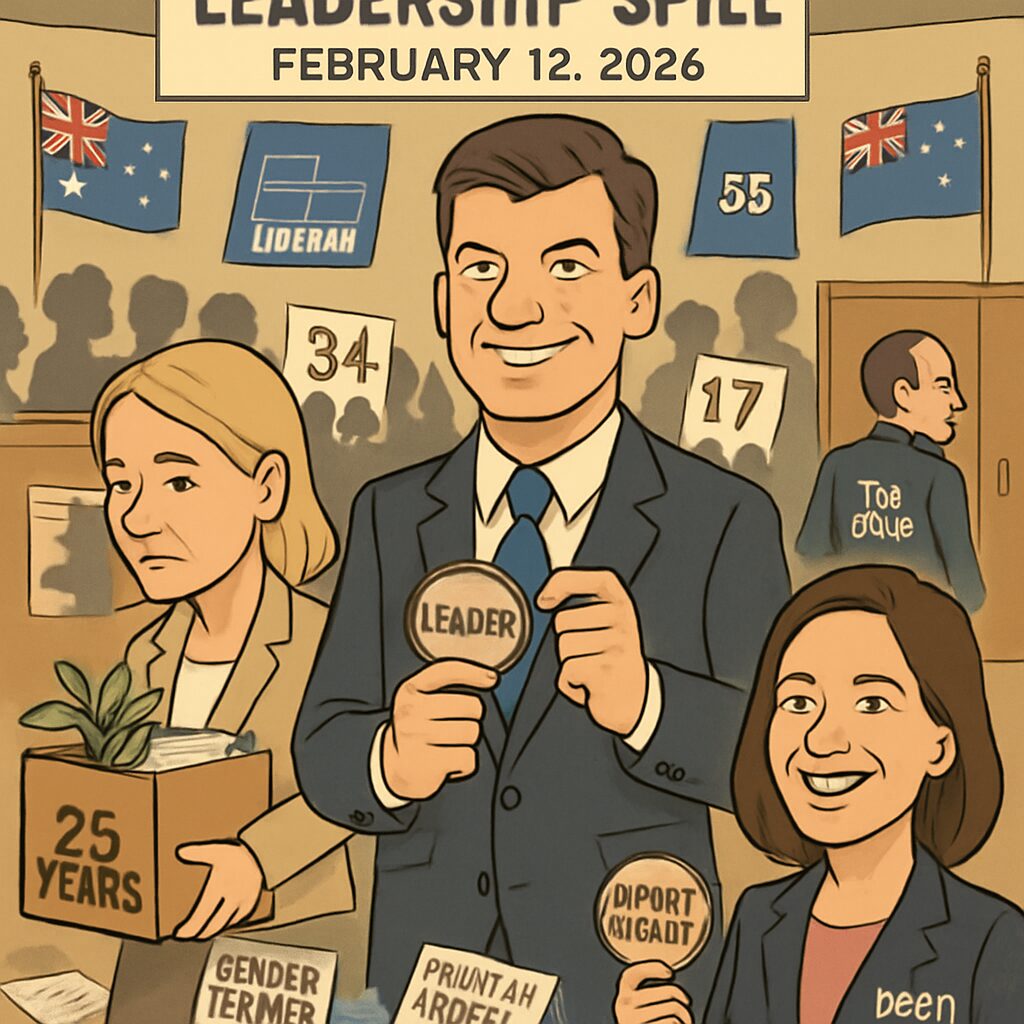
Angus Taylor has been elected as the new leader of Australia’s Liberal Party, replacing Sussan Ley after a leadership spill that ended her historic nine-month tenure. This development has sparked renewed conversation about the ‘glass cliff’ phenomenon and the challenges women face in achieving and maintaining leadership roles in Australian politics.
In a partyroom vote held on February 12, 2026, Angus Taylor secured 34 votes to Sussan Ley’s 17, comfortably winning the leadership. Jane Hume was elected as deputy leader, replacing Ted O’Brien. The spill was precipitated by internal party turmoil, poor polling, and a temporary split with the National Party, which had weakened Ley’s position. Taylor, a former energy minister and shadow treasurer, immediately outlined his priorities, focusing on restoring living standards, protecting Australian values, and scrapping Labor’s emissions policies.
Sussan Ley, the first woman to lead the Liberal Party, announced her intention to resign from parliament in the coming weeks, ending a 25-year political career. In her farewell remarks, she reflected on her brief leadership, citing the campaign for a royal commission into the Bondi terror attack and internal debates over net-zero emissions as significant achievements. Her supporters argued that she was not given adequate time to prove herself and that her removal could further damage the party’s appeal to women voters.
The concept of the ‘glass cliff’ has been central to discussions surrounding Ley’s departure. This phenomenon refers to women and minorities being promoted to leadership positions during times of crisis, only to be set up for failure. Ley took over the Liberal Party after its worst election defeat in modern history, facing the daunting tasks of unifying fractured factions, overhauling policies, and repairing the party’s reputation with women. Critics and analysts debate whether her short tenure exemplifies this trend or if it was solely due to performance issues.
Angus Taylor’s ascendancy marks a shift towards the conservative wing of the Liberal Party. In his first press conference, he emphasized unapologetically defending Australian values, tightening immigration controls, and expanding childcare choice. He acknowledged the need to win back voters who have drifted to parties like One Nation, promising to restore confidence in the Liberals. His policy stances, including opposition to net-zero targets and a focus on home ownership, signal a return to traditional conservative themes.
The leadership change underscores broader issues of gender diversity in Australian politics. While representation has improved, women remain rare at the highest levels of leadership. The Labor Party has achieved majority female representation through quotas, but the Coalition has resisted such measures, arguing that gender should not matter. This episode highlights the ongoing struggle for gender equality in political leadership and the Liberal Party’s reluctance to embrace systemic changes to promote women.
Looking ahead, the Liberal Party faces significant challenges in rebuilding its image and voter base. The rapid ousting of its first female leader may exacerbate perceptions of disunity and resistance to change. Analysts suggest that for the party to survive and thrive, it must address internal divisions, reflect modern Australia’s diversity, and move beyond self-obsession. The upcoming by-election in Ley’s seat of Farrer will be an early test of the new leadership’s ability to stabilize the party.
Ultimately, Sussan Ley’s departure is more than a political shuffle; it is a moment that forces a reckoning with how women are treated in Australian politics. Whether viewed through the lens of the glass cliff or as a consequence of political performance, it raises critical questions about opportunity, fairness, and the future of gender representation in the nation’s leadership.

