

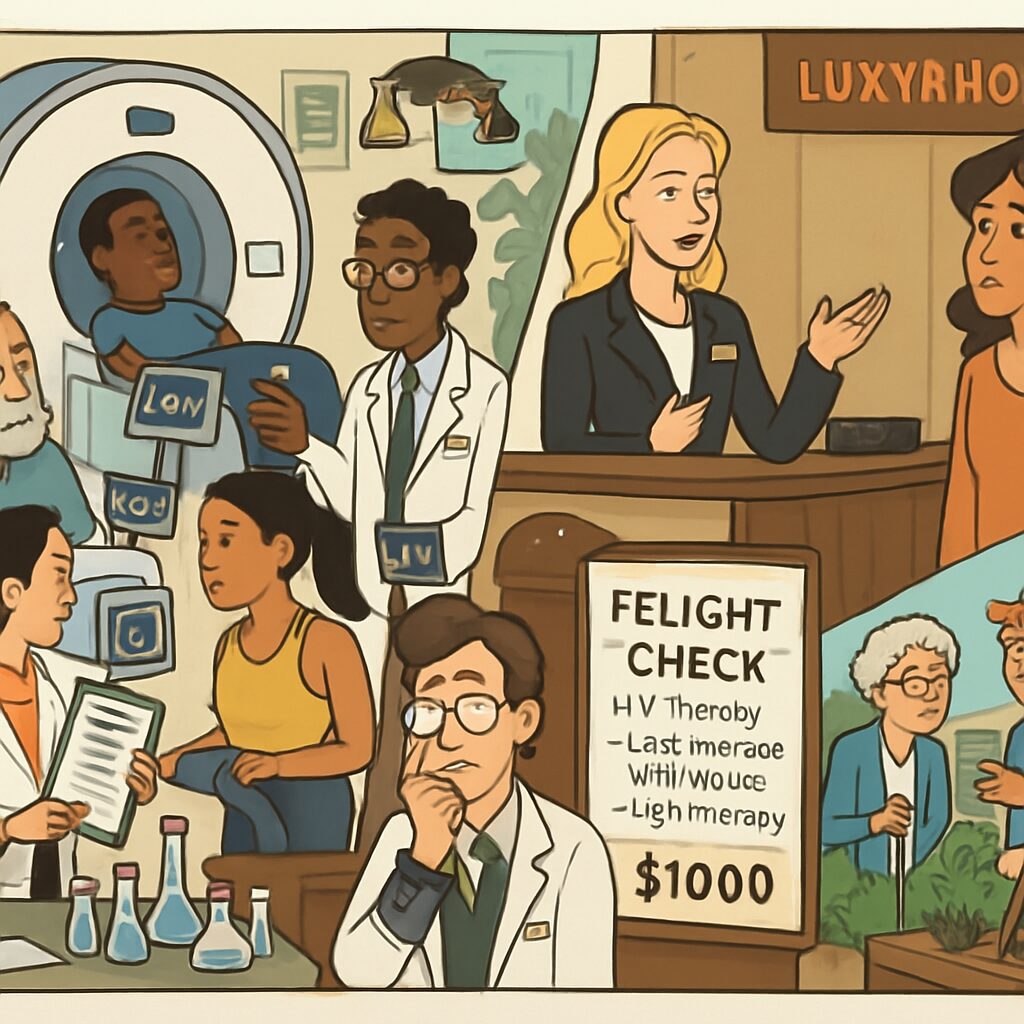
The longevity industry is experiencing rapid growth, with clinics and luxury hotels offering expensive diagnostics and treatments aimed at slowing ageing, but scientific evidence for many interventions remains limited, raising questions about efficacy and equity.
At clinics like Biograph in New York and San Francisco, assessments can last up to six hours and cost thousands of dollars, involving advanced diagnostics such as MRI scans, VO2 max testing, and comprehensive bloodwork. These services promise to extend healthspan by identifying health risks years before symptoms appear, with clinics claiming that one in six members uncover urgent findings. However, the gap between scientific support and consumer offerings is widening as prices increase.
Luxury hospitality has integrated longevity protocols, exemplified by the Four Seasons Los Angeles at Beverly Hills, which offers a $1,000 medical-grade recovery program called Flight Check. Developed with Immortelle Integrative Health, this 60-minute protocol includes IV therapy, laser-based immune fortification, and light therapy, targeting the physiological toll of air travel. Such programs often lead to broader discussions about longevity, highlighting how wellness is becoming embedded in high-end travel experiences.
Experts like Deborah Kado, a professor at Stanford Medicine, and Andrea LaCroix from UC San Diego, caution that many commercialized interventions—such as red light therapy, contrast therapy, and cold plunges—lack robust clinical trial data for extending human longevity. Kado emphasizes that assumptions based on animal studies do not translate to proven human benefits, while LaCroix notes the absence of evidence that any interventions extend healthy longevity in humans, labeling them as self-experimentation at personal risk.
Women represent a major demographic for longevity clinics, with menopause-focused offerings becoming a distinct subcategory, often priced at several thousand dollars. Jessica Shepherd, a physician specializing in women’s health, acknowledges the progress in addressing menopause but warns against making women feel they must invest heavily to prevent decline, stressing that menopause is a transition to be supported, not a problem to be fixed.
Equity concerns are prominent, as the high costs of longevity services create a two-tier aging system. Kado points out that in the United States, people with fewer resources may skip preventative care for basic needs, yet healthy longevity does not require luxury services, as many elderly individuals thrive without them. This disparity highlights the need for accessible health solutions.
Calls for industry accountability are growing, with leaders like Melanie Goldey, CEO of Tally Health, advocating for transparency about what science can deliver. Goldey stresses that fair pricing involves clearly communicating what is well-supported by research, what is evolving, and what remains unknown, to prevent overpromising to consumers.
As the longevity market expands, balancing innovation with ethical responsibility will be crucial. The industry’s sustainability may depend on aligning commercial offerings with scientifically validated practices, ensuring that the pursuit of a longer, healthier life is both evidence-based and equitable.

