

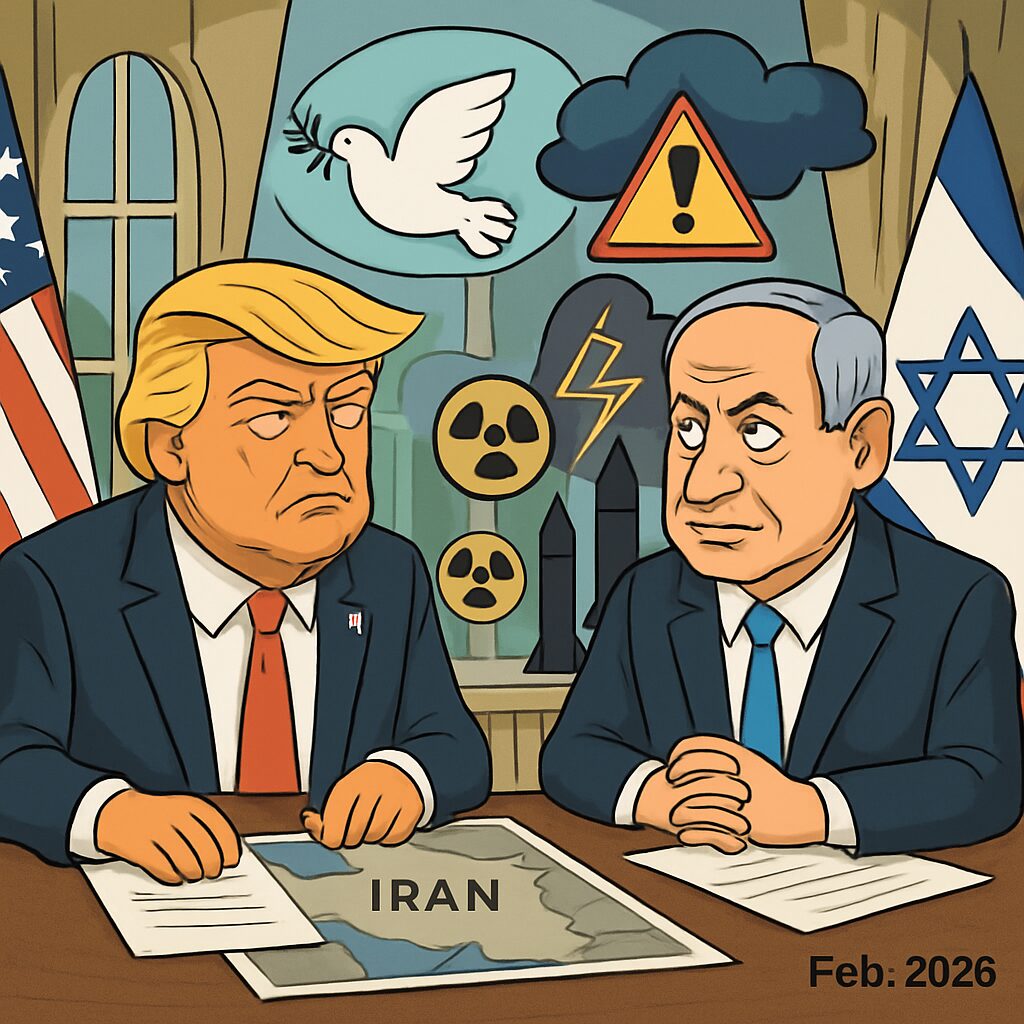
President Donald Trump met with Israeli Prime Minister Benjamin Netanyahu at the White House and announced that the United States will continue to pursue negotiations with Iran, while warning of potential action if a nuclear deal is not reached. The leaders discussed Iran’s nuclear programme and regional security concerns during their meeting on February 11, 2026, amid heightened tensions in the Middle East.
In a private meeting that lasted nearly three hours, Trump and Netanyahu focused on the ongoing diplomatic efforts to curb Iran’s nuclear ambitions. Trump later stated on Truth Social that the discussions were ‘very good’ and emphasized his insistence that talks with Iran continue to explore the possibility of a deal. This stance comes as both leaders acknowledge the need for a diplomatic solution but prepare for alternatives, reflecting the complex dynamics of US-Israel relations and regional stability.
Netanyahu, who has made six trips to the US since Trump’s return to office, pressed for a comprehensive agreement that addresses not only Iran’s uranium enrichment but also its ballistic missile programme and support for proxy groups like Hamas and Hezbollah. Israeli officials have long argued that Iran poses an existential threat, and Netanyahu’s government is under pressure to secure a deal that meets its security needs. The prime minister’s office highlighted the importance of limiting Iran’s regional influence as a key component of any negotiations, underscoring Israel’s strategic priorities.
Iran, on the other hand, has expressed willingness to limit its nuclear activities in exchange for sanctions relief but has resisted additional demands. Iranian President Masoud Pezeshkian warned that his country would not yield to excessive demands, even as he reiterated Iran’s commitment to dialogue and its denial of seeking nuclear weapons. This position is set against a backdrop of recent protests in Iran and a joint US-Israeli air campaign last year, which analysts say have left the regime in a vulnerable state, potentially influencing its negotiating stance.
The Trump administration has been actively involved in restarting nuclear talks after withdrawing from the Obama-era deal in his first term and reimposing sanctions. Special envoy Steve Witkoff and Jared Kushner provided updates on recent negotiations with Iran, indicating ongoing efforts. Trump has publicly stated that a good deal would mean no nuclear weapons and no missiles, but he has also hinted at military options, such as deploying additional aircraft carriers to the region if diplomacy fails, highlighting the administration’s dual-track approach.
Regional dynamics play a crucial role, with the US increasing its military presence and warning Iran against further aggression. The meeting also touched on the ceasefire in Gaza, as the Trump administration works to implement peace agreements. Secretary of State Marco Rubio engaged with Netanyahu on these issues, underscoring the interconnected nature of Middle East diplomacy and security, where progress on one front can impact others.
Experts suggest that while Trump prefers a diplomatic outcome, he may be reluctant to engage in a major military conflict with Iran, especially in an election year. Similarly, Iran’s weakened position could make it more amenable to negotiations, but domestic pressures and regional rivalries complicate the path forward. The close coordination between the US and Israel is expected to continue, with both nations reserving the right to take action if a satisfactory deal is not achieved, setting the stage for critical upcoming talks.
Looking ahead, the success of these diplomatic efforts will hinge on the ability to bridge gaps between Iran’s demands and the security concerns of Israel and the US. The next rounds of negotiations will be pivotal in determining whether a new nuclear agreement can be forged or if tensions will escalate further in this volatile region, with implications for global stability and Middle East peace.

