

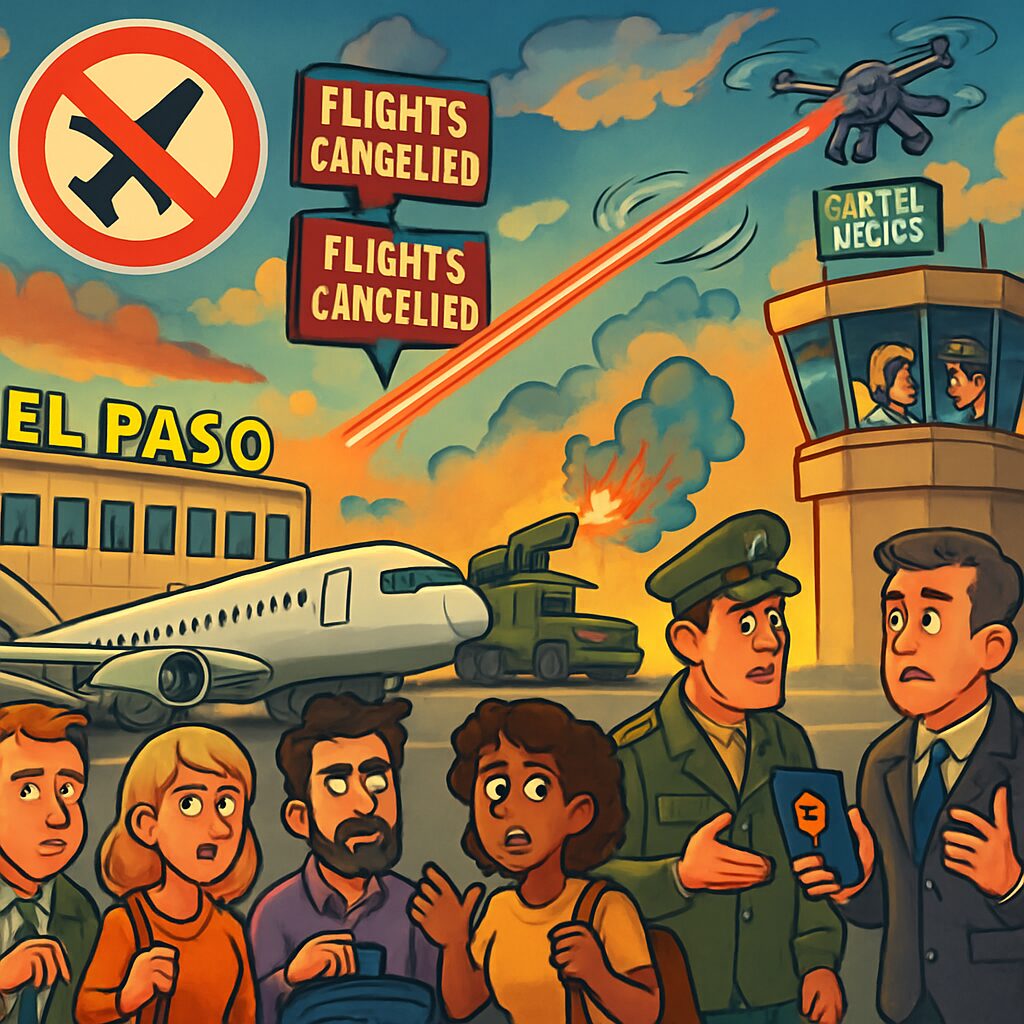
The unexpected shutdown of airspace over El Paso, Texas, was triggered by the U.S. military’s plans to test a high-energy laser against cartel drones without coordinating with aviation authorities, leading to a brief but disruptive closure that highlighted tensions between national security and air safety. On February 11, 2026, the Federal Aviation Administration abruptly imposed a 10-day flight restriction, grounding all flights up to 18,000 feet, only to lift it about eight hours later after the Pentagon’s unannounced intentions came to light.
The core dispute arose from the Defense Department’s desire to deploy a directed-energy weapon designed to disable drones operated by Mexican drug cartels along the border. Sources indicated that the Pentagon had scheduled a meeting with the FAA for February 20 to discuss risks, but sought to proceed with the laser test earlier, forcing the FAA to shut down airspace to prevent hazards. Customs and Border Protection was reportedly operating the technology, used to shoot down mylar balloons, with Defense personnel present, though conflicting accounts cited a cartel drone incursion as the trigger.
Transportation Secretary Sean Duffy stated on social media that the FAA and Defense Department acted swiftly to neutralize a drone threat, ensuring commercial travel safety. Pentagon officials echoed this, while the FAA remained silent on the coordination breakdown, fueling skepticism among lawmakers and local leaders who were not informed in advance. Representative Veronica Escobar of Texas criticized the federal government for leaving El Paso officials in the dark, calling such disruptions unacceptable.
The closure caused significant travel chaos, with passengers receiving last-minute notifications and scrambling for alternatives. Audio from air traffic controllers captured pilots’ surprise at the 10-day ground stop, and travelers like Samuel found themselves amid confusion without clear information. The El Paso International Airport, a regional hub, saw operations halted and hastily resumed, underscoring the impact of sudden federal actions.
This incident highlights ongoing border security challenges, where drone incursions by cartels are common but rarely prompt extreme measures. Officials report thousands of monthly drone detections for drug smuggling and surveillance, making counter-drone technology a priority. The military has tested lasers in remote areas, but the El Paso test involved a populous zone, raising safety concerns and exposing gaps in interagency communication.
Political fallout was immediate, with demands for accountability from Texas and New Mexico lawmakers. El Paso Mayor Renard Johnson labeled the disruption “major and unnecessary,” akin to post-9-11 measures, and urged better coordination. The episode has sparked discussions on balancing national security with civilian safety in border regions.
Moving forward, the FAA and Pentagon are expected to review coordination protocols, with the scheduled February 20 meeting addressing the laser system’s risks. Travelers and residents grapple with the aftermath, as the quick reversal did little to ease initial confusion. This event serves as a cautionary tale for deploying advanced military technologies in civilian areas, emphasizing the need for clear communication and joint planning between defense and transportation agencies.

