

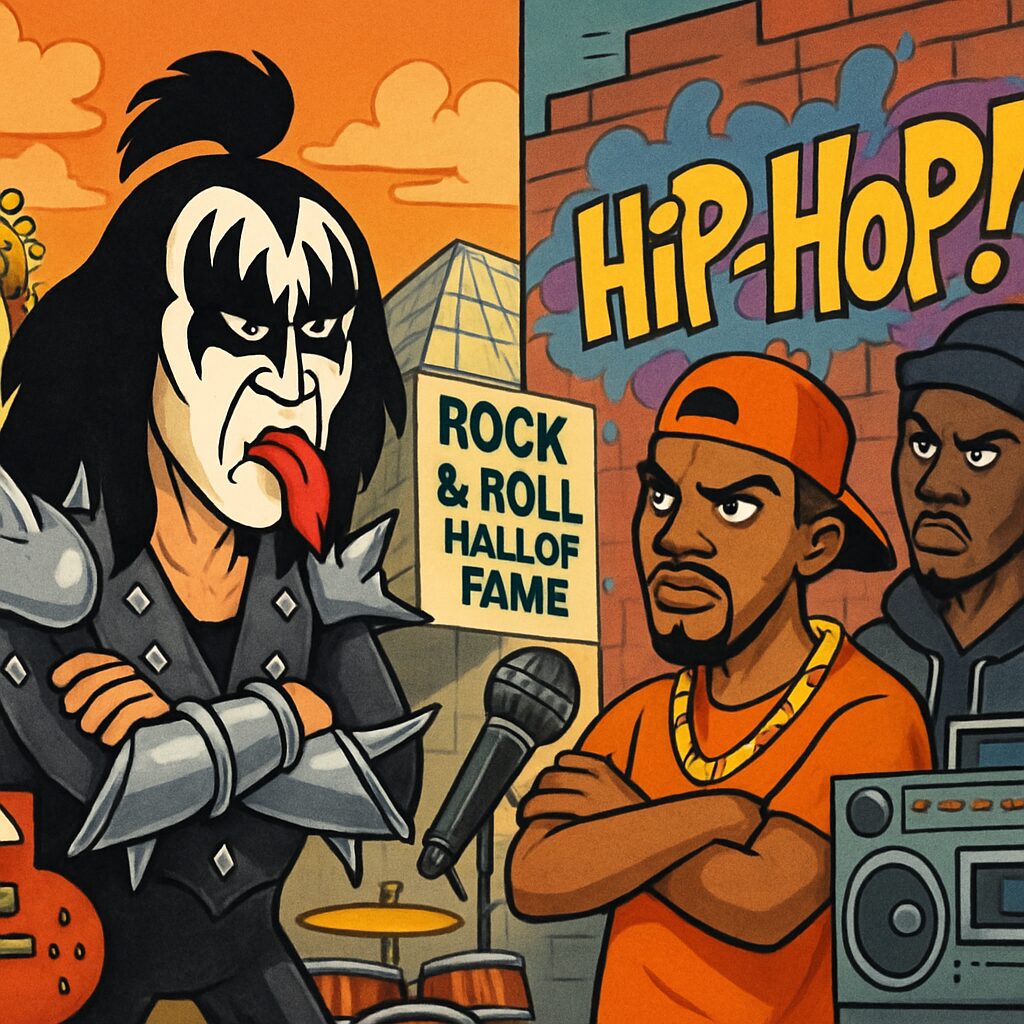
Gene Simmons, the iconic co-founder of KISS, has reignited a long-standing controversy by publicly criticizing the Rock & Roll Hall of Fame for inducting hip-hop artists, arguing that the genre does not belong in an institution dedicated to rock music. Speaking on the “Legends N Leaders” podcast last week, the 76-year-old rocker dismissed hip-hop as “not my music” and made comments that have been perceived as racially insensitive, stating, “I don’t come from the ghetto.”
During the interview, Simmons questioned why hip-hop pioneers like Grandmaster Flash are honored while rock giants such as Iron Maiden remain excluded, despite their commercial success. He reiterated his belief that hip-hop is primarily a “spoken-word art” rather than music, contrasting it with the complexity of rock compositions. This stance has been a consistent theme for Simmons, who has previously expressed similar views in interviews with Rolling Stone and other outlets.
The rocker’s comments have drawn swift criticism, with many pointing out that his remarks overlook the cultural and musical significance of hip-hop. Simmons referenced a past exchange with rapper Ice Cube, who defended hip-hop’s inclusion by emphasizing the “spirit of rock and roll.” However, Simmons remained unconvinced, sarcastically asking when Led Zeppelin would be inducted into a hypothetical Hip-Hop Hall of Fame.
This is not the first time Simmons has clashed with hip-hop artists over the Rock Hall. In 2016, when N.W.A. was inducted, member MC Ren directly addressed Simmons during the acceptance speech, stating, “hip-hop is here forever—get used to it.” This was in response to Simmons’ 2015 comment where he said he was eagerly awaiting the “death of rap,” highlighting the deep-seated tension between the rock legend and the hip-hop community.
Simmons’ criticisms are part of a broader debate about the Rock & Roll Hall of Fame’s evolving criteria. Since its inception, the Hall has gradually expanded to include artists from various genres, reflecting changes in popular music. Supporters argue that hip-hop, like rock, is a rebellious and influential genre that deserves recognition, while critics like Simmons maintain that it dilutes the institution’s focus.
Other legendary rockers have also expressed skepticism about hip-hop. Rolling Stones guitarist Keith Richards once remarked that rap contains “so many words, so little said,” and Grateful Dead’s Jerry Garcia called it “not music” in a 1995 documentary. However, these views are increasingly seen as outdated as hip-hop continues to dominate global music charts and cultural discourse.
Gene Simmons, inducted into the Rock Hall with KISS in 2014, has a history of provocative statements, but his latest comments have sparked particular outrage on social media and among music fans. The backlash underscores the ongoing cultural divide between different musical traditions and generations, with many accusing Simmons of elitism and ignorance toward hip-hop’s roots and artistry.
As the controversy unfolds, it raises questions about the future direction of the Rock & Roll Hall of Fame and its role in celebrating diverse musical legacies. While Simmons stands firm in his opinion, the institution continues to honor a wide range of artists, suggesting that the definition of “rock and roll” may be more inclusive than some purists prefer. The debate is likely to persist as music evolves and new genres seek recognition in hallowed halls.

