

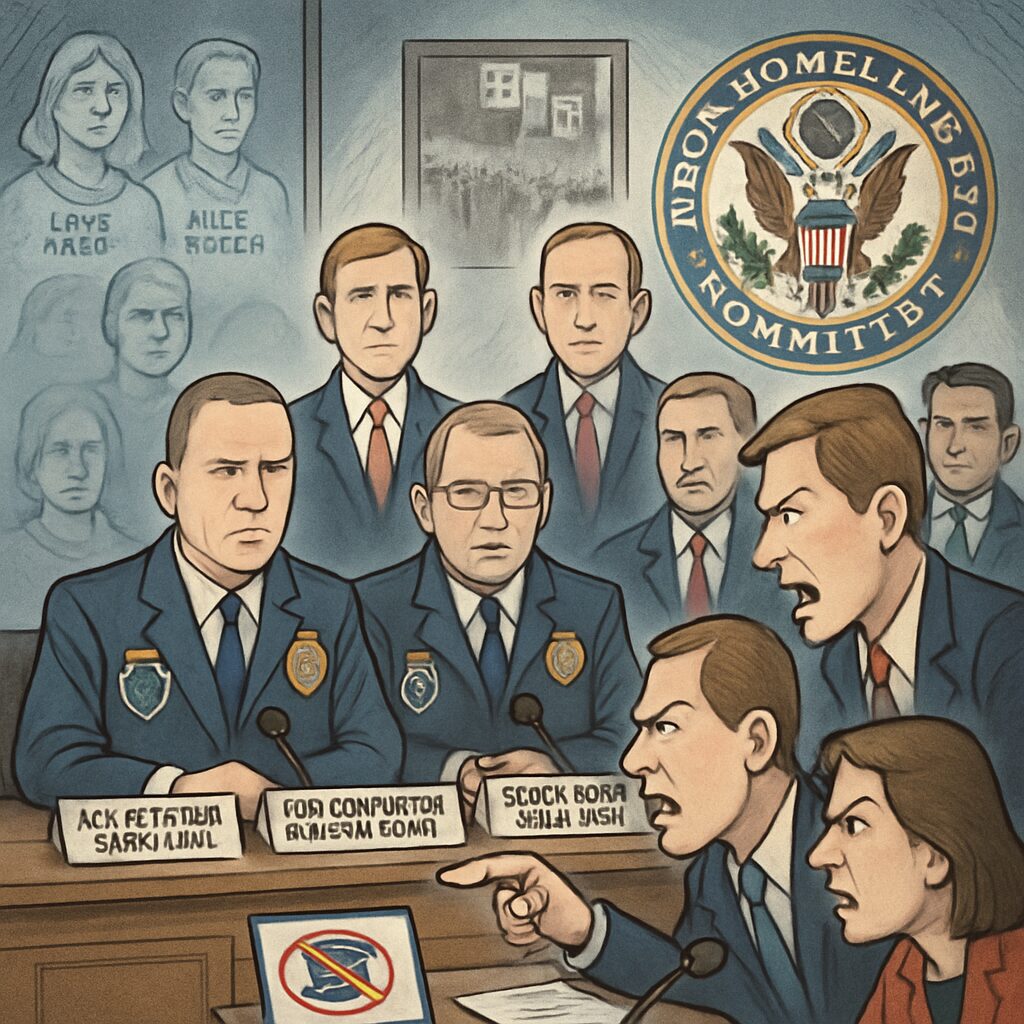
In a tense House Homeland Security Committee hearing on Tuesday, February 10, 2026, top Trump administration immigration officials faced intense scrutiny from Democrats over the recent killings of two U.S. citizens in Minneapolis amid a broader crackdown on immigration. The hearing highlighted deep partisan divides and raised questions about enforcement tactics, with officials defending their actions while committing to investigations into the fatalities.
The hearing featured testimony from ICE Acting Director Todd Lyons, CBP Commissioner Rodney Scott, and USCIS Director Joseph Edlow, who spent over three hours before the committee. Democrats pressed the officials on the deaths of Renee Good and Alex Pretti, who were shot by federal agents in separate incidents in January, leading to widespread backlash. Both Lyons and Scott declined to comment extensively on the shootings, citing active investigations, but committed to sharing results with Congress once completed. This reluctance fueled Democratic criticism, with Rep. Eric Swalwell drawing sharp comparisons to corporate efficiency, questioning Lyons about previous remarks likening deportation systems to Amazon.
Republicans, led by Committee Chairman Andrew Garbarino, called for impartial investigations into the killings but largely avoided direct criticism of the administration. Instead, they focused on condemning sanctuary city policies and highlighting arrests of high-risk immigrants, blaming previous administrations for current immigration issues. The partisan tone was evident throughout, with Democrats accusing officials of overreach and Republicans defending enforcement as necessary for national security. This entrenched positioning reflects the ongoing debate over Homeland Security funding, which has been stalled due to Democratic demands for reforms.
A contentious moment arose when Rep. Dan Goldman invoked Nazi Germany, asking Lyons if he was aware of historical regimes that required proof of citizenship. Lyons acknowledged the comparison but defended ICE personnel, stating that equating them to Gestapos was inappropriate and urging a visit to a Holocaust museum for context. This exchange underscored the emotional intensity of the hearing, with Democrats using stark historical analogies to criticize tactics, while officials pushed back against what they saw as unfair characterizations.
Beyond the killings, Democrats questioned the use of force by federal agents, citing incidents like the pepper-spraying of a Chicago family in their car. Scott confirmed that such actions were not proper procedure but noted ongoing investigations without providing details. Lyons also denied allegations that ICE maintains a database tracking U.S. citizens, despite reports suggesting otherwise, emphasizing that the agency does not target domestic protesters. These details revealed concerns about accountability and transparency in enforcement operations.
The hearing also touched on broader policy issues, with Republicans highlighting increased border security funding under Trump, while Democrats advocated for abolishing ICE or implementing reforms like body cameras and de-prioritizing non-criminal arrests. The $170 billion allocated to immigration agencies through 2029 was mentioned, illustrating the scale of the administration’s commitment. However, with a short-term funding extension expiring soon, the political impasse threatens to delay budgetary decisions and further polarize the debate.
In closing, the hearing demonstrated little common ground, with both sides reiterating long-held positions. Democrats continue to demand resignations and systemic changes, while Republicans uphold the administration’s agenda as vital for law and order. The outcomes of the investigations into the Minneapolis killings and potential reforms will likely shape future immigration policy and congressional negotiations, keeping the issue at the forefront of political discourse.

