

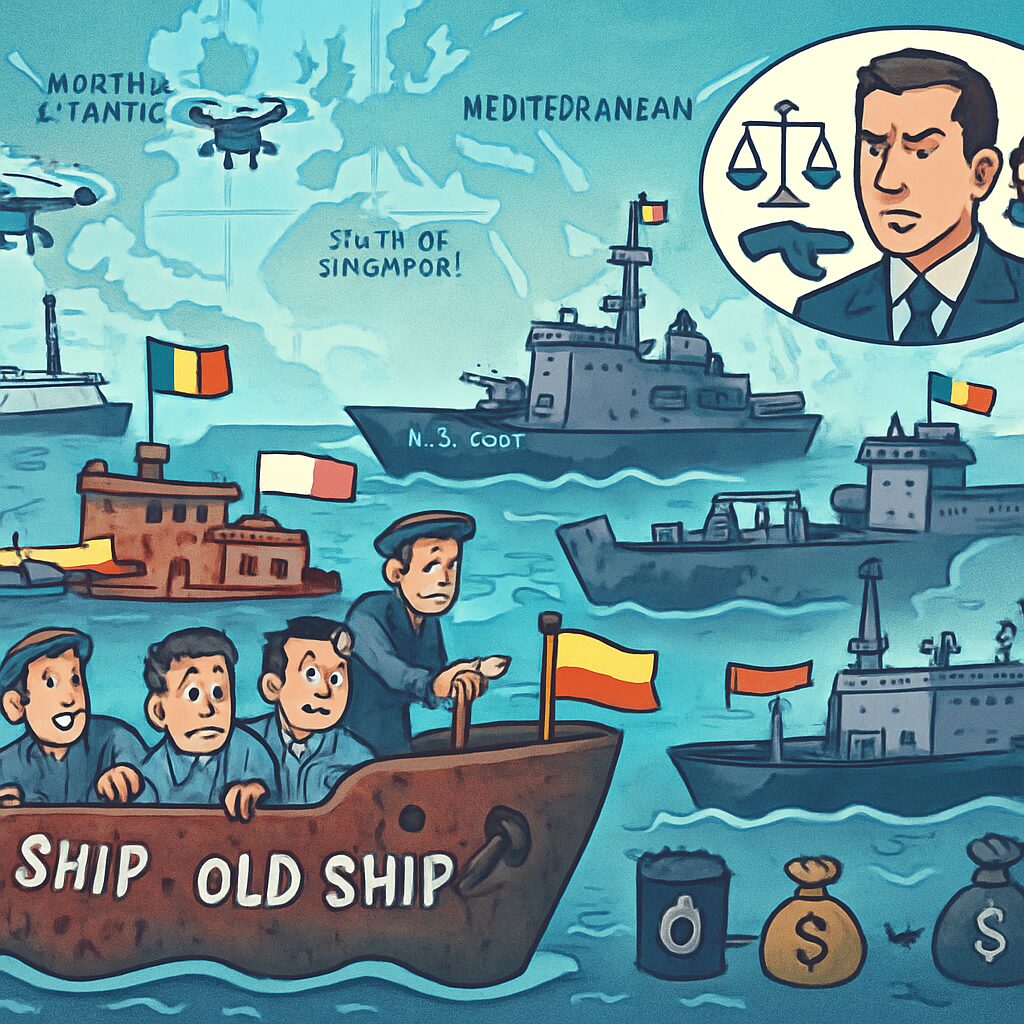
The shadow fleet of tankers evading international sanctions to transport Russian and Iranian oil is rapidly expanding, posing significant challenges to global maritime security and fueling geopolitical conflicts. Western governments are grappling with how to effectively counter this growing threat, which involves complex tactics like identity manipulation and poses risks to crew safety and the environment.
The fleet has surged to approximately 1,468 vessels, triple its size since Russia’s full-scale invasion of Ukraine four years ago, and now constitutes about 18-19% of the internationally trading tanker fleet. This shadow network, often comprising aging and poorly maintained ships, frequently changes names, flags, and identification numbers to avoid detection, with vessels like the Gale adopting multiple identities such as Sea Shell and Beeta to conceal sanctioned activities.
A key tactic is the use of “zombie ships,” which steal the identities of decommissioned vessels to reappear in tracking systems, allowing them to operate freely. For instance, the Gale, sanctioned by the U.S. for transporting Iranian oil, was involved in a ship-to-ship transfer south of Singapore in late January, highlighting the sophisticated methods used to obscure cargo origins. Analysts describe regions like this as epicenters of maritime lawlessness, where illicit oil shipments thrive.
Human costs are stark, with crews often unaware of the risks when signing contracts. Russian engineer Denis, who served on the EU- and UK-sanctioned tanker Serena, reported dire conditions including non-functional safety equipment and unpaid wages, likening the experience to modern-day slavery. International Transport Workers Federation inspectors echo these concerns, noting that seafarers become “prisoners on board” once at sea, with little recourse due to opaque ownership structures.
In response, Western nations have begun taking more aggressive actions. Recently, the U.S. intercepted the Russian-flagged tanker Marinera after a two-week chase in the North Atlantic, with UK support, while France seized the Grinch in the Mediterranean. These operations, conducted under international law, signal a shift towards kinetic measures, though they come with logistical challenges, such as maintaining seized vessels and managing environmental hazards.
The debate in capitals like London and Brussels centers on balancing forceful interventions with practical constraints. Tom Keatinge of the Royal United Services Institute notes frustration over Russia’s continued oil sales but highlights the difficulties of handling massive tankers post-seizure. The Trump administration’s confiscation of Venezuelan oil and Ukraine’s drone attacks on shadow fleet tankers add layers to the response spectrum, though European allies are cautious about escalating to such levels.
Bureaucratic efforts continue, including sanctions on vessels, pressure on flag states like The Gambia to tighten regulations, and new EU insurance rules. However, the sheer scale of the shadow fleet overwhelms resources, compounded by national security concerns, such as suspected Russian involvement in undersea cable sabotage. A recent coordinated warning by 14 countries underscores the threat of AIS manipulation to maritime safety.
As the net closes on Russian oil with potential EU bans on maritime services, the shadow fleet is likely to adapt, perpetuating a cycle of evasion. The ongoing conflicts in Ukraine and the Middle East, funded by oil revenues, ensure that this issue remains urgent, with Western governments forced to innovate in their enforcement strategies while navigating legal and operational pitfalls.

