

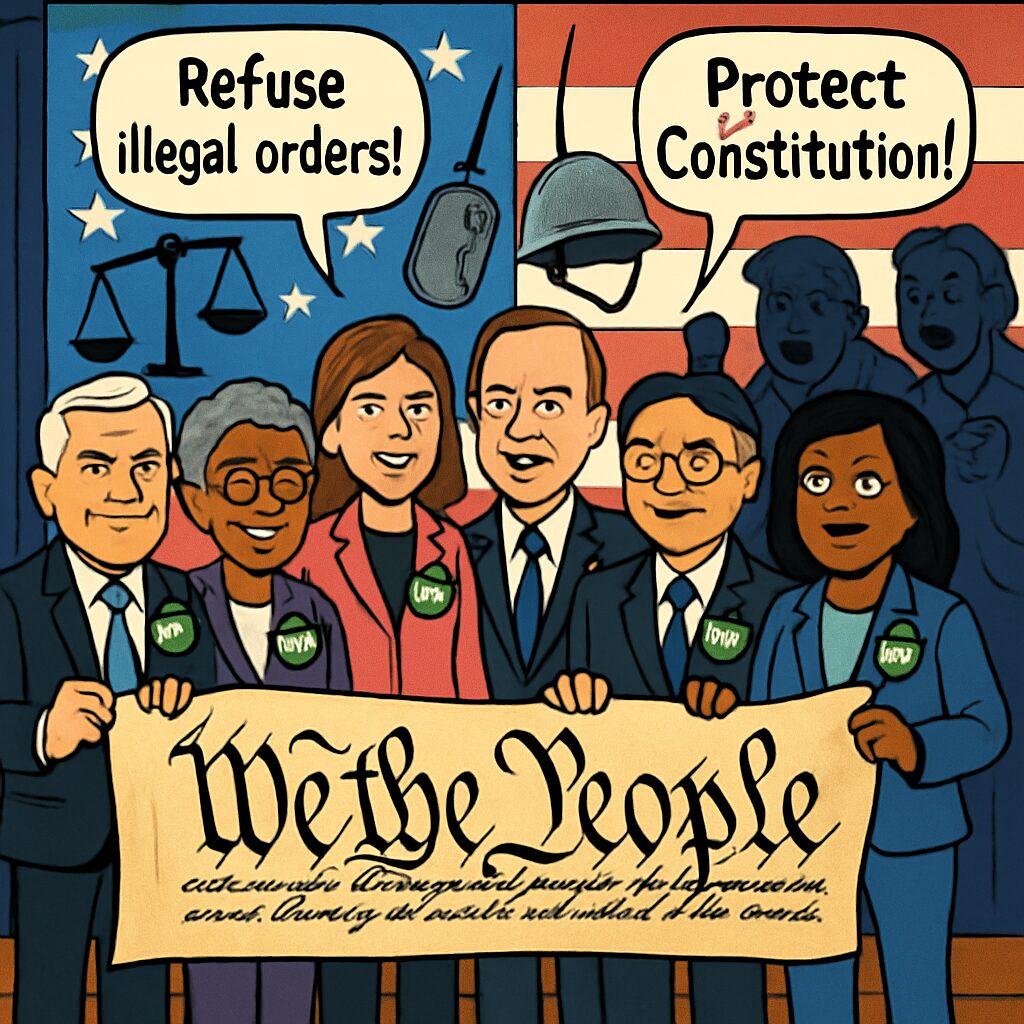
A federal grand jury on Tuesday declined to indict six Democratic lawmakers who posted a video urging U.S. military members to disobey any illegal orders from the Trump administration, marking a significant rebuke of the Justice Department’s efforts to prosecute political opponents. The decision, reported by multiple news outlets including CNN and CBS News, underscores ongoing tensions between the administration and its critics over free speech and the rule of law.
The video, which was posted in November, featured Senators Elissa Slotkin of Michigan and Mark Kelly of Arizona, along with Representatives Jason Crow of Colorado, Chris Deluzio and Chrissy Houlahan of Pennsylvania, and Maggie Goodlander of New Hampshire. All six are veterans or former intelligence officials who warned in the 90-second clip that ‘threats to our Constitution’ are coming ‘from right here at home’ and repeatedly urged service members and intelligence officials to ‘refuse illegal orders.’ The lawmakers said the video was prompted by Trump’s proposals to use the military in ways they view as illegal, such as targeting terrorists’ families or deploying troops to U.S. cities.
The Justice Department sought charges under a statute that prohibits causing insubordination in the military, with a maximum penalty of 10 years in prison. However, the grand jury refused to approve the indictments, a rare occurrence that highlights the legal challenges in such politically charged cases. This follows similar attempts to prosecute other Trump foes, like former FBI Director James Comey and New York Attorney General Letitia James, which have also faced judicial pushback.
In response to the decision, the lawmakers condemned the administration’s actions. Kelly called it an ‘outrageous abuse of power,’ while Slotkin accused Trump of trying to ‘weaponize our justice system against his perceived enemies.’ Crow issued a blunt warning, saying Americans ‘should be appalled’ by the weaponization of justice, and Deluzio stated he would not be intimidated. Goodlander praised the grand jury for honoring the Constitution, and Houlahan called it a win for free speech.
The video had drawn fierce criticism from the Trump administration, with the president labeling it ‘seditious behavior’ and demanding arrests. Defense Secretary Pete Hegseth argued the video sowed confusion and endangered troops, and he attempted to punish Kelly by reducing his military rank and retirement pay—a move Kelly is challenging in court. A federal judge has expressed skepticism about the constitutionality of Hegseth’s actions, promising a ruling soon.
House Speaker Mike Johnson, a Republican, said the Democrats ‘probably should be indicted,’ arguing that urging disobedience crosses a line. However, legal experts note that military members are required to follow legal orders but must disobey those that are manifestly unlawful, adding complexity to the debate over the video’s message.
The grand jury’s declination is seen as a victory for Democratic critics of Trump and a setback for the administration’s aggressive legal tactics. It raises questions about the limits of presidential power and the independence of the justice system in a polarized political climate. The case also reflects broader struggles over civil liberties and the enforcement of norms in government.
Looking ahead, the fallout continues as Kelly’s lawsuit against Hegseth progresses, and the lawmakers remain under scrutiny. The event highlights the enduring conflicts between executive authority and legislative dissent, with implications for future interactions between the military, justice system, and political speech in the United States.

