

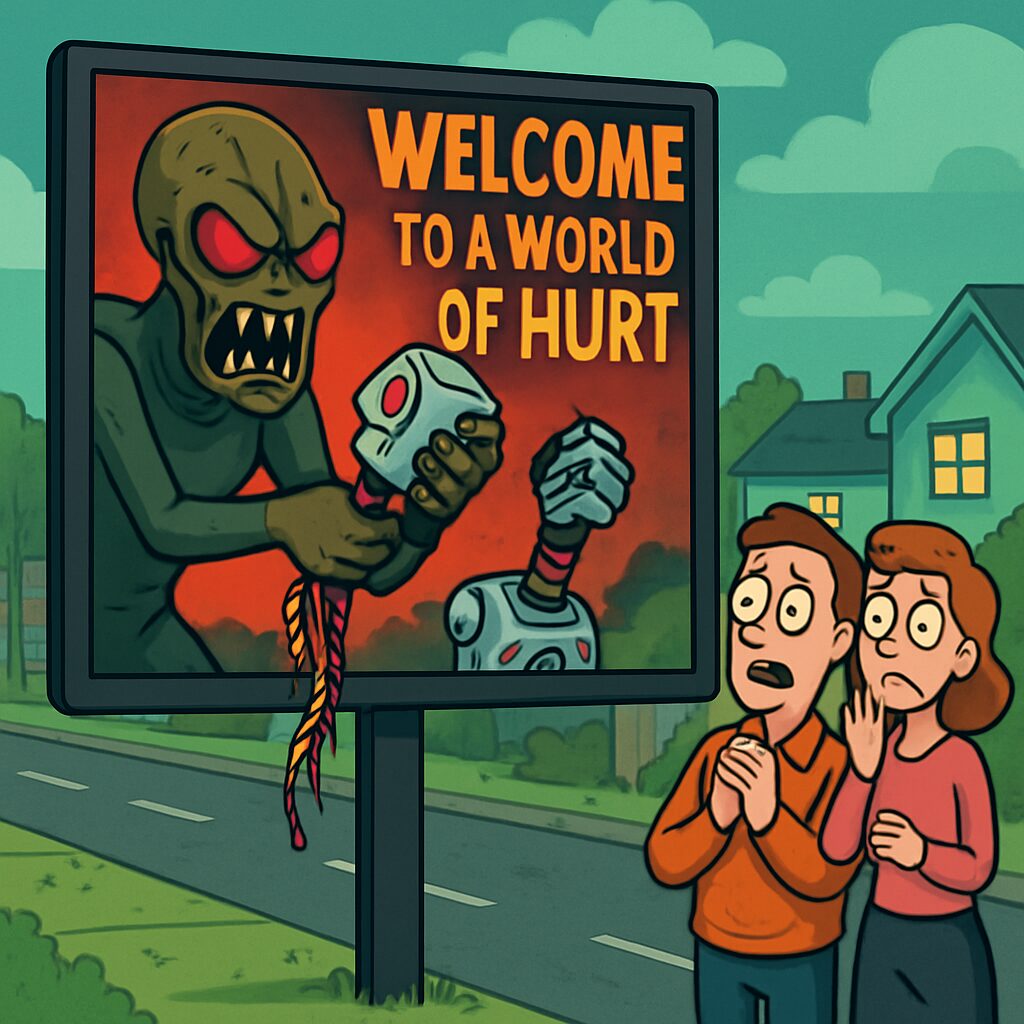
A Disney advert for the upcoming sci-fi film Predator Badlands has been banned by the UK’s Advertising Standards Authority after complaints that its graphic depiction of a severed body was likely to frighten and cause distress to children. The ruling highlights ongoing tensions between creative marketing and regulatory standards aimed at protecting young audiences from disturbing content.
The controversial digital poster advert was displayed on a roadside in Giffnock, Glasgow, promoting the film’s release scheduled for November. It featured a large, alien-like creature holding aloft the severed torso of a smaller figure, with the bottom half missing and spine exposed. Other elements included close-up shots of the alien’s distorted face and sharp fangs, accompanied by the caption “welcome to a world of hurt.” The advert was part of a campaign by Disney’s subsidiary, Twentieth Century Studios, targeting general audiences but was accessible outdoors where children could easily see it.
Two parents filed formal complaints with the ASA, arguing that the imagery was “inappropriate and disturbing for young children” and unsuitable for public display. They expressed concern that the gory and menacing scenes could cause fear and emotional harm, particularly given the advert’s outdoor location. The complaints emphasized the need for advertisers to consider the unintended impact on vulnerable viewers, especially in spaces frequented by families.
In response, Disney defended the advert, stating that the severed figure was intended to be a “synth” or robot, not a human, and that its dismembered appearance further emphasized its non-human nature. The company noted that the scene lasted less than two seconds in a 10-second advert and had been “sense checked” by third parties, with adjustments made based on feedback. Disney argued that the stylized and brief nature of the content, aligned with the film’s 12A rating, should mitigate concerns about harm or offence.
However, the ASA rejected these arguments, ruling that the advert breached the social responsibility and harm and offence provisions of the UK advertising code. The regulator found that the alien character appeared “menacing” and the severed torso’s gory details were not clearly distinguishable as robotic, making it disturbing to younger children. The ASA also cited the frightening caption and close-up shots as additional factors that could cause distress, underscoring that advertisers must ensure content is suitable for a general audience, including kids.
As a result, the ASA banned the advert from appearing again in its current form and reminded Disney to take greater care in future campaigns to prevent distressing material from being seen by children. This action serves as a warning to other advertisers about the strict enforcement of standards regarding violent or scary imagery in public spaces. The ruling may influence how studios market age-restricted films, balancing creative freedom with regulatory compliance.
Disney acknowledged the ruling in a statement, saying, “We take our responsibilities to audiences very seriously and strive to work closely with partners to meet the required standards.” This incident reflects broader industry challenges in navigating advertising regulations, especially as digital and outdoor ads become more immersive. It also ties into ongoing debates about the impact of media violence on youth and the role of watchdogs in upholding public welfare.
Looking ahead, the ban could prompt Disney and other entertainment giants to review their marketing strategies for horror or action films, potentially leading to more cautious approaches in ad design and placement. The ASA’s decision reinforces its commitment to protecting children from inappropriate content, setting a precedent for future cases involving graphic imagery in advertising. As consumer awareness grows, such rulings may drive higher standards across the media landscape, ensuring that promotional materials align with societal expectations for safety and decency.

