

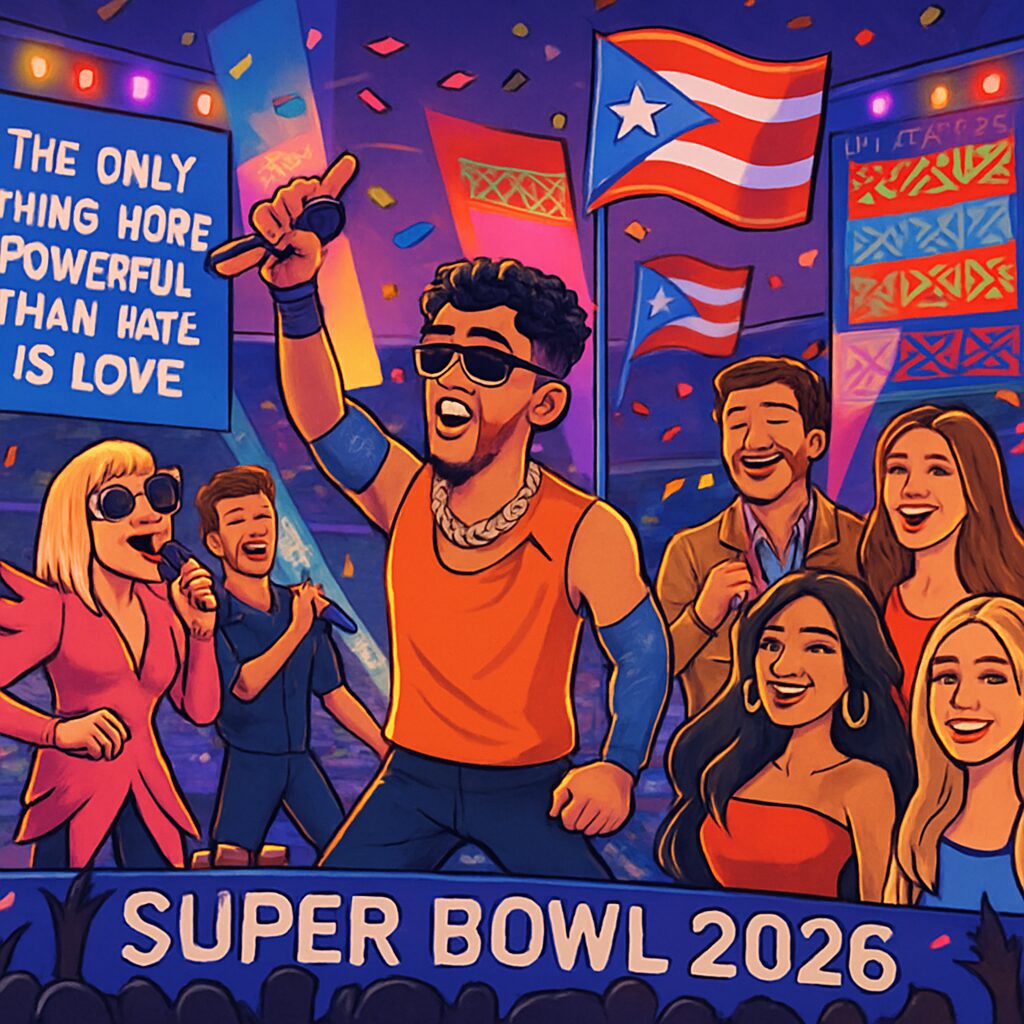
Bad Bunny’s Super Bowl 2026 halftime show was a historic, star-studded spectacle that captivated millions with its cultural significance and secretive production. The performance, held on February 8 at Levi’s Stadium in Santa Clara, California, featured a medley of hits entirely in Spanish and numerous surprise celebrity cameos, all kept under tight wraps until showtime.
The Puerto Rican icon made history as the first artist to deliver a full halftime show in Spanish, blending his reggaeton hits with unexpected elements. His set included special appearances by music legends Lady Gaga and Ricky Martin, who performed their own songs in new arrangements, adding a layer of novelty and excitement to the high-energy performance. The show celebrated Bad Bunny’s heritage and recent Grammy wins, reinforcing his status as a global superstar.
A central feature was the “casita” segment, where Bad Bunny was joined on the field by a diverse array of celebrities dancing to his music. This group included actors Pedro Pascal and Jessica Alba, musicians Cardi B and Karol G, and social media influencer Alix Earle, among others. Their presence highlighted the show’s inclusivity and appeal across different audiences, with each participant bringing unique energy to the vibrant atmosphere.
Secrecy was a hallmark of the production, as revealed by hospitality mogul David Grutman, a close friend of Bad Bunny who participated in the casita. Grutman shared in an exclusive interview that even the celebrities involved were unaware of major surprises, such as a live wedding ceremony and the full list of musical guests. He emphasized that Bad Bunny was deeply involved in every detail, ensuring the show reflected his personal vision and cultural pride.
Alix Earle’s inclusion was particularly strategic, with Grutman explaining that she was chosen as the “face of Gen Z” to make the performance more relatable to younger viewers. Earle, a popular TikTok star, is also set to star in a Netflix reality show produced by Grutman, linking her cameo to broader media ventures. This move underscored Bad Bunny’s intent to bridge generational and cultural gaps through his art.
Beyond entertainment, the halftime show served as a platform for social commentary, echoing Bad Bunny’s past advocacy for immigrant rights and love over hate. Screens in the stadium displayed messages like “The only thing more powerful than hate is love,” resonating with his Grammy speech themes. The performance reinforced Puerto Rican pride and challenged stereotypes, making it a poignant moment in mainstream media.
The show has sparked widespread acclaim and discussion, with fans and critics praising its bold production values and cultural impact. It sets a new benchmark for Super Bowl halftime shows, blending music, celebrity, and meaningful messaging in a way that appeals to a global audience. The event’s success highlights the growing influence of Latinx artists in entertainment.
Looking forward, Bad Bunny’s halftime show is likely to inspire future Super Bowl productions and encourage greater diversity in major events. As reports continue to emerge, the performance stands as a landmark achievement, celebrating innovation and representation in live entertainment.

