

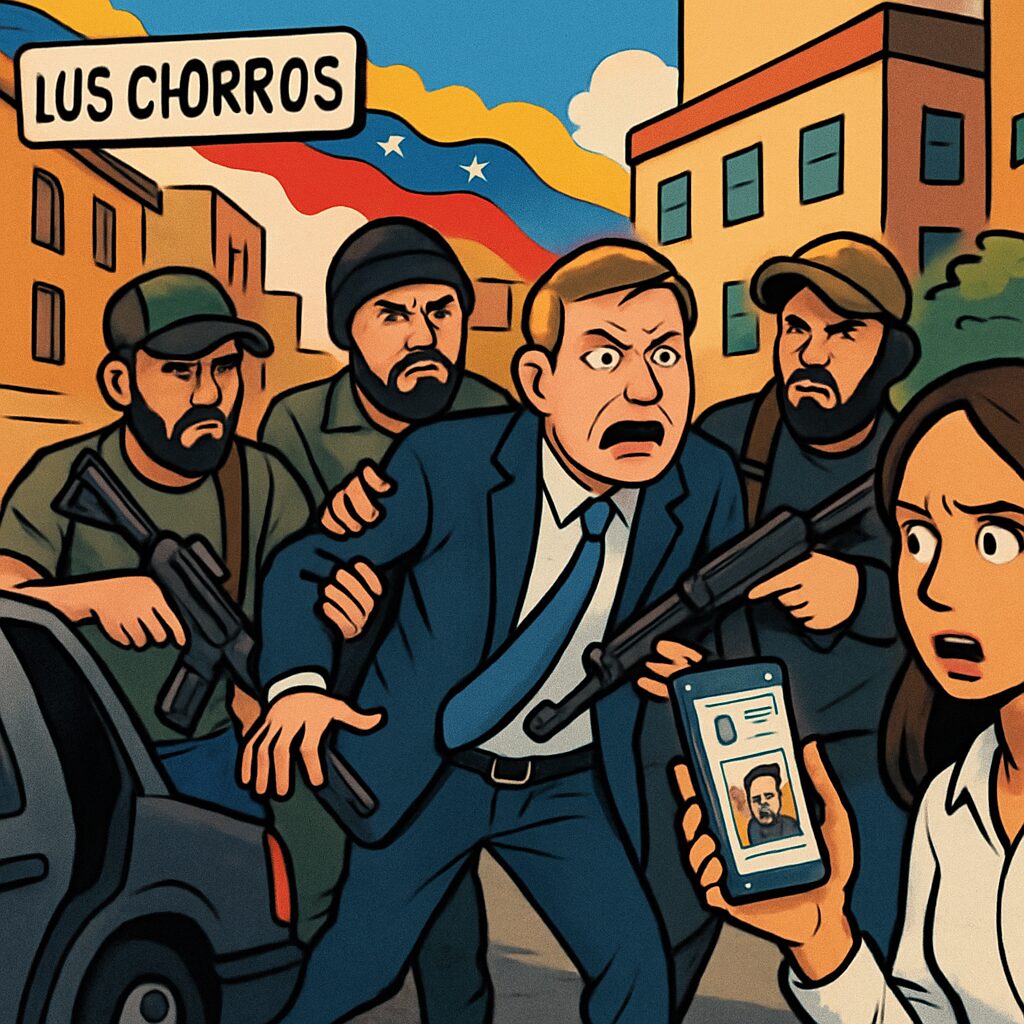
In a startling development, Venezuelan opposition politician Juan Pablo Guanipa was abducted shortly after his release from an eight-month detention, according to opposition leader María Corina Machado and human rights organizations. The incident underscores the volatile political climate in Venezuela following the U.S. capture of former President Nicolás Maduro and the interim leadership of Delcy Rodríguez.
Guanipa, a leader of the Justice First party and former vice-president of the National Assembly, was taken in the Los Chorros neighborhood of Caracas by heavily armed men dressed in civilian clothes who arrived in four vehicles. Machado reported on social media that he was ‘violently taken away’ just hours after being freed, with his party alleging the kidnapping was carried out by “repressive forces of the dictatorship.” Those accompanying him described weapons being pointed at the group before Guanipa was forced into a car.
Prior to this incident, Guanipa had been detained since May 2025 after being accused by Interior Minister Diosdado Cabello of leading a terrorist plot to sabotage legislative elections. He was among at least 30 political prisoners released on Sunday, according to the rights group Foro Penal, which assists detainees in Venezuela. The Public Prosecutor’s Office stated that Guanipa’s release was revoked due to non-compliance with house arrest conditions, though specifics remain unclear.
The release was part of a broader government initiative announced in January to free political prisoners, a move pressured by the opposition and international actors, including the United States. Foro Penal confirmed that 383 prisoners have been released since then, but critics argue the process is slow and lacks transparency. Acting President Rodríguez has faced mounting calls to address human rights abuses, though the government denies holding individuals for political reasons, insisting they are jailed for crimes.
Guanipa’s family expressed swift emotional shifts, from celebration to distress. His son Ramón initially posted on social media about the joy of impending reunion, but later demanded proof of life in a video, holding the regime responsible for his father’s safety. Machado echoed these concerns, calling for international intervention to secure Guanipa’s immediate release and end the persecution of opposition figures.
The kidnapping has intensified scrutiny on Venezuela’s political stability, with opposition groups warning of continued repression under Rodríguez’s interim administration. Machado and her allies vow to continue advocating for the freedom of all political prisoners, emphasizing that such incidents deter democratic progress. The international community, including human rights watchdogs, is likely to increase pressure for accountability and transparency.
As Venezuela navigates this crisis, the fate of Guanipa and other detainees remains uncertain, casting a shadow over efforts to reconcile the divided nation. The event signals persistent challenges in transitioning from Maduro’s rule and highlights the fragile state of civil liberties in the country.

