

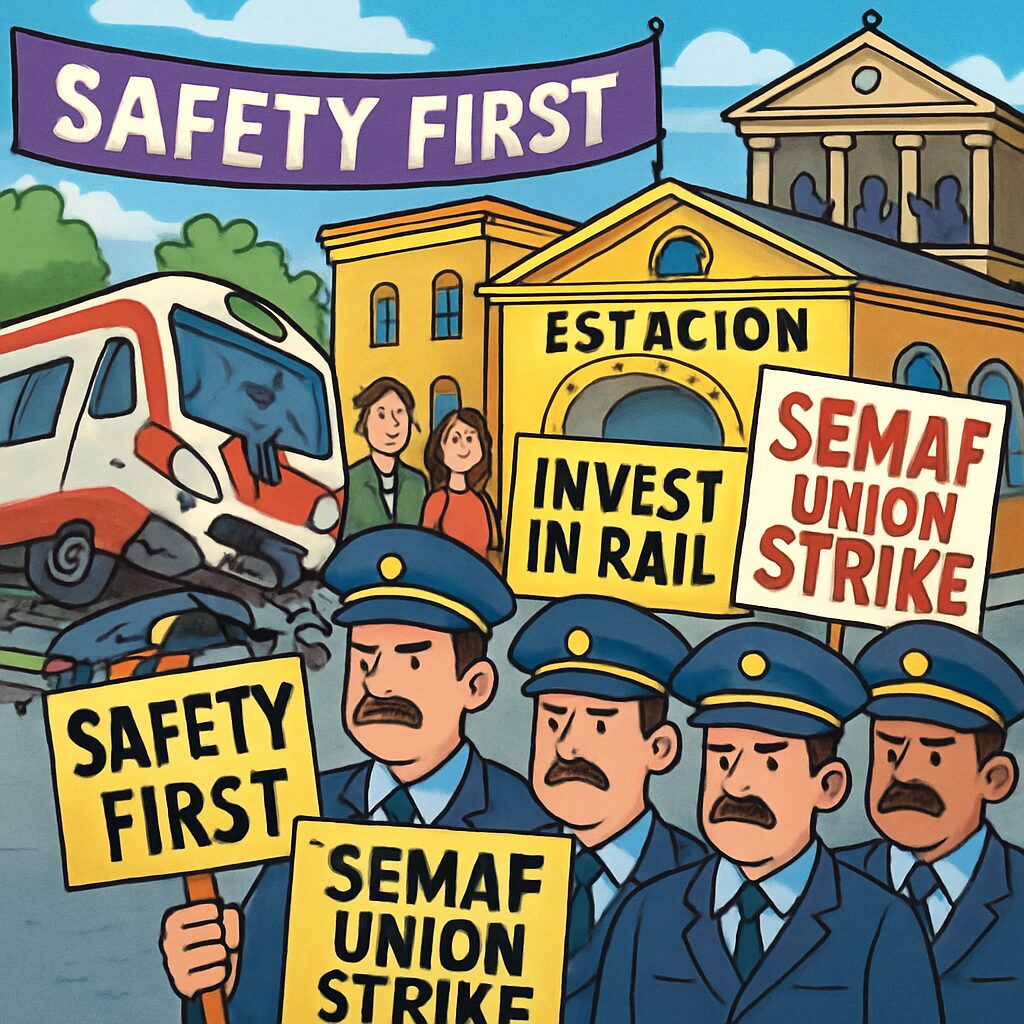
Spanish train drivers have launched a nationwide strike today, demanding improved safety measures following two deadly train crashes in January that killed dozens and raised serious concerns about the country’s rail infrastructure. The three-day strike, organized by the Semaf union, began on Monday in protest of what drivers describe as a lack of safety guarantees on Spain’s rail system, causing significant disruption for commuters and travelers across the nation.
This industrial action comes in the wake of two tragic accidents that have shaken public confidence. On January 18, a high-speed train derailed and collided with another in Adamuz, southern Spain, resulting in 46 fatalities—the worst rail disaster in Spain in more than a decade. Just two days later, near Barcelona, a collapsed wall caused a local train to derail, killing a trainee driver and injuring at least 37 passengers, further highlighting safety vulnerabilities.
The Semaf union has been vocal in its demands, calling for the hiring of additional staff and increased investment in maintenance to address what it terms ‘the constant deterioration of the rail network.’ Following the crashes, safety checks uncovered faults and maintenance issues on various routes, amplifying the union’s concerns. Union representatives have stated that these incidents mark a critical juncture, urging all necessary actions to guarantee railway safety.
In response, the Spanish government has defended its track record. Transport Minister Óscar Puente pointed to a €700 million investment in updating the Madrid-Andalusia line in recent years, which includes the section where the Adamuz accident occurred. He asserted that the issues are not due to lack of maintenance, obsolete infrastructure, or insufficient investment, seeking to reassure the public amid growing scrutiny.
Preliminary reports from the rail accident investigation commission (CIAF) have shed light on the causes. For the Adamuz crash, grooves found on the wheels of the derailed train and others suggest a fracture in the track existed before the train passed over it. In Catalonia, officials believe the wall collapsed as the train was passing, striking the driver’s cab and causing extensive damage to the first carriage, where most injuries occurred.
The political fallout is mounting, with Prime Minister Pedro Sánchez scheduled to be grilled in parliament later this week about the failures in the rail system. The strikes have not only disrupted travel but also tarnished Spain’s image as a leader in rail technology, prompting calls for comprehensive reforms and increased oversight from opposition parties and public advocates.
As the strike continues, its impact on the economy and daily life is being felt, with many routes canceled or delayed. Looking ahead, the outcome of parliamentary discussions and ongoing investigations will likely influence future safety measures and investment priorities, potentially leading to stricter regulations and enhanced infrastructure checks to prevent similar tragedies and restore trust in Spain’s rail network.

