

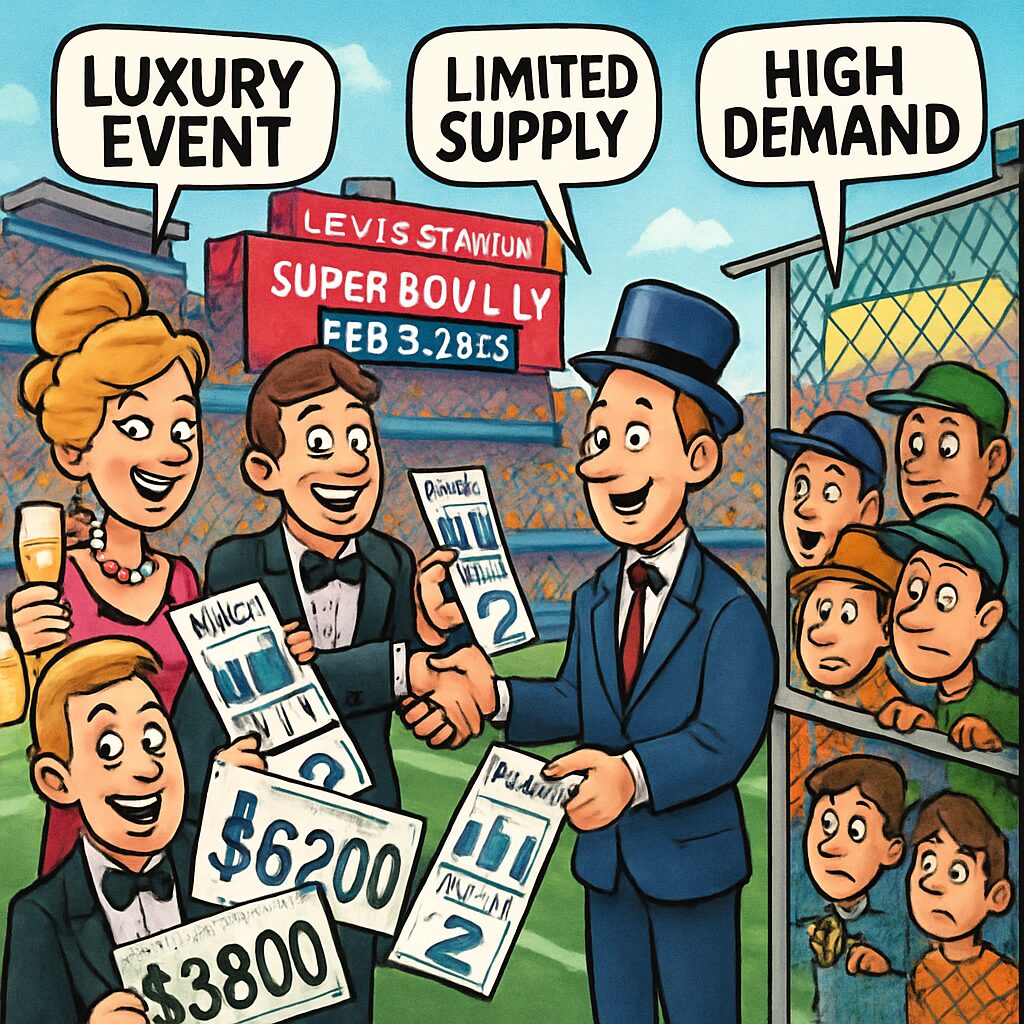
The Super Bowl’s staggering ticket prices are driven by a combination of limited supply and intense demand, cementing its status as a luxury event with costs that persistently climb. This year’s Super Bowl LX in Santa Clara, California, is no exception, with average tickets surpassing $6,200 and the cheapest seats on secondary markets like TickPick exceeding $3,800, highlighting the exclusivity that defines the game.
Super Bowl LX, scheduled for February 8, 2026, at Levi’s Stadium, represents the pinnacle of American sports culture, where the experience often outweighs the actual gameplay. Unlike regular-season games, the Super Bowl functions as a cultural phenomenon, attracting fans and corporate buyers alike who are willing to pay premium prices for a seat at this iconic event. Sports economist Victor Matheson from the College of the Holy Cross emphasizes that for many, the teams involved are secondary to the spectacle itself, underscoring the event’s broad appeal and its unique position in the sports landscape.
Scarcity is intentionally built into the Super Bowl model, as stadium capacities have remained largely unchanged over the years, preventing any increase in available seats. Matheson points out that the NFL’s ability to sell seats has stayed constant, which places immense pressure on prices due to unyielding demand. With stadiums unable to expand, the only variable that adjusts is cost, leading to the exorbitant prices seen today. This design ensures that the Super Bowl remains a rare commodity, akin to high-end luxury goods where supply constraints fuel value.
The distribution of tickets is meticulously controlled by the NFL, which allocates the vast majority before they reach the public. For instance, at Super Bowl XLVIII in 2014, 99% of tickets were pre-allocated: 35% went to the two competing teams to share, 5% to the host team, 35% to the other 29 NFL teams, and 25% to corporations, broadcast networks, media outlets, sponsors, and the host committee. Players and team staff get first dibs, followed by sponsors, leaving only a tiny fraction for general fans, which perpetuates the scarcity and drives up market prices.
Remaining tickets are distributed through highly competitive NFL-sponsored lotteries, often restricted to season ticket holders, and those fortunate enough to win frequently resell them at significant markups. This system forces most interested buyers into the secondary market, where prices are driven even higher by scarcity and speculation. CNN has reached out to the NFL for comment on this distribution strategy, but the pattern remains entrenched, highlighting the league’s tight grip on ticket access and its impact on affordability.
The secondary market caters to an affluent demographic, as evidenced by economic data. A report from Louisiana State University after last year’s Super Bowl in New Orleans revealed that nearly one in four attendees reported household incomes above $500,000, with the majority earning between $200,000 and $500,000. In contrast, less than 10% had incomes at or below the 2024 U.S. median of $83,730, illustrating the wealth disparity among Super Bowl crowds and explaining why high prices are sustainable.
Historical comparisons starkly illustrate the price inflation. Two tickets to the first Super Bowl in 1967 would cost about $118.20 in today’s dollars, equivalent to a few tanks of gasoline. Now, the expense is comparable to trading in a 2019 Subaru Outback, according to an analysis by Edmunds. This dramatic rise reflects the Super Bowl’s evolution from a sporting event to a luxury commodity, driven by decades of increasing demand and strategic market positioning.
Expert insights suggest that prices are unlikely to plateau. While SeatGeek notes that prices could drop slightly ahead of kickoff, any discounts are quickly snatched up, indicating sustained demand. Matheson predicts that between the limited seats and the high incomes of attendees, ticket prices will continue to skyrocket. The NFL’s strategic control and economic forces ensure that the Super Bowl remains a symbol of exclusivity, with future events likely to see even higher costs, reinforcing its role as a premium spectacle rather than an accessible game for the average fan.

