

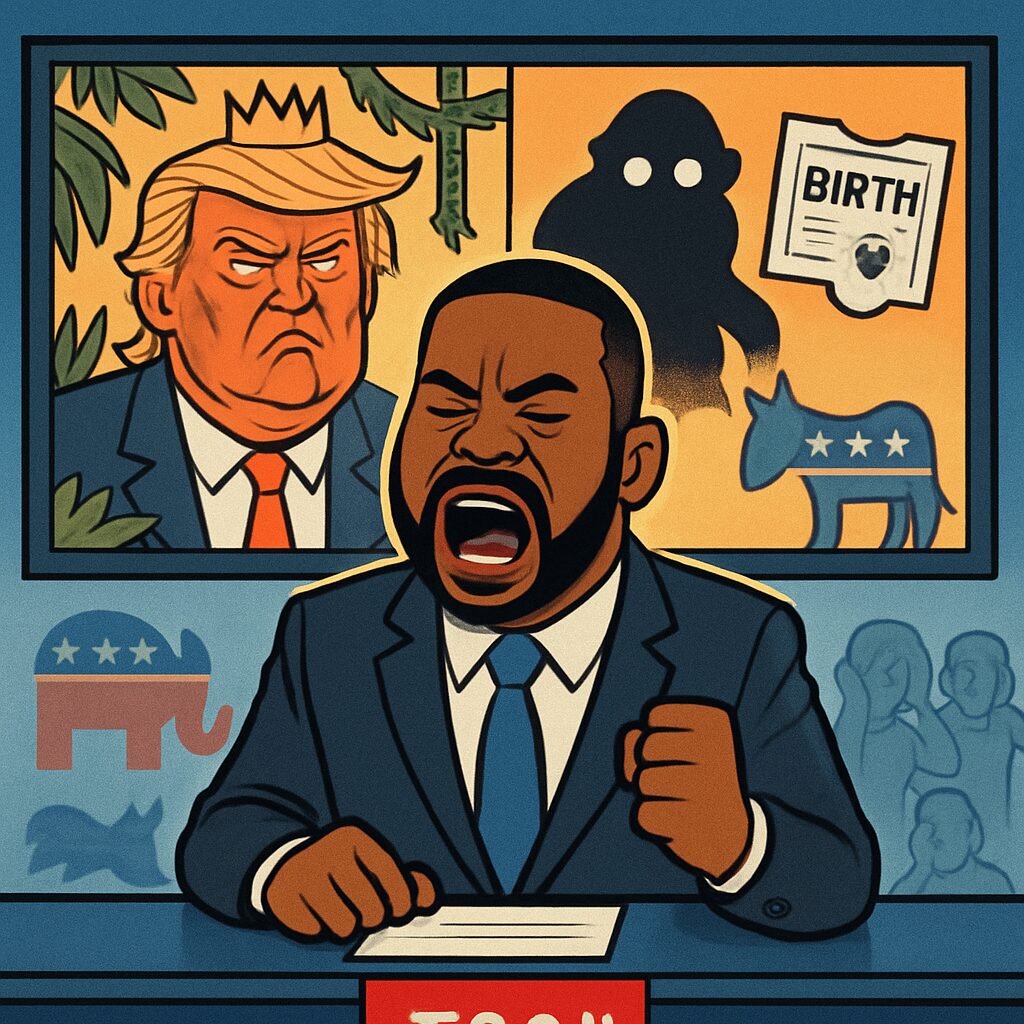
In a scathing on-air commentary, CNN anchor Victor Blackwell directly challenged the defenders of President Donald Trump after the president shared a racist video depicting former President Barack Obama and former First Lady Michelle Obama as apes. Blackwell’s segment, which aired on Saturday, February 7, 2026, posed the poignant question: ‘What more would they need to see?’ to those who continue to excuse Trump’s behavior, highlighting a pattern of racially charged actions that have characterized his presidency.
The controversy began late on Thursday, February 6, when Trump posted the video to his Truth Social account at 11:44 PM. The video contained an image that portrayed the Obamas as apes, an overtly racist depiction that quickly ignited a firestorm of criticism. Republican Senator Tim Scott of South Carolina was among the first to condemn the post, calling it ‘the most racist thing I’ve seen out of this White House’ and initially praying it was fake before acknowledging its authenticity. Other lawmakers and public figures echoed this outrage, underscoring the divisive nature of the content.
In response, White House Press Secretary Karoline Leavitt issued a statement defending the post as part of an internet meme that depicted Trump as the ‘King of the Jungle’ and Democrats as characters from ‘The Lion King.’ She urged critics to ‘stop the fake outrage and report on something today that actually matters to the American public.’ However, this defense was short-lived; approximately 12 hours after the initial post, it was deleted from Truth Social. An unnamed White House official later claimed that ‘a White House staffer erroneously made the post,’ but Trump himself complicated this narrative by stating that he had watched the meme but not the Obama part, leaving the explanation in disarray.
During his CNN show ‘First of All With Victor Blackwell,’ the anchor seized on this incident to deliver a comprehensive rebuke of Trump’s history with race. Blackwell methodically listed past controversies, including Trump’s emphasis on Obama’s middle name, Hussein; his promotion of the birther conspiracy theory; his instruction to four congresswomen of color to ‘go back’ to their countries; and his derogatory comments about immigrants from African nations and Haiti. By recounting these events, Blackwell aimed to demonstrate a consistent pattern of behavior that, in his view, should leave no doubt about Trump’s tendencies.
Blackwell’s commentary also touched on the political implications, noting how elected Republicans have often dismissed or defended Trump’s actions. He referenced instances where politicians like Representative John James condemned specific incidents but still asserted that Trump is not racist, prompting Blackwell to question the criteria being used. ‘What more would he need to see?’ Blackwell asked, emphasizing the disconnect between Trump’s words and the excuses made by his allies.
The segment resonated widely, partly because it aired on a major news network and was picked up by other outlets like Yahoo News, which described it as a ‘blistering rant at defenders.’ This coverage amplified the message, bringing it to a broader audience and reinforcing the critique of Trump’s conduct. The timing is significant, as the United States navigates a contentious political landscape with ongoing debates about race, immigration, and leadership.
In the aftermath, the incident is likely to have lasting effects on public perception and political dynamics. It may influence voter attitudes in upcoming elections and shape how media outlets cover Trump’s rhetoric. Blackwell’s challenge to ‘the president’s excusers’ serves as a call for accountability, urging a reassessment of support based on empirical evidence rather than partisan loyalty.
Ultimately, this episode underscores the enduring tensions around race in American politics and the role of media in holding powerful figures to account. As Blackwell concluded, the question remains: how many racist acts must occur before they are universally acknowledged as such, and what will it take for defenders to change their stance?

