

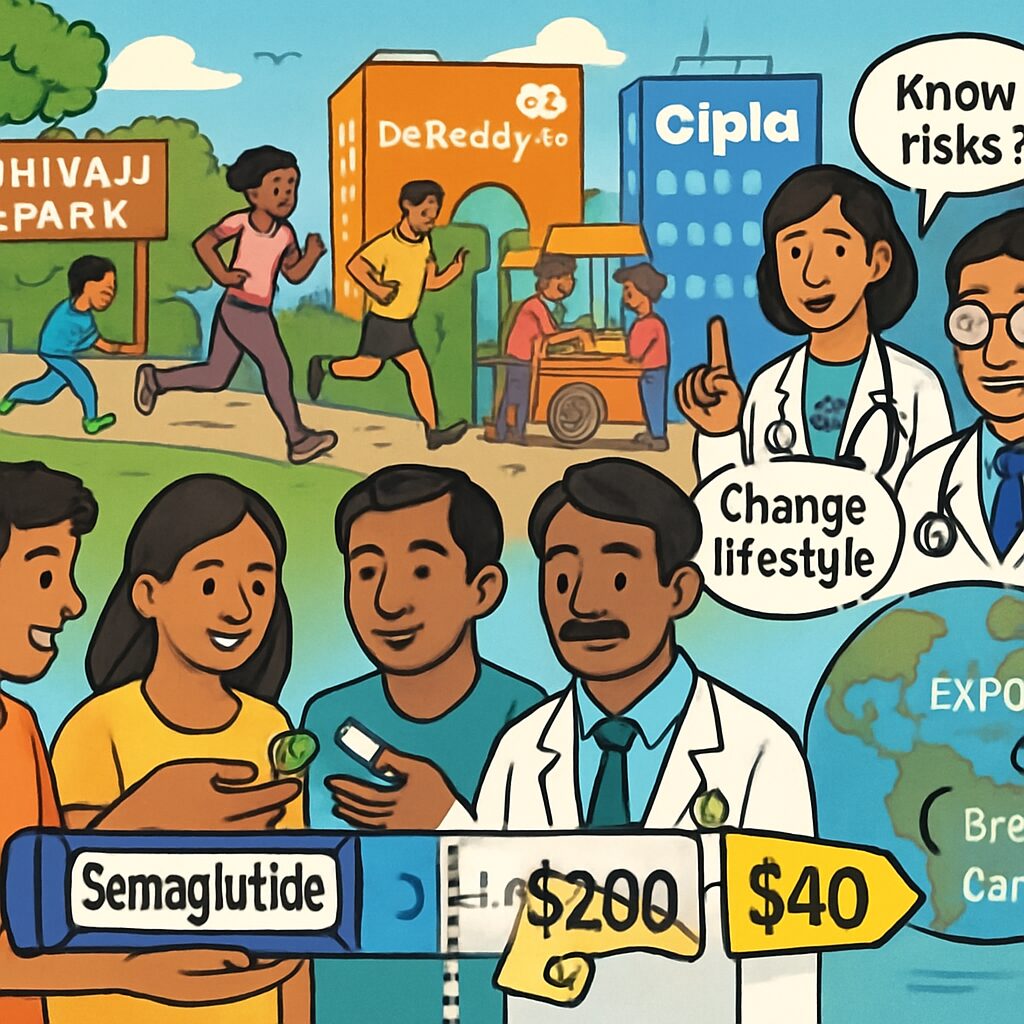
India is on the brink of revolutionizing access to weight-loss medications as the patent for semaglutide, the key ingredient in drugs like Ozempic, expires in March 2026. Indian pharmaceutical companies are preparing to launch generic versions that could reduce costs by up to 90%, potentially transforming the fight against obesity in the country and beyond.
In Mumbai’s Shivaji Park, the daily contrast between fitness enthusiasts and indulgent food stalls highlights India’s complex health landscape, setting the stage for a medical and commercial frenzy. The imminent expiry of the patent protecting semaglutide, a protein that mimics appetite-regulating hormones, opens the door for cheap alternatives to Novo Nordisk’s blockbuster drugs Ozempic and Wegovy. This shift is expected to unleash a wave of generic production from India’s massive pharma industry, poised to capitalize on the March 2026 deadline.
Semaglutide works by telling the brain you’re full, aiding weight loss and diabetes control. With the patent lapse, at least 10 Indian firms, including Dr. Reddy’s Laboratories, Cipla, and OneSource Specialty Pharma, have begun manufacturing processes. OneSource is investing nearly $100 million to quintuple production capacity, while Biocon has commissioned a $100 million injectables facility in Bengaluru, targeting launches in 2027 with exports to Brazil and Canada. Dr. Reddy’s plans to sell generic semaglutide in 87 countries, anticipating hundreds of millions in sales.
Analysts forecast a price war that could slash drug costs by 90% in India. Namit Joshi of the Pharmaceuticals Export Promotion Council predicts monthly doses dropping to $77 within a year and eventually to $40, compared to current high prices. Jefferies investment bank calls this a “magic pill moment,” projecting the semaglutide market could reach $1 billion. This affordability contrasts with the U.S., where patents last until the 2030s, keeping prices steep.
The demand is already evident from patients like Mahesh Chamadia, a Mumbai accountant who lost 10 kilograms using Eli Lilly’s Mounjaro, a similar drug. Spending about $280 monthly, he has seen improved blood sugar and reduced cravings, though costs remain high for many. Mounjaro became India’s second-largest pharmaceutical brand within six months of launch, underscoring the rapid market growth.
However, these drugs carry risks such as nausea, diarrhea, and abdominal pain, and doctors warn against misuse for cosmetic slimming. Clinics are advertising injections for pre-wedding weight loss, prompting concerns from specialists like Dr. Rajiv Kovil, who stress that obesity management requires a holistic approach including diet and exercise. Endocrinologist Dr. Atul Luthra notes that without lifestyle changes, side effects may increase.
India, known as the “pharmacy of the world,” could mirror its success with affordable HIV drugs by becoming a low-cost supplier in the global obesity fight. With 450 million adults projected to be overweight by 2050, this access is critical for a country grappling with diabetes and obesity epidemics. The generic rollout aims to serve both domestic needs and international markets, potentially easing global shortages.
As March 2026 approaches, doctors brace for a patient surge while policymakers weigh whether cheaper drugs alone can curb obesity or if broader societal shifts are needed. For individuals like Chamadia, who urges his son to try the treatments, the generics offer hope for lasting health control, marking a pivotal moment in India’s healthcare narrative.

