

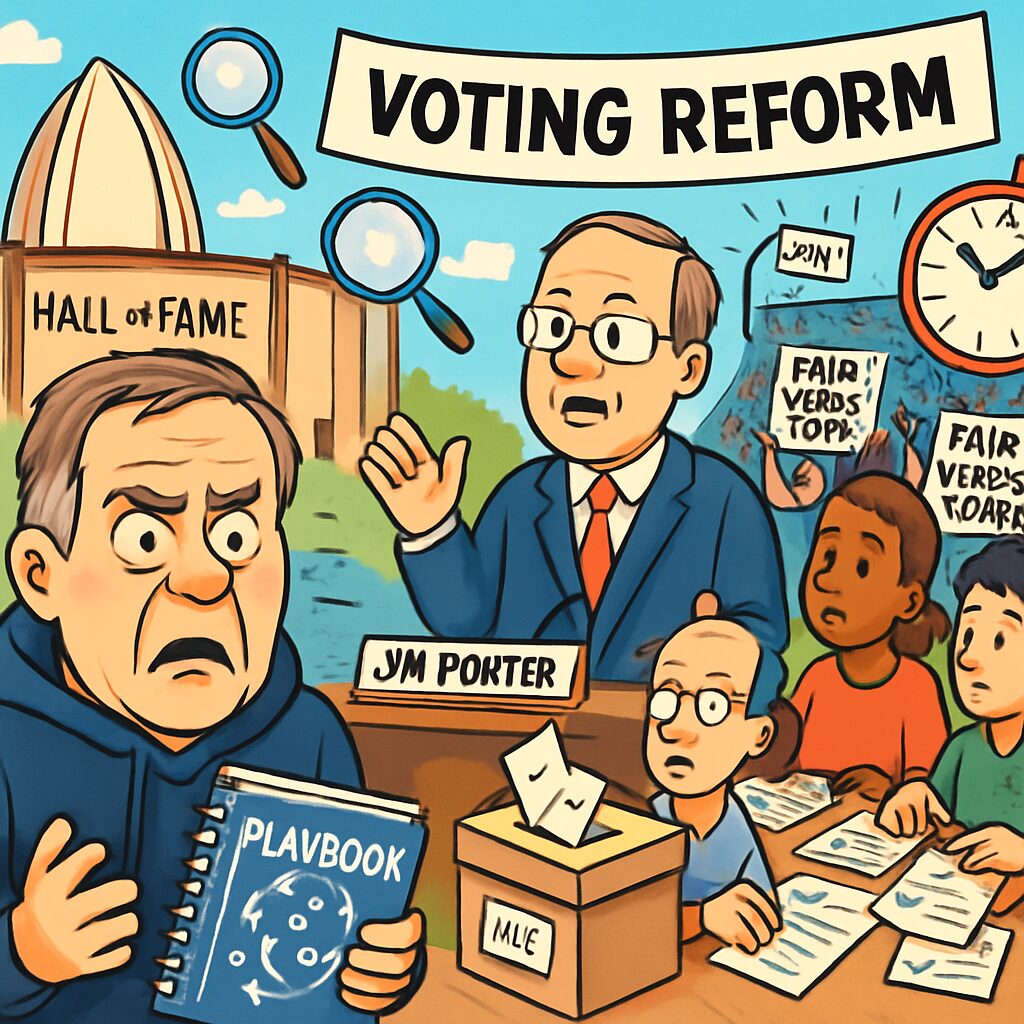
The Pro Football Hall of Fame is reevaluating its selection process after the omission of eight-time Super Bowl champion coach Bill Belichick from the 2026 induction class sparked significant public and media backlash. Hall president Jim Porter announced plans to return to in-person voting and consider other adjustments to ensure the integrity of the enshrinement procedures.
The controversy emerged when Belichick, eligible for the first time this year, was not voted into the Hall despite his unparalleled coaching record. Similarly, New England Patriots owner Robert Kraft, who oversaw six of those Super Bowl victories, was also snubbed, leading to widespread criticism from fans, players, and analysts alike. Porter addressed these concerns in an interview with the Associated Press, emphasizing that while the Hall respects the voters’ independence, it expects them to follow established rules by selecting the “most deserving” candidates.
Specific changes under consideration include reverting to in-person meetings for the 50-member selection committee, which had moved online during the COVID-19 pandemic. Porter also suggested shortening the time between the vote and the public announcement to reduce the risk of leaks, aiming to maintain the tradition of “The Knock” where Hall of Famers personally inform new inductees. Additionally, the Hall may start releasing vote totals and individual ballots in the future to increase transparency.
Porter indicated that the Hall might replace voters who violate confidentiality agreements or fail to adhere to the guideline of choosing the most deserving individuals in each category. He stressed that instructions were clearly communicated multiple times during the voting process, and any deviation could undermine the system’s credibility. This move comes after some voters publicly justified their choices, such as selecting senior players over Belichick due to perceived last chances, which Porter stated is not permissible under the rules.
The current voting structure groups coaches and contributors with senior players who have been retired for at least 25 years, a change implemented recently that has made it more difficult for anyone to reach the 80% threshold required for induction. This year, only running back Roger Craig from the senior/coach/contributor category was elected, while Belichick and Kraft fell short. Porter questioned why voters could handle such groupings for decades but now struggle, urging a reflection on whether all are truly picking the most deserving candidates.
In the modern-era category, four players were inducted: quarterback Drew Brees, wide receiver Larry Fitzgerald, linebacker Luke Kuechly, and kicker Adam Vinatieri. However, this marks the second consecutive year with fewer than five modern-era inductees, following a rule change that altered the voting dynamics. Porter acknowledged that the number of inductees has decreased but defended the process as necessary to maintain high standards.
The outcry over Belichick’s snub has highlighted broader concerns about the Hall of Fame’s selection criteria and the potential influence of past controversies like “Deflategate” and “Spygate” on voters’ decisions. Porter, however, maintained that the proposed tweaks are not specifically aimed at Belichick’s case but are part of ongoing efforts to protect the Hall’s reputation. He expressed openness to feedback but ruled out a complete overhaul, focusing instead on incremental improvements.
Looking ahead, the Hall plans to engage with various stakeholders to refine the voting process, with changes likely to be implemented before the next selection cycle. While Belichick is expected to gain induction in the future, the current discussions aim to restore public trust and ensure that the Pro Football Hall of Fame continues to honor the sport’s greatest contributors fairly and transparently.

