

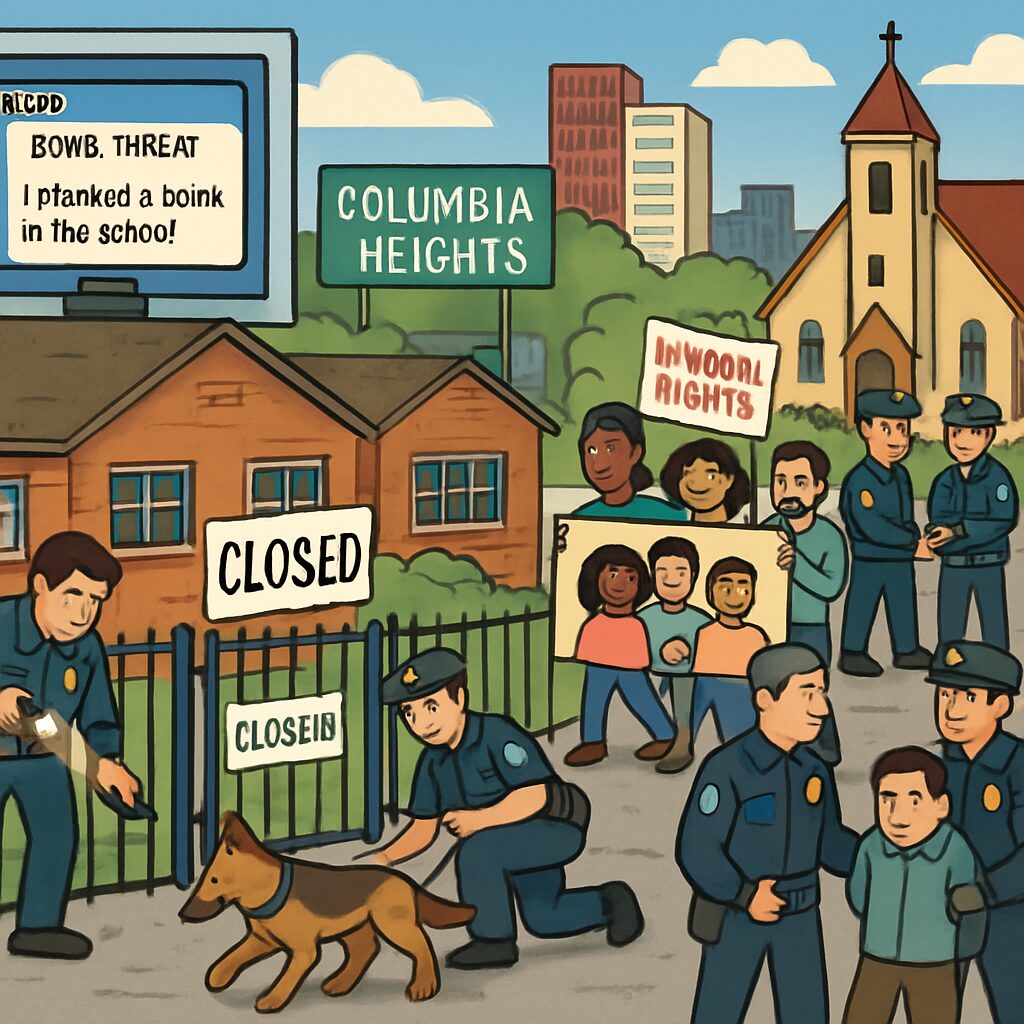
On Monday, February 2, 2026, multiple schools in the Columbia Heights district near Minneapolis were closed as a precaution after receiving a bomb threat via email, which authorities later confirmed was a hoax after thorough searches revealed no suspicious devices.
The threat was emailed in the early hours, prompting the school district to announce closures out of an abundance of caution to ensure student and staff safety. Police from Columbia Heights, Minneapolis, and Metro Transit assisted in searching the campuses, with no suspicious packages or devices located. Columbia Heights Police Department stated that due to the timing of the threat, it wasn’t possible to investigate fully before school hours, leading to the decision to cancel classes for the day.
This incident occurs amid heightened tensions in Minnesota related to federal immigration enforcement actions. Recently, several students from the district, including five-year-old Liam Ramos, were detained by Immigration and Customs Enforcement (ICE), sparking national outcry and protests. Ramos and his father were released over the weekend from a Texas detention center after a federal judge’s order, but other students remain detained, with the school district expressing relief and calling for their release.
Separately, the U.S. Justice Department announced additional arrests in connection with anti-ICE protests at a Minnesota church last month, highlighting the ongoing conflict between immigration enforcement and community activists. Attorney General Pam Bondi stated that those who riot in places of worship will be found and held accountable, underscoring the legal crackdown on protest activities.
Protests against ICE have been widespread in Minneapolis and other U.S. cities, with recent incidents including the shootings of U.S. citizens Renee Good and Alex Pretti by federal agents, further fueling public unrest. A post-mortem report confirmed Pretti’s death as homicide, and investigations are ongoing, with agents placed on leave and civil rights probes initiated.
The hoax threat to schools is seen in the context of these broader social and political challenges, with education disruptions adding to the strain on families and institutions already affected by immigration policies. Community responses have included strikes and continued demonstrations, reflecting deep divisions over enforcement actions.
Schools are set to reopen on Tuesday, February 3, as police continue to investigate the source of the bomb threat. Authorities are collaborating with other agencies to track down those responsible, emphasizing the priority of safety in educational settings. The district has assured that classes will resume normally, with heightened vigilance in place.
This event underscores the complex interplay between public safety concerns and socio-political issues, with hoax threats exploiting community vulnerabilities during times of crisis. It highlights the need for robust response protocols and the ongoing impact of national policies on local communities.

