

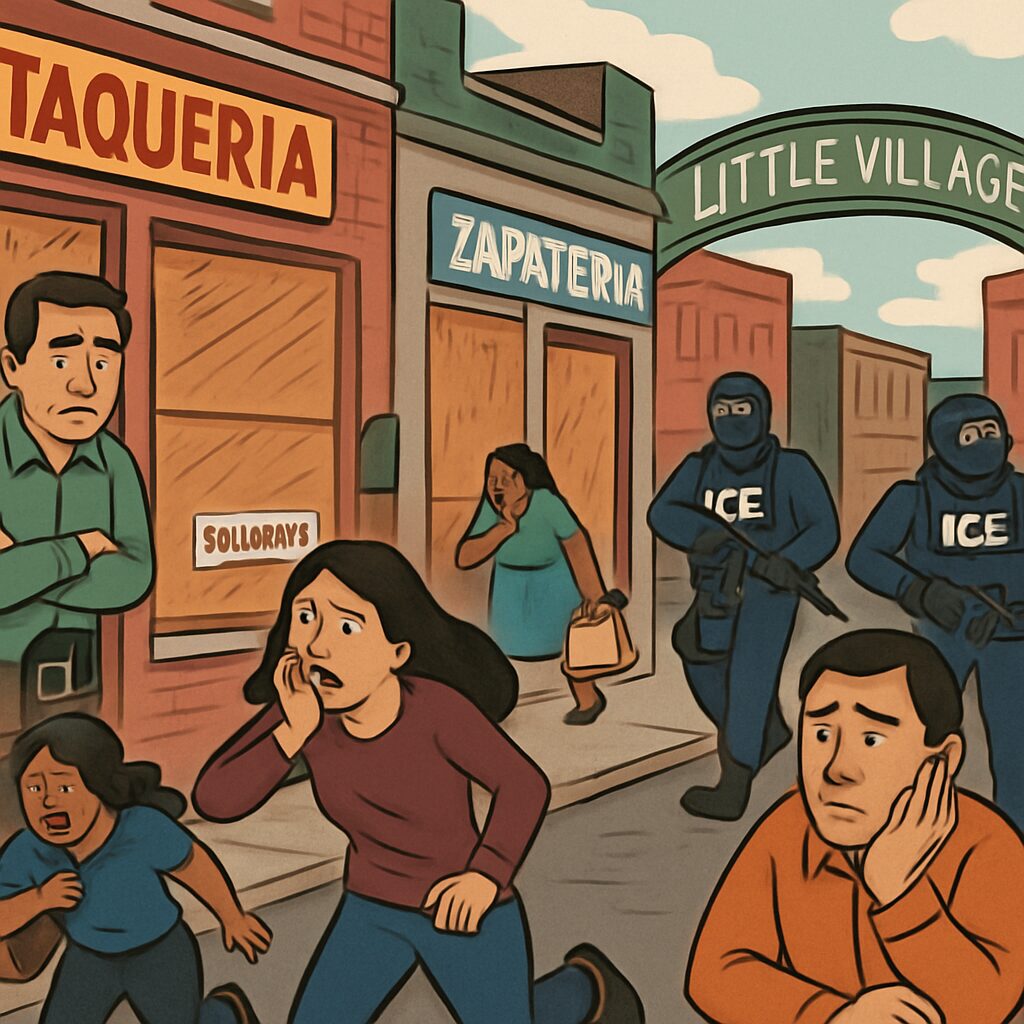
In Chicago’s Little Village, a once-thriving Hispanic neighborhood known as the ‘Mexican Magnificent Mile,’ recent Immigration and Customs Enforcement (ICE) raids have instilled widespread fear, drastically reducing foot traffic and crippling local businesses, with some reporting sales declines of over 60%.
The raids, part of the Trump administration’s Operation Midway Blitz launched in September, have targeted undocumented immigrants, leading to a palpable shift in daily life. Residents describe scenes of masked agents with rifles, causing people to hide or flee, and the community has adapted by staying indoors, turning bustling streets into near-empty corridors. Business owners like Carlos Macias of Carniceria y Taqueria Aguascalientes recount how a raid at his shop spread terror, with customers ducking under tables and employees crying. This fear has translated into economic hardship, with Macias noting business has dropped by half or more, and other establishments facing similar fates.
Local officials report dramatic sales decreases; Alderman Michael Rodriguez cites examples where restaurants and mobile phone shops have seen drops of up to 60% or no sales for weeks. The economic impact extends beyond Little Village, as the area is a key revenue generator for Chicago, with its vibrant local economy now under threat. In response, the city has launched initiatives like Shopping in Solidarity to encourage support for local businesses. However, efforts are challenged by the ongoing fear, with community leaders emphasizing the need for resilience and unity in the face of uncertainty.
The Department of Homeland Security defends the raids as necessary for public safety, citing arrests of individuals with criminal records. However, court records show many detainees pose low risk, sparking debates over the proportionality and human cost of the enforcement actions. Economists warn that mass deportations could harm the GDP, with studies predicting potential cuts of up to 7% over three years and price increases by 2028. Meanwhile, some political figures support the crackdown, highlighting the tension between security concerns and economic realities.
Personal stories, such as that of Adolfo Peña, a Trump voter whose shoe shop revenue halved, illustrate the complex emotions and unintended consequences. Peña expressed regret over his vote, citing economic losses from tariffs and raids. The community remains committed to persevering, but the fear of ICE shapes every aspect of life, from work to social interactions, with street vendors avoiding corners and families altering routines.
Looking ahead, the Trump administration plans to expand ICE operations, with funding approved for more agents and detention centers. For Little Village, the future hinges on balancing enforcement with community well-being, as residents and businesses strive to adapt to this new normal, hoping for a return to the neighborhood’s former vibrancy despite the ongoing challenges.

