

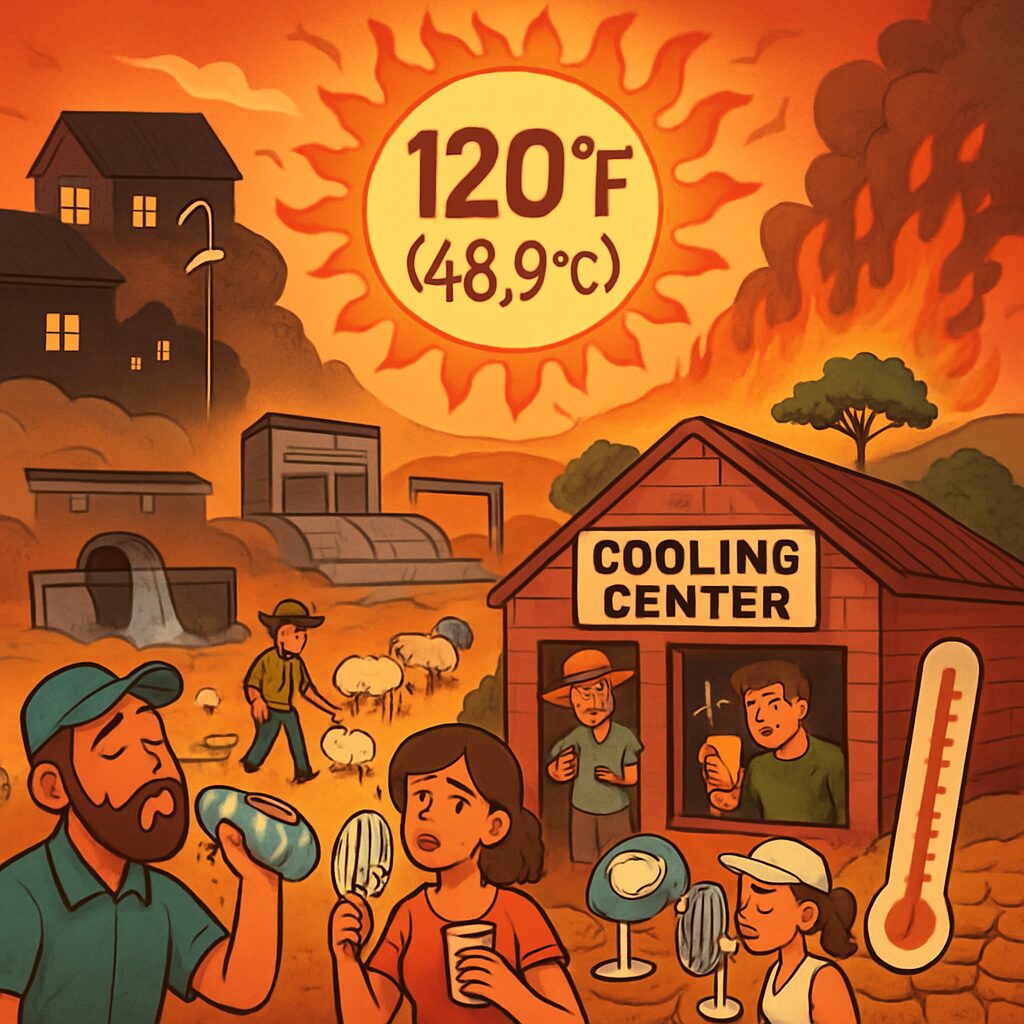
Australia is grappling with an intense heat wave that has pushed temperatures to near-record highs, with rural towns in Victoria reaching 48.9 degrees Celsius (120 Fahrenheit) this week, marking the state’s hottest day on record. The prolonged heat has fueled destructive bushfires, forced evacuations, and strained infrastructure across southeastern Australia, highlighting the severe impacts of climate change on the region.
In Victoria, the towns of Hopetoun and Walpeup recorded preliminary highs of 48.9°C on Tuesday, surpassing previous records and echoing the deadly conditions of the 2009 Black Saturday bushfires. While no fatalities have been reported from this heat wave, authorities have issued urgent warnings as multiple fires burn out of control, threatening communities and natural habitats. The state capital, Melbourne, also endured extreme heat, with temperatures exceeding 45°C, prompting health alerts and disrupting daily life.
The heat wave has triggered widespread bushfires, particularly in rural areas like Gellibrand, where residents faced terrifying blazes. Karlee Smith, a local farmer, described riding through flames to herd sheep to safety, while her family battled fires with a water tanker. The community’s water supply was compromised after fires damaged the treatment plant, leaving residents without safe drinking water and underscoring the cascading effects of extreme weather on essential services.
Climate scientists attribute the severity of this heat wave to human-caused climate change, with recent analyses suggesting such events are now five times more likely. Dr. Kate Charlesworth of the Australian Climate Council emphasized that heat is a silent killer, responsible for over 1,000 Australian deaths between 2016 and 2019. The current conditions are part of a broader trend of hotter and longer summers, exacerbating risks to public health and the environment.
Beyond Victoria, neighboring states including New South Wales and South Australia have also seen record temperatures, with some areas approaching 50°C. The heat has strained power grids, leading to outages for over 100,000 homes at one point, and forced businesses to close early to protect workers. In Hopetoun, local hotel owner Steve Mccullough kept his pub open as a cooling center, offering refuge to residents fearful of high electricity bills from air conditioning.
The heat wave’s impacts extended to major events, such as the Australian Open tennis tournament in Melbourne, where extreme heat protocols were enacted. Matches on outer courts were postponed, and players used ice packs and fans to cope with the scorching conditions. Attendance plummeted as people heeded health warnings to stay indoors, reflecting the broader societal disruption caused by the extreme weather.
Authorities have urged vulnerable populations, including the elderly and children, to stay hydrated and seek air-conditioned spaces, with ambulance services on high alert for heat-related emergencies. Community solidarity has been evident, with neighbors checking on each other and local businesses adapting to provide support. However, the ongoing threat of fires and heat stress means that the crisis is far from over, with forecasts indicating the heat wave will persist into the weekend.
Looking ahead, the recurrence of such extreme heat waves underscores the urgent need for climate adaptation and mitigation strategies. As Australia faces one of its hottest summers on record, the events of this week serve as a stark reminder of the escalating challenges posed by global warming. Residents and officials alike are bracing for more frequent and intense weather events, calling for coordinated efforts to enhance resilience and reduce greenhouse gas emissions.

