

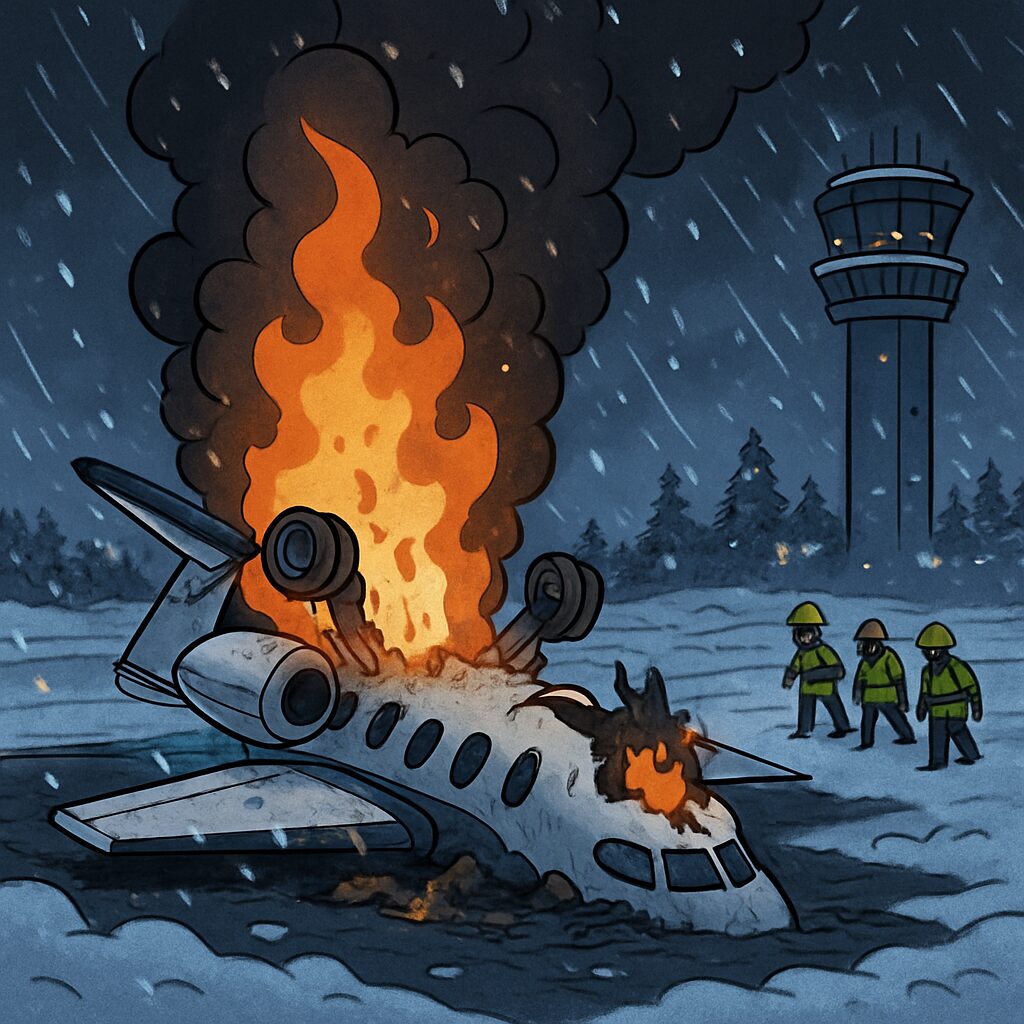
A private jet crashed during takeoff at Bangor International Airport in Maine, leading to the presumed deaths of all six people on board amidst a fierce winter storm that swept across the northeastern United States. The incident highlights the perils of aviation in severe weather and has sparked an investigation by federal authorities.
The crash occurred at approximately 19:45 local time on Sunday, January 25, when the Bombardier Challenger 600 aircraft went down shortly after departure from the airport. Initial confusion arose when the Federal Aviation Administration (FAA) reported seven fatalities and one serious injury, but later corrections from Bangor airport officials stated that no individuals were transported to hospitals, and all are presumed deceased. This discrepancy underscores the chaotic nature of emergency responses during such events.
Authorities have identified that the aircraft was carrying two flight crews and four passengers, whose names are being withheld pending formal identification. The plane is registered to a law firm in Houston, Texas, adding a layer of complexity to the investigation as officials look into the purpose of the flight and the backgrounds of those on board. The FAA has confirmed that the jet “crashed under unknown circumstances on departure” and was found inverted and engulfed in flames on the runway.
The incident took place during a severe winter storm that has been affecting a large swathe of the United States, with pilots reportedly struggling with poor visibility at the time of the crash. Audio from air traffic control, obtained by CBS News and published on LiveATC.net, captured discussions about visibility issues minutes before the accident, and shortly after, a controller was heard describing a “passenger aircraft upside down.” This evidence points to the challenging conditions faced by aviation personnel.
Images from the scene showed thick smoke and fierce flames on the runway, indicating the severity of the impact. The National Weather Service has forecasted between 10 to 16 inches of snow in parts of Maine, including Bangor, by Tuesday morning, which could hinder ongoing investigation and recovery efforts. The storm has already killed several people and left hundreds of thousands without power across the country.
Beyond the immediate crash, the winter storm has caused widespread travel disruption, with over 11,000 flights canceled and nearly 5,500 delayed on Sunday, according to FlightAware. Major airports in cities like Philadelphia, Washington D.C., Baltimore, and New York were affected, compounding the logistical challenges for travelers and authorities alike. This context emphasizes the broader impact of extreme weather on national infrastructure.
The FAA is leading a thorough investigation into the cause of the crash, which remains unknown. Factors such as mechanical failure, pilot error, or weather-related issues are being considered. Public records and witness accounts will be crucial in piecing together the events leading up to the tragedy. The investigation aims to provide answers and improve safety protocols for future flights.
This event serves as a somber reminder of the risks associated with aviation during adverse conditions and has prompted discussions on enhancing safety measures. As authorities work to identify the victims and determine the cause, the focus remains on supporting the affected families and preventing similar incidents. The outcome of the investigation could lead to changes in aviation regulations, especially for private flights in inclement weather.

